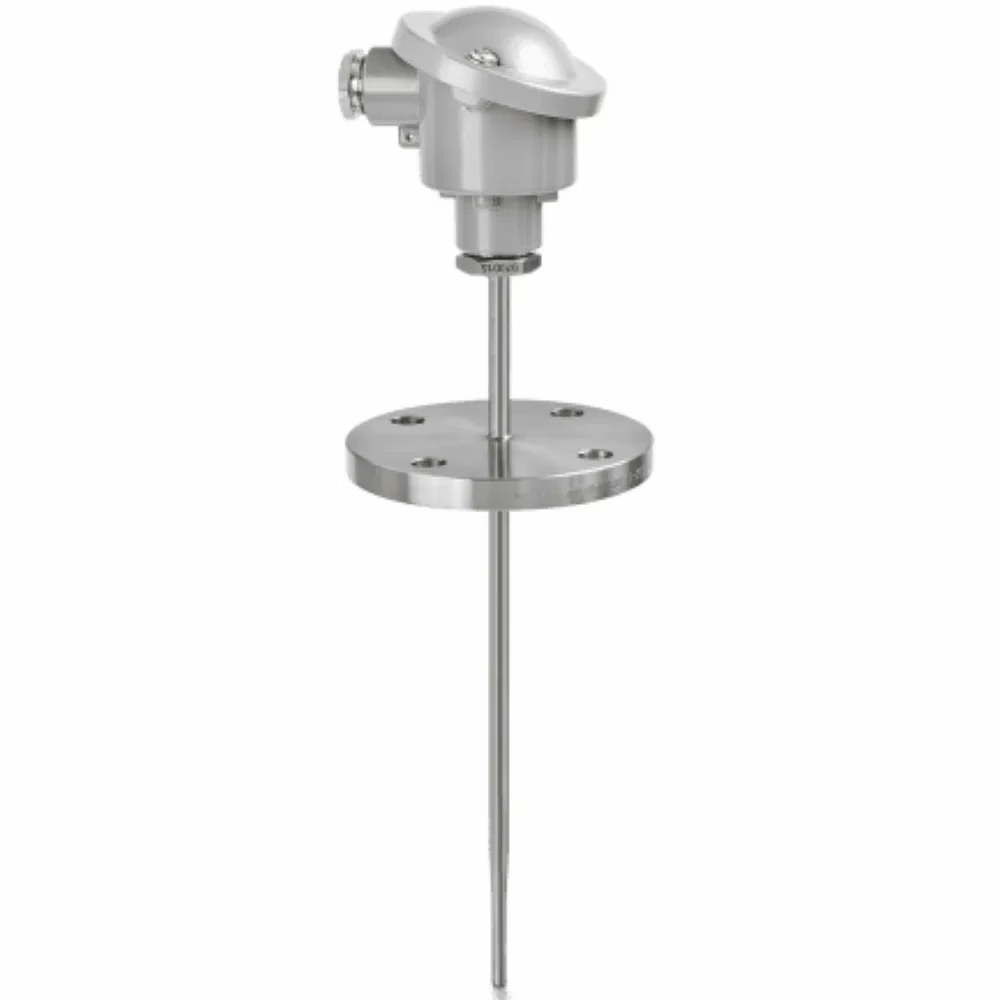
Electromechanical Architecture and Junction Logic of the TCA-F42
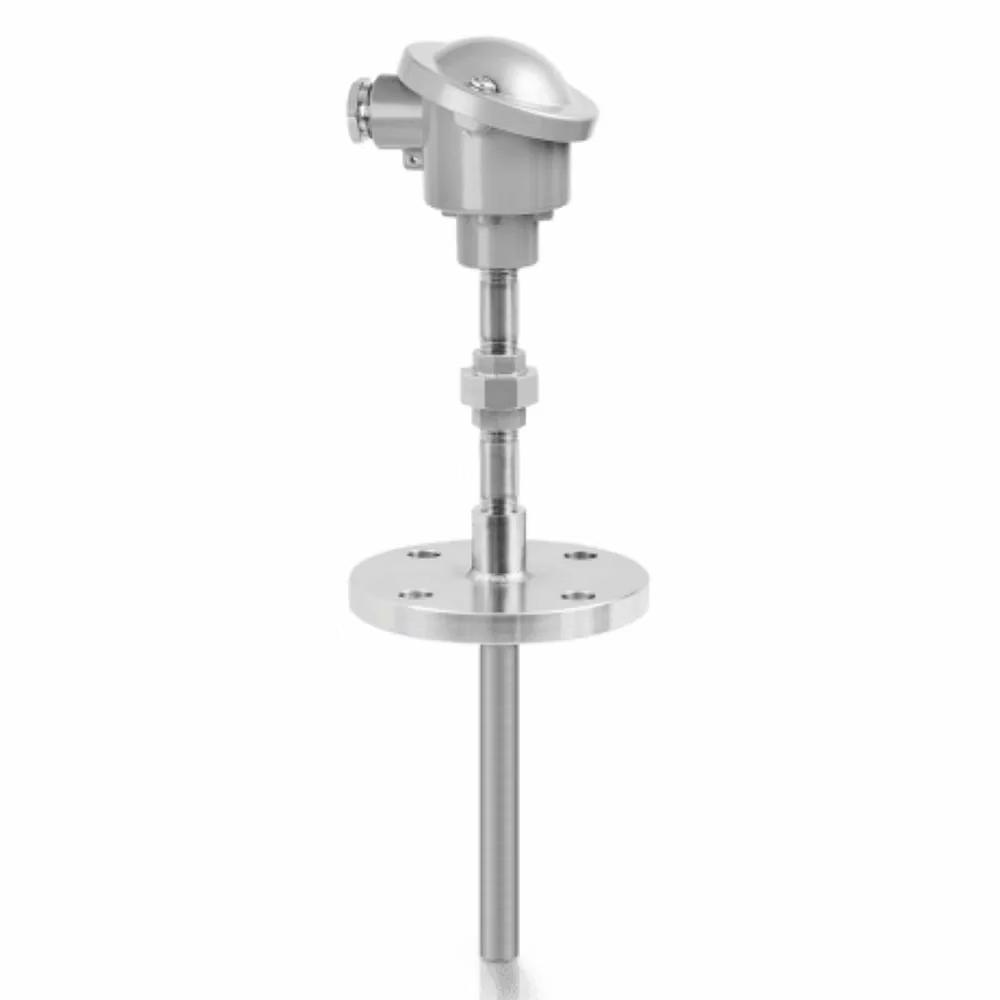
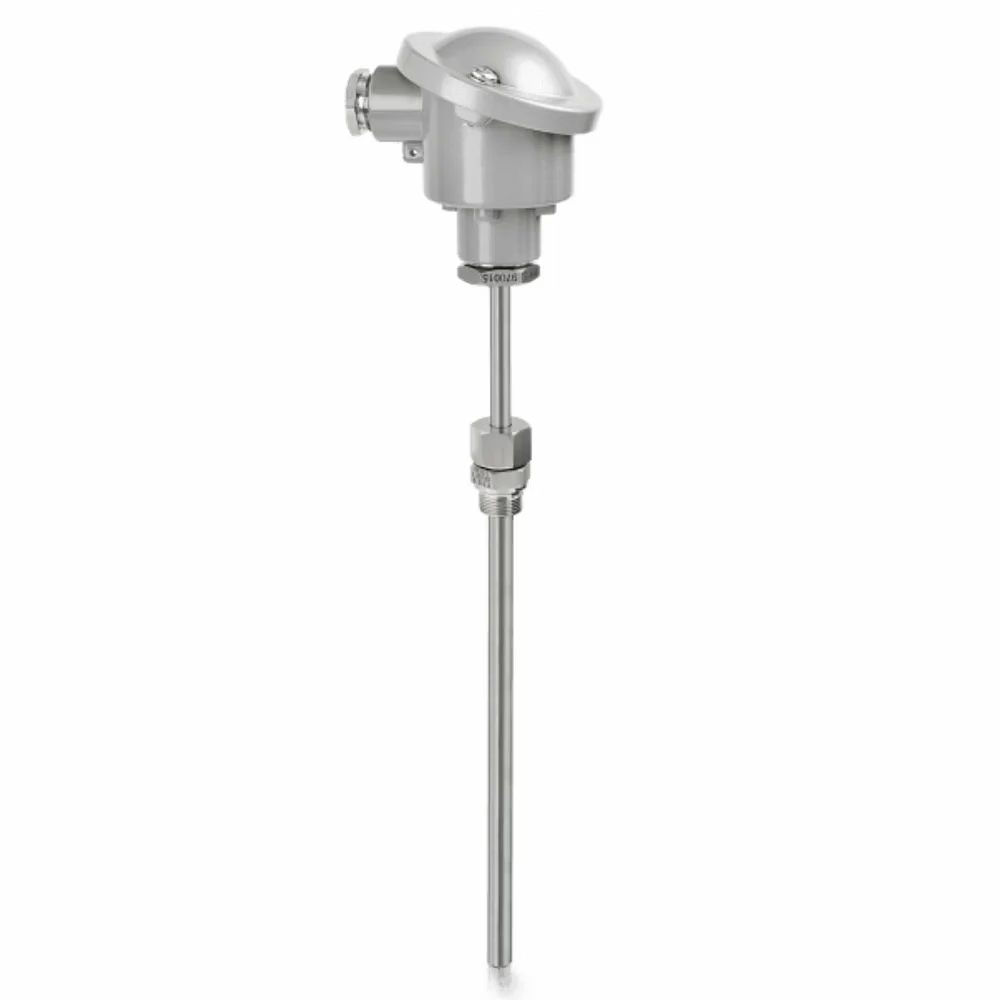
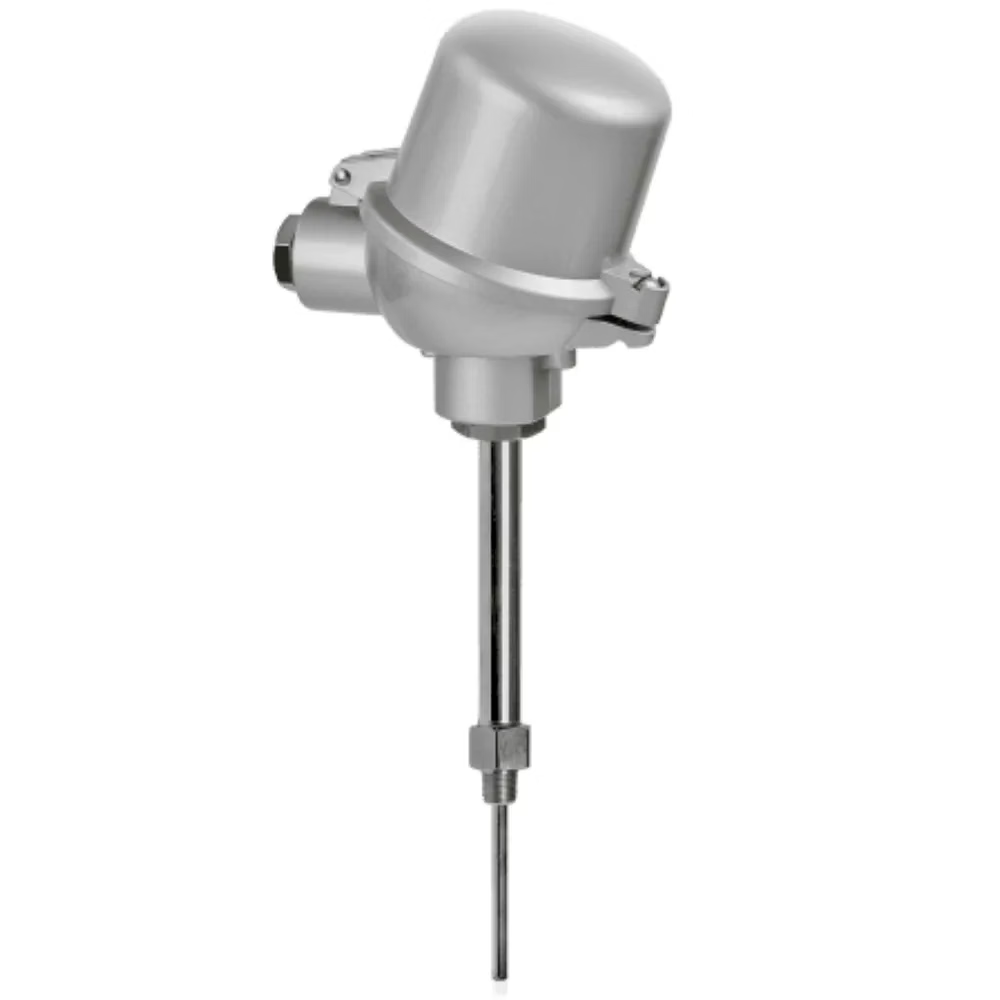
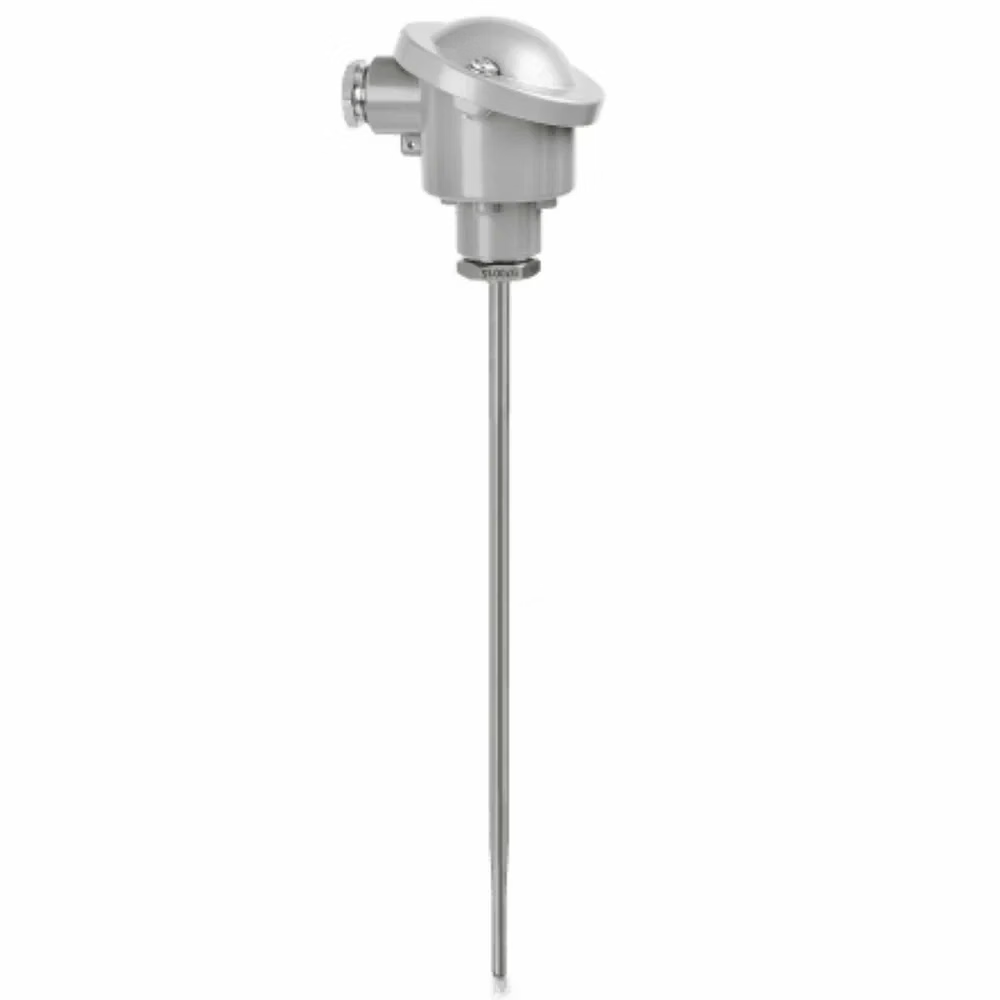
The technical framework of the OPTITEMP TCA-F42 utilizes two dissimilar metallic conductors welded together at the tip to form a measurement junction. The structural reasoning for the sheathed design is to protect the thermoelements from oxidation and "atmospheric poisoning," which occurs when process gasses react with the wire chemistry. Measurement physics rely on the Seebeck Effect; a failure in the conductor's metallurgical purity leads to "calibration drift," where the sensor reports a lower temperature than the actual process value. This failure mode is particularly dangerous in burner control or furnace monitoring, as it can lead to undetected over-temperature conditions and structural damage to the heating equipment. The connection head features an internal cold-junction reference point; if this head is improperly sealed, moisture ingress causes parasitic EMFs at the terminal block, resulting in signal errors of several degrees. Quality consistency is managed through batch calibration against traceable standards, with EMF values verified at the limits of the element's rated range. Failure to maintain junction integrity—due to mechanical shock or vibration—results in an "open-circuit" fault, which can decommission the control loop and trigger an emergency system shutdown.
Functional Performance and Response Dynamics in Process Monitoring
Operational efficiency is achieved through the sensor’s fast thermal response, which allows PID controllers to react to process upsets with minimal lag. Functional performance centers on the junction type selection (Grounded, Ungrounded, or Exposed). In real operational scenarios, an "Exposed Junction" provides the fastest response but is susceptible to chemical attack; conversely, an "Ungrounded Junction" provides high electrical isolation but introduces a significant time constant. A failure to match the junction type to the electrical noise environment of the facility leads to "common-mode noise," which commonly causes erratic temperature readings in PLC inputs. The TCA-F42 utilizes insulated conductors within the sheath to maintain signal integrity over long cable runs. The terminal head includes strain-relief fittings to prevent wire fatigue caused by industrial vibration. Maintenance procedures involve periodic loop-checks; the modular head design allows for the replacement of the internal sensor insert without removing the protective sheath from the pressurized process line—effectively lowering the mean time to repair (MTTR) and eliminating the need for process shutdowns.
Institutional Deployment and Logistical Readiness for Thermal Units
Intended for manufacturing process monitoring, kiln control, and HVAC distribution, the TCA-F42 is configured for the logistical requirements of multimodal multi-site rollouts. Units are packed in protective sleeves with humidity-control desiccant to prevent the oxidation of the thermoelement wires during maritime transport. Failure to implement moisture-controlled packaging can lead to "hygroscopic contamination" of the internal insulation, manifesting as reduced insulation resistance and signal shunting upon site commissioning. For international procurement, supply-readiness is supported through serialized batch test certificates and compliance declarations documenting electrical standards (IEC/ANSI). Export-ready documentation includes unit-level inspection logs and material declarations provided with each consignment. OEM assembly and private-label options are available, allowing system integrators to specify custom probe lengths and head orientations to match their equipment enclosures. This high-authority approach ensures the procurement team receives verified, site-ready sensors that meet the technical performance requirements of global industrial markets, providing the transparency required for institutional asset registration and facility-level commissioning.
Frequently Asked Questions
- What calibration documentation is supplied? Batch certificates with reference EMF values at specific control temperatures are provided for acceptance.
- How does mounting affect response time? Insertion into a thermowell increases the time constant; direct immersion is faster but exposes the probe to more wear.
- Are custom lead lengths available? Yes, the assembly can be customized with specific extension lead lengths and termination types for OEM integration.
- How is moisture exposure minimized? Protective sleeves, desiccants, and sealed connection heads are used to protect the unit during transit.
- What QC records accompany bulk shipments? Each lot includes per-batch calibration certificates, assembly serial lists, and inspection logs.
Description provided by shakti power solutions pvt limited.