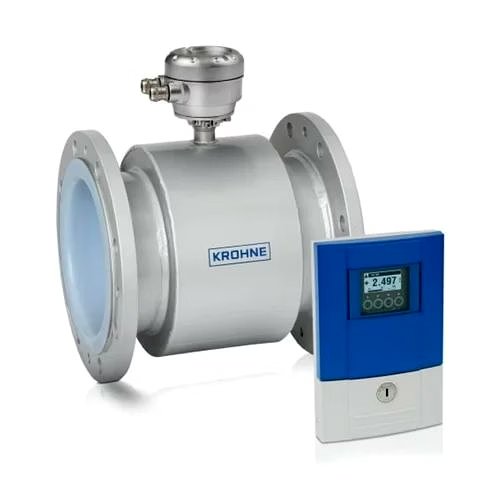
Construction and Traceability Logic of the POWERFLUX 4030 Meter
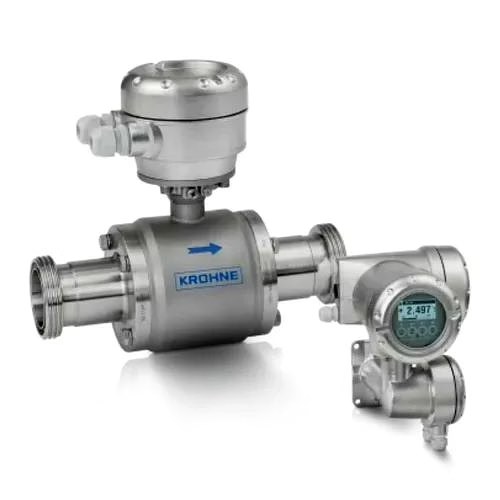
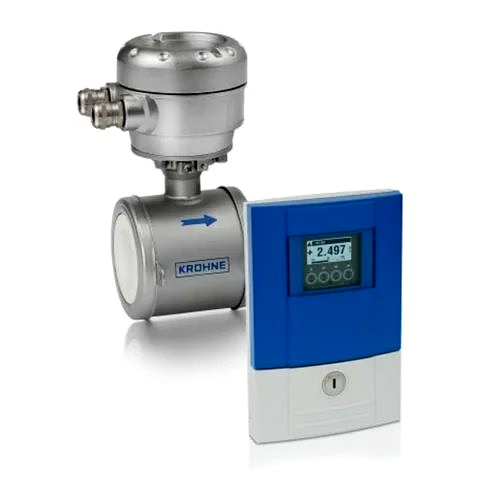
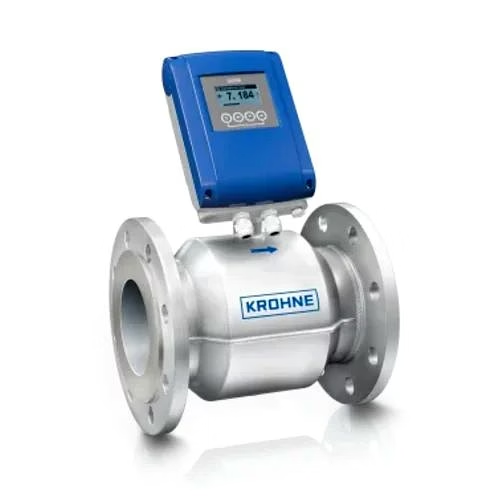
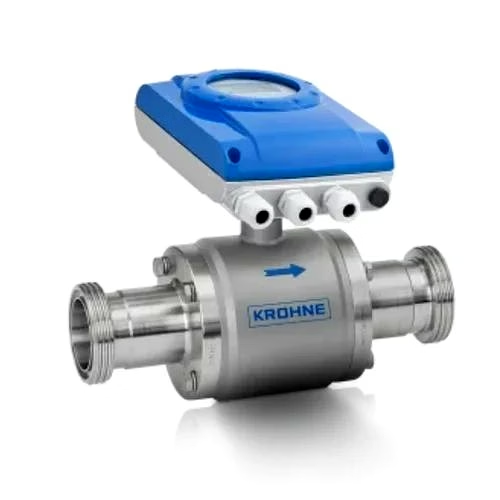
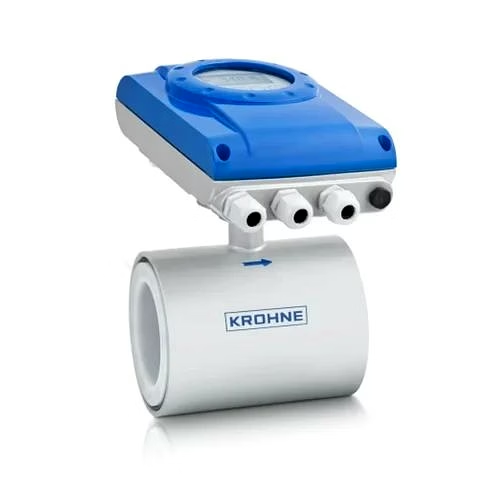
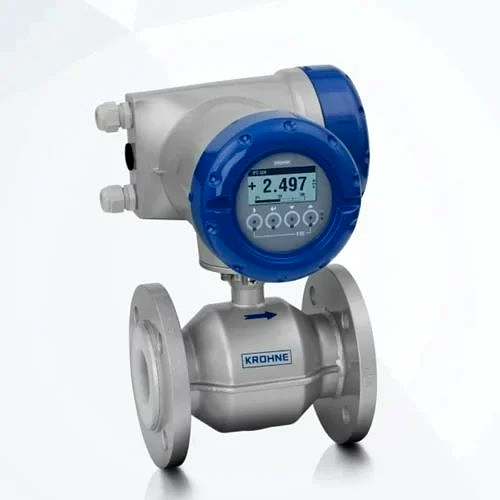
The technical framework of the POWERFLUX 4030 - Electromagnetic flowmeter utilize a flange-mounted metallic flow body containing a high-integrity dielectric liner and paired electrode sensors. The structural reasoning for the liner selection is to create a controlled capacitive interface necessary for electromagnetic sensing; a failure in the liner’s dielectric properties—due to chemical absorption—results in "signal leakage," manifesting as erratic zero-drift and measurement inaccuracy. Measurement physics rely on the sampling of the induced potential across the wetting surface as water moves through the magnetic field. A failure in the magnetic coil excitation—due to internal moisture ingress—leads to field instability, decommissioning the meter and causing erroneous totalizers in the facility’s water budget. Quality consistency is managed through serialized units linked to lot-level inspection reports documenting bore concentricity and magnetic-field uniformity. This structural reasoning ensures that every meter in the lot meets the accuracy requirements of regulated utility environments. The internal PCBA utilize high-grade components to minimize thermal drift in unconditioned plant rooms.
Functional Performance and operational stability in Utility Metering
Operational efficiency is achieved through the unit’s high-sampling-rate digital signal processing, which compensates for fluctuations in water conductivity and temperature. functional performance centers on the unit’s ability to provide steady volumetric data in environments with high electrical noise; the input filtering and excitation control isolate the measurement signal from the noise generated by nearby variable frequency drives (VFDs). In real operational scenarios, a failure to manage the "grounding path"—especially in non-metallic pipe headers—leads to signal shunting and erroneous current outputs. The POWERFLUX 4030 utilizes high-speed metering algorithms to track flow changes within milliseconds, supporting the tight control required for chemical dosing or blending operations. If the transmitter detects an electrode fouling event—due to scale or grease buildup—it triggers a maintenance alarm before the measurement drift impacts process quality. The modular electronics design effectively lowers the mean time to repair (MTTR) by allowing for field exchange without removing the flow body from the line, effectively improving the overall availability of the facility distribution network.
Institutional Deployment and Logistical Readiness for multi-site rollouts
Designed for municipal water metering, industrial utilities, and OEM skid systems, the POWERFLUX 4030 is configured for the logistical requirements of project-scale procurement. Units ship in reinforced crates with internal bracing and vapor-barrier liners to protect the sensitive sensor alignment and internal finishes during transit. Failure to implement shock-mitigating packaging can lead to microscopic fractures in the liner-to-flange interface, resulting in external leakage upon site commissioning. For international procurement, supply-readiness is supported through serialized calibration certificates and compliance declarations (CE/IEC). Export-ready documentation include unit configuration snapshots and installation checklists provided with each shipment to facilitate institutional asset registration and customs review. Packaging utilize desiccant packs to prevent finish degradation and terminal oxidation during long-haul logistics. OEM customization and private-label arrangements are supported, allowing for branding and pre-set firmware parameters to match the system builder’s specifications. This high-authority approach ensure procurement teams receive verified hardware that meet the performance and safety requirements of global manufacturing markets, providing the transparency required for institutional instrumentation rollouts.
Frequently Asked Questions
- What installation conditions affect the accuracy? Proper grounding and maintaining specified upstream/downstream straight runs are essential to minimize disturbances and ensure linear accuracy.
- What is the recommended verification cadence? Verification intervals depend on service conditions; typical facility QA schedules recommend annual verification against flow standards.
- How is moisture handled in electrical compartments? Enclosures utilize gasket seals and hydrophobic membrane vents to limit condensation risk and prevent moisture ingress.
- What packaging protects the meter during shipping? Reinforced crates with internal bracing, shock-absorbing mounts, and vapor-barrier liners are used for consolidated shipments.
- Which documents accompany procurement orders? Every unit ships with a factory calibration certificate, lot inspection reports, and electrical safety declarations.
Description provided by Shakti Power Solutions Pvt Limited.
Standard water and wastewater monitoring
Polypropylene (PP) and Hard Rubber
DN25 to DN1200 (1 to 48 inches)
Compact version IP69, Remote version IP68 / NEMA 6P
4-20 mA, Pulse, Frequency, Status, HART®
Full bore with no moving parts; wear resistant
On-site without process interruption via OPTICHECK
Specifications
Model Name/Number
OPTIFLUX 2100
Measurement Principle
Electromagnetic
Suitable Media
Any Liquid (Water and Wastewater)
Maximum Process Pressure
40 barg / 580 psig
Process Temperature Range
-5°C to +90°C
Liner Material
Polypropylene (PP), Hard Rubber
Flange Standards
PN40 / ASME Cl 300
Flange Size Range
DN25 to DN1200 (1 to 48 inches)
Protection Rating
IP68 (Remote), IP69 (Compact), NEMA 6P
Communication Interfaces
4-20 mA, Pulse, Frequency, Status, HART®
Minimum Order Quantity (MOQ)
1