Hygienic Construction and Sensing Logic of the 6500 Capacitance Switch
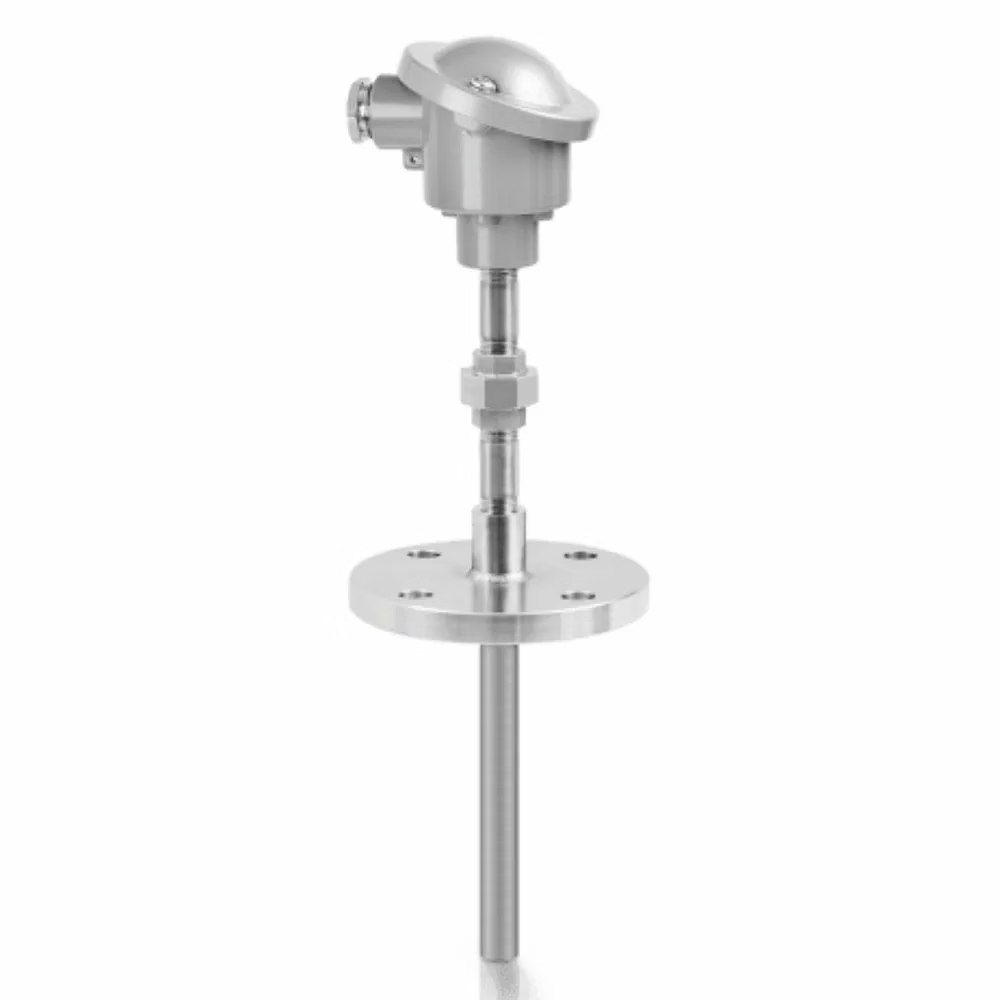
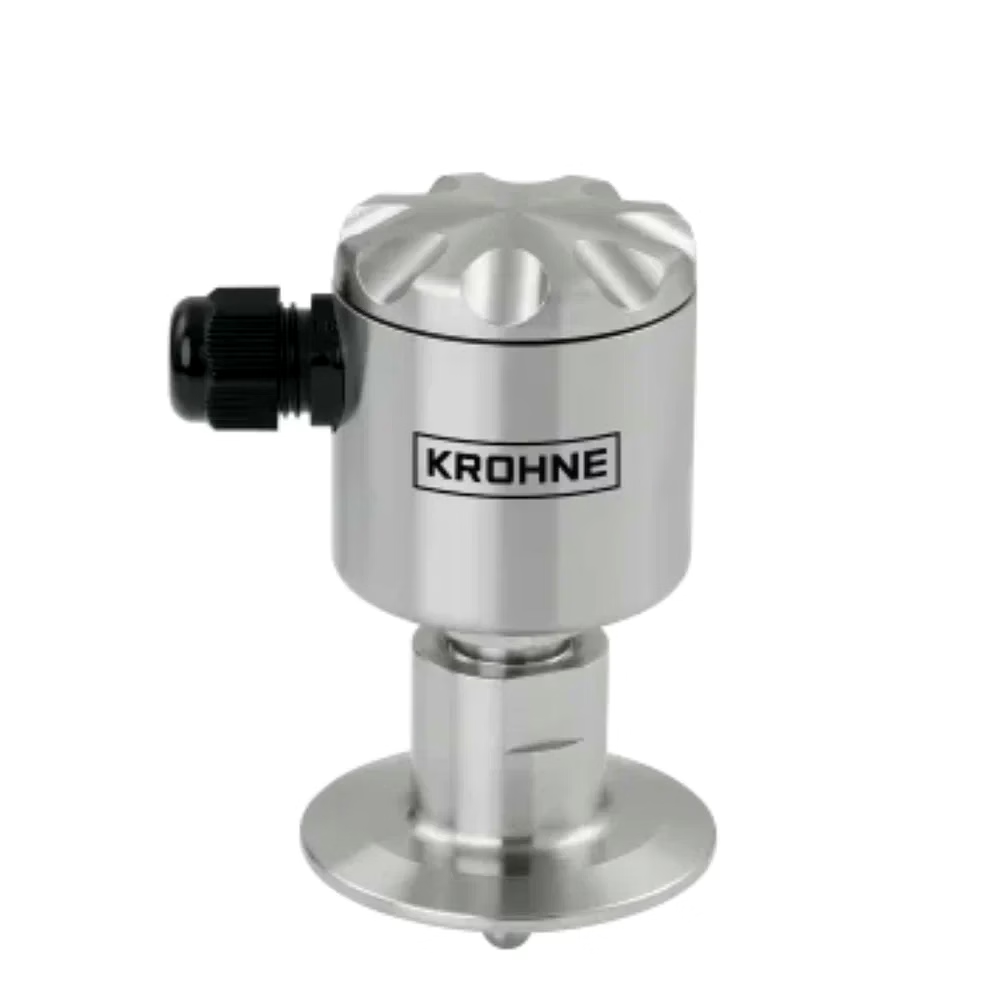
The technical framework of the 6500 Capacitance level switch utilizes a high-frequency oscillator that measures the change in electrical capacitance between the sensing electrode and the vessel wall. The structural reasoning for the polished wetted surfaces (typically Ra < 0.8 µm) is to eliminate microscopic crevices where bio-growth or product cross-contamination can occur—a failure mode that results in batch rejection and catastrophic financial loss in pharmaceutical lines. Measurement physics rely on the dielectric shift when process material covers the probe; a failure in the sensitivity tuning—due to drifting electronics—leads to "ghost triggers" from tank wall condensation or foam layers. This leads to erroneous batch completions and production downtime. The switch utilizes a "guard electrode" architecture that ignores buildup on the probe surface, ensuring that only a full immersion triggers an alarm. Quality consistency is managed through serialized surface-finish reports and functional verification logs, providing the documentation required for FDA or EMA compliance audits. If the gasket material is incorrectly selected for the CIP chemicals (e.g., using standard EPDM in a nitric acid wash), the seal will fail, allowing process fluid to enter the electronics housing and decommissioning the sensor.
Functional Performance and Operational Efficiency in Sanitary Tanks
Operational efficiency is achieved through the switch’s near-instantaneous response time, which is critical for high-speed filling and overfill protection loops. Functional performance centers on the unit’s ability to maintain its calibration during extreme thermal shocks typical of SIP cycles (up to 140°C). In a real operational scenario, a failure to manage thermal expansion results in "mechanical stress cracking" at the probe base, leading to localized leaks and microbial harborage. The 6500 utilizes high-performance PEEK or PTFE insulators that maintain their dielectric properties and mechanical seal at high temperatures. The sealed housing includes hydrophobic vents that prevent internal condensation—a failure mode that commonly destroys solid-state electronics in humid bottling halls. If the sensor detects a loss of signal or an internal logic fault, it can be configured to "fail-safe" to the alarm position, preventing unmonitored tank overflows. The adjustable sensitivity allows B2B facility managers to use the same sensor model for both high-permittivity aqueous liquids and low-permittivity oils, effectively reducing the facility's spares inventory and simplifying the technical specs for procurement teams.
Institutional Deployment and Logistical Readiness for Sanitary Units
Recommended for hygienic processing lines and pharmaceutical batch tanks, the 6500 Capacitance switch is configured for the logistical requirements of project-scale procurement. Units are packed in sealed trays with protective caps over the tri-clamp surfaces to prevent "scratching" or mechanical deformation of the sealing face during multimodal transit. Failure to use surface-protected packaging results in Ra value degradation, which can compromise the hygienic validation of the entire process vessel. For international procurement, supply-readiness is supported through traceable inspection reports and compliance declarations (FDA/3-A). Export-ready documentation includes unit-level surface-finish certificates and functional test logs provided with each shipment to facilitate regulatory review and institutional asset registration. Packaging utilizes corrosion-inhibiting liners to prevent atmospheric damage during sea freight. OEM integration options include custom labeling and pre-configured output settings for system builders delivering branded hygienic skids. This high-authority approach ensures the procurement team receives verified, deployment-ready hardware that meet the rigorous performance and safety standards of global food and pharmaceutical markets.
Frequently Asked Questions
- What surface finishes are provided for hygienic use? Electropolished and mechanically polished finishes (Ra < 0.4 µm or 0.8 µm) are available per order.
- How does the switch handle foam? Adjustable sensitivity and signal filtering help the switch distinguish between dense liquid and transient foam layers.
- What packaging protects the tri-clamp? Units ship in sealed trays with custom-fitted caps to preserve the Ra finish on wetted parts.
- Are seals durable under SIP cycles? High-grade PEEK and PTFE insulators are rated for repeated exposure to standard sterilization temperatures.
- Which compliance documents are provided? Shipments include surface-finish reports, material trace certificates, and functional test certificates.
Description provided by Shakti Power Solutions Pvt Limited.
Advanced hygienic environments including food, beverage, pharmaceutical, and water treatment
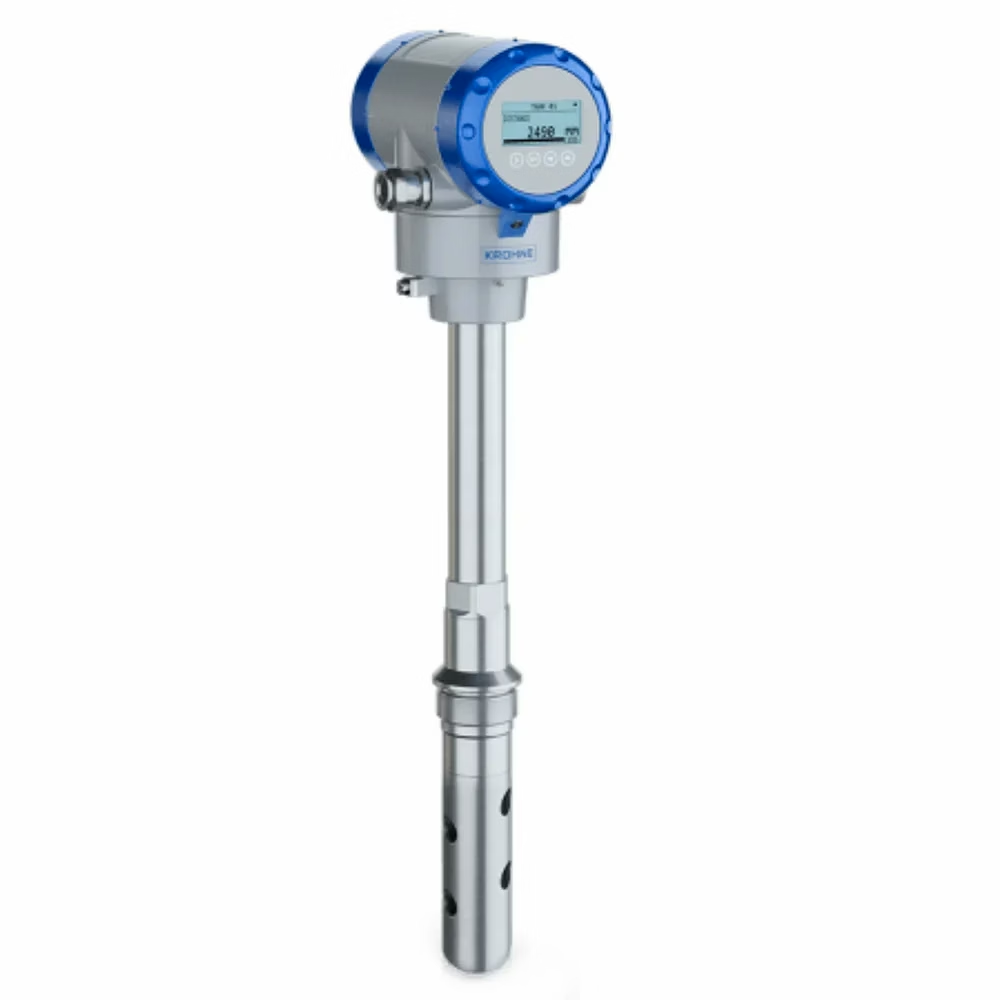
Point Level Detection using capacitance technology
Hygienic-grade stainless steel
Capacitance level detection optimized for hygienic use
Compact design suitable for confined and sanitary spaces
Flush, smooth surfaces designed for easy cleaning and minimal contamination
Standard industrial signals for easy process control integration
Compatible with elevated temperatures typical for hygienic processing
Corrosion-resistant components suitable for aggressive cleaning agents
Complies with industry hygiene and safety standards
Specifications
Product Type
Capacitance level switch
Suitable Media
Liquids in hygienic processes
Measuring Principle
Capacitance
Measurement Range
Point level detection (specific range varies by configuration)
Process Connection
Designed for hygienic fittings (Tri-clamp, etc.)
Output Signal
Standardized industrial output (e.g., relay or switch output)
Material
Stainless steel 316L or equivalent hygienic-grade
Ingress Protection
IP67 or higher
Power Supply
Typically 24 V DC
Approvals
Hygienic certifications, industry safety approvals
Operating Temperature
Up to 150°C depending on the configuration
Cable Material
Sanitary-grade cable with chemical resistance


 FIEO Registered
Export Ready
FIEO Registered
Export Ready