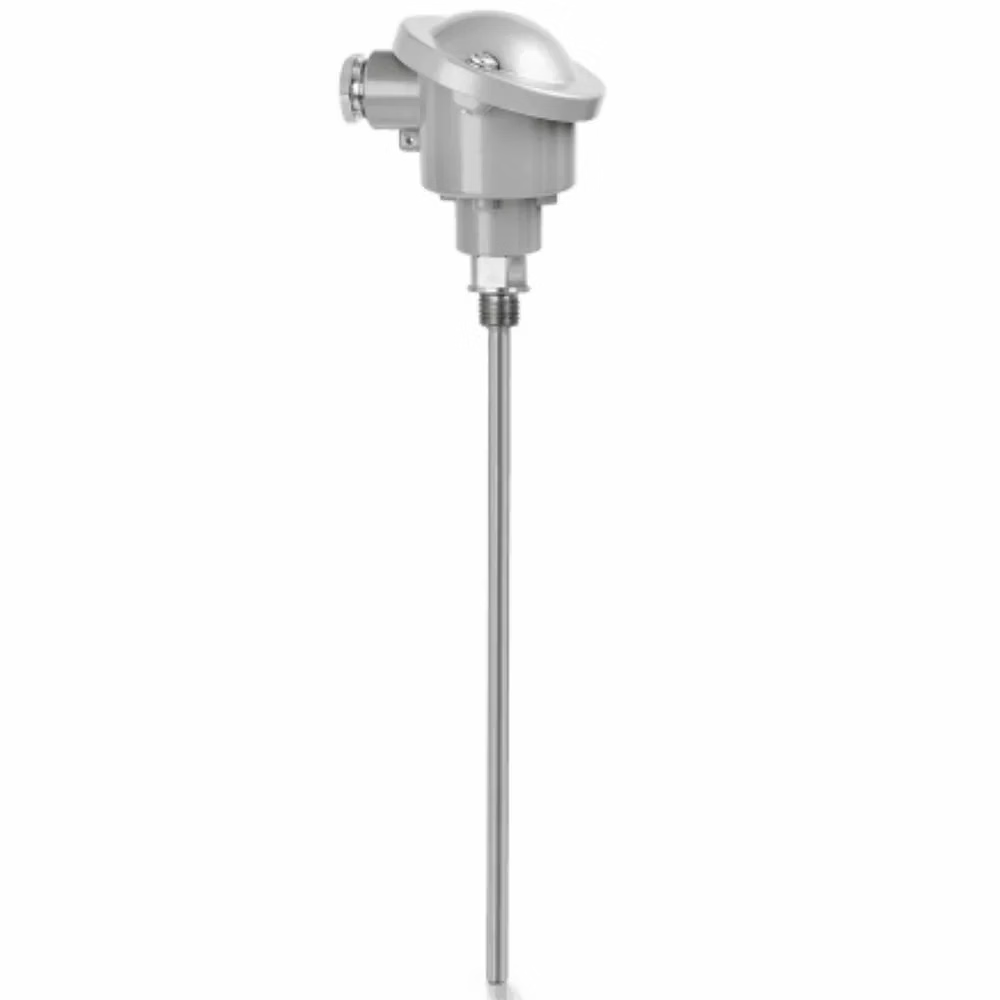
Technical Composition and Low-Temperature Sensing Logic of the TCA-S11
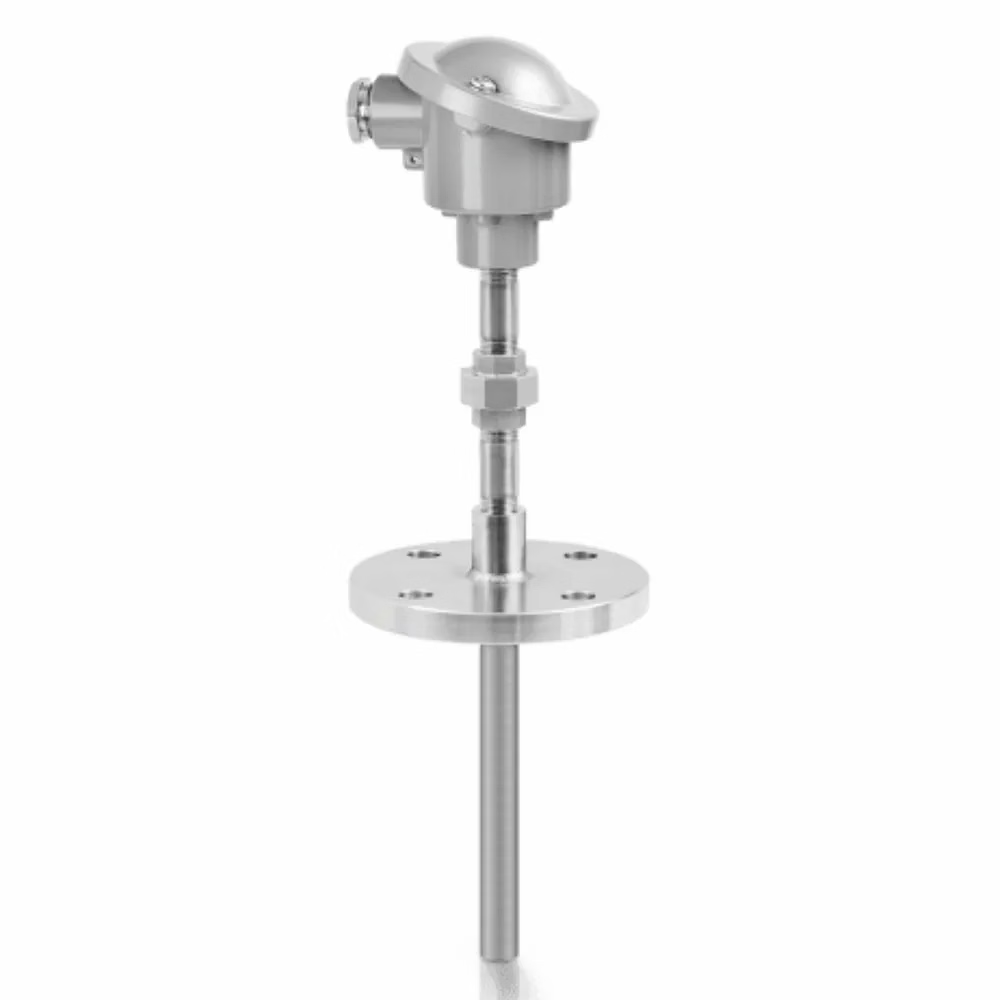
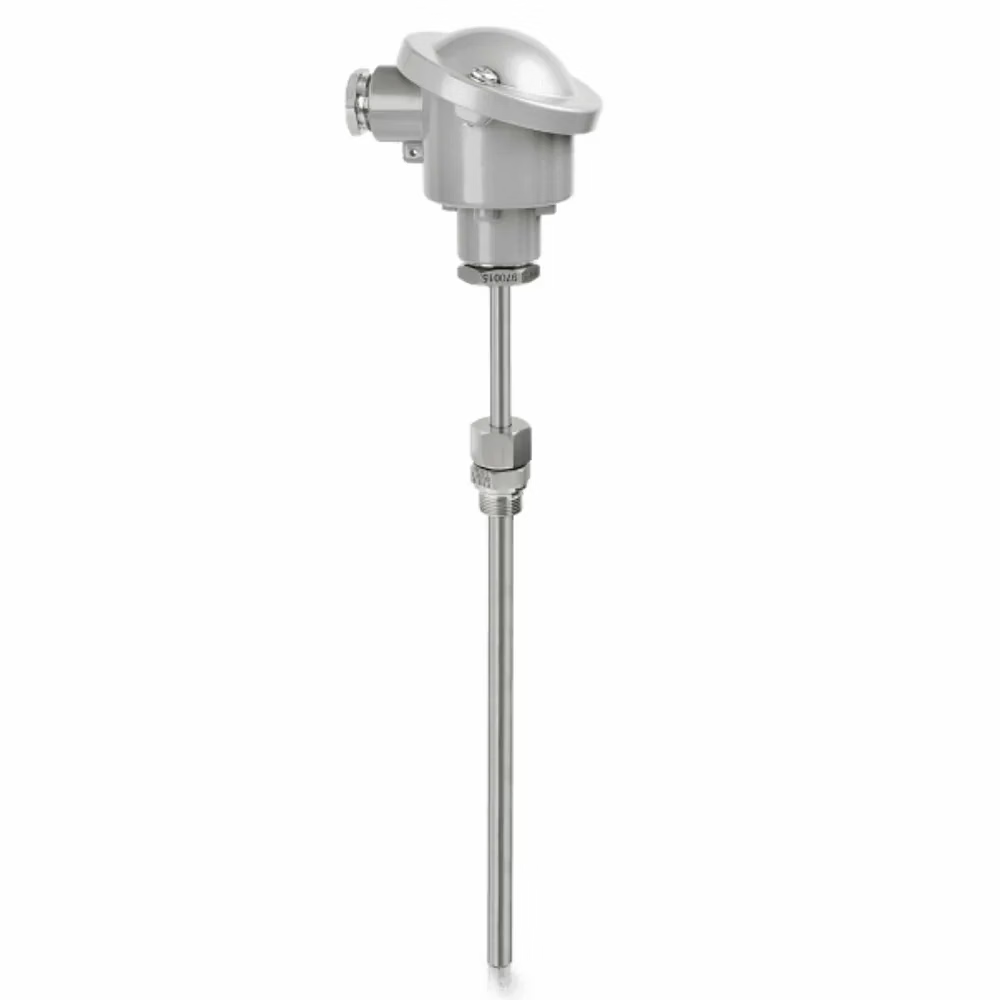
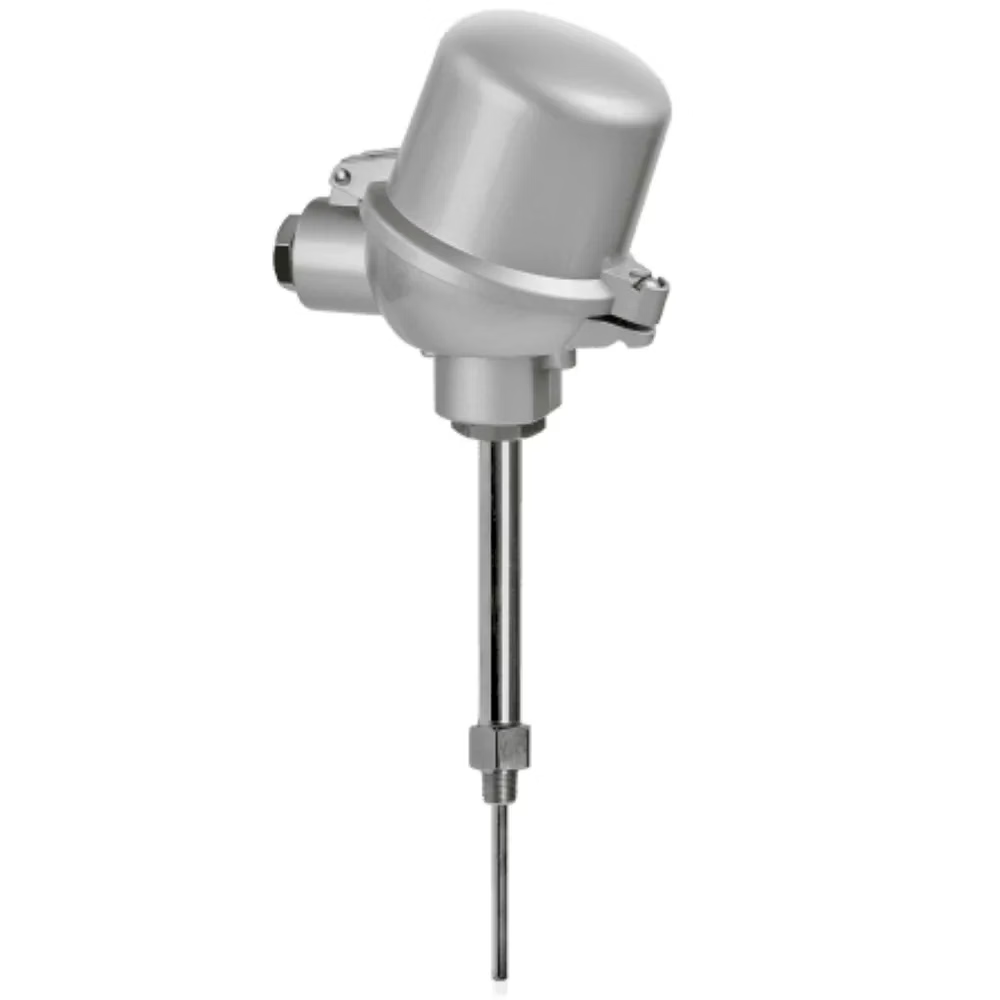
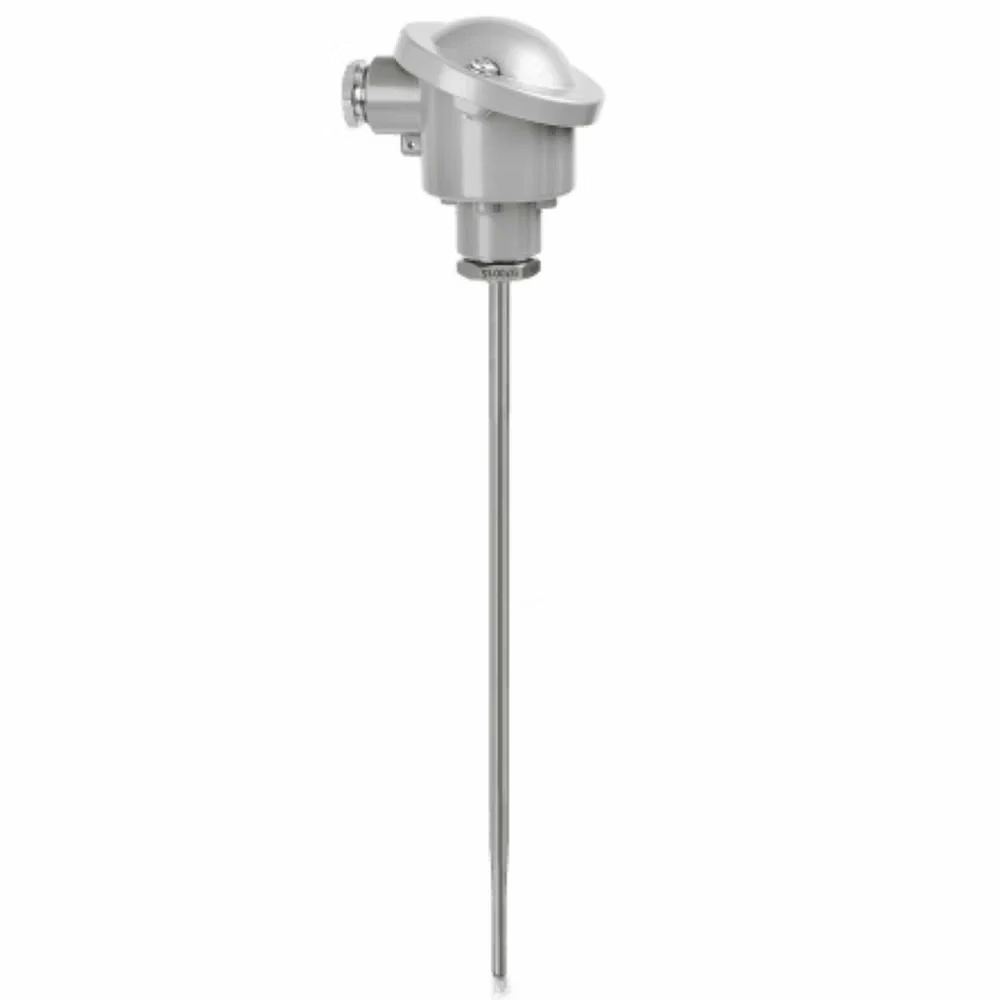
The technical framework of the TCA-S11 Thermocouple assembly utilizes a matched pair of thermocouple wires (Type T or J) encased in a thin-walled metallic sheath with high-purity insulation. The structural reasoning for the thin-wall design is to achieve an extremely short "thermal time constant," allowing the sensor to track rapid temperature fluctuations in refrigeration cycles. Failure to maintain low thermal mass in these applications leads to "control hunting," where the cooling system overshoots its setpoint because the sensor cannot react quickly enough to the cooling pulse. Measurement physics rely on the differential EMF generated across the two junctions; at low temperatures, Type T (Copper-Constantan) is particularly effective due to its high sensitivity and resistance to moisture-induced corrosion. If the internal insulation—typically MgO or specialized polymers—absorbs moisture, it results in "parasitic junctions," which create signal noise and offset the reading by several degrees—a failure mode that can decommission a sensitive pharmaceutical storage chamber. Quality consistency is managed through lot-based factory zero-offset checks, ensuring the sensors provide repeatable data for institutional QC documentation.
Functional Performance and Stability in Cryogenic and Cold-Chain Monitoring
Operational efficiency is achieved through the use of an integral cold-junction extension, which moves the reference point away from the localized thermal gradients of the measurement site. This is a critical operational standard for facilities where sensors are mounted in wall penetrations; failure to move the reference point leads to significant measurement drift as the ambient temperature outside the chamber fluctuates. Functional performance centers on the unit’s dielectric strength; the assembly is tested to ensure that the sheathed element remains isolated from the process ground, preventing ground loops that commonly corrupt data in networked monitoring systems. In a real operational scenario, a failure in the cable overwrap—due to cryogenic embrittlement—results in exposed conductors and signal shorting. The TCA-S11 utilizes fiberglass or specialized polymer overwraps designed to remain flexible at sub-zero temperatures. The unit supports continuous operation when installed per manufacturer wiring practices, and the field-replaceable terminations enable rapid maintenance without full probe replacement, effectively lowering the mean time to repair (MTTR) for the B2B operator.
Institutional Deployment and Logistical Readiness for Regulated Lines
Designed for process monitoring in manufacturing lines and OEM integration into analytical instruments, the TCA-S11 is configured for the logistical requirements of large-volume procurement. Units are packed in sealed film trays or metalized vapor-barrier pouches to prevent the hydration of the internal insulation during multimodal transport. Failure to use vapor-barrier packaging results in reduced insulation resistance during maritime freight, which can impair measurement accuracy upon site commissioning. For international projects, supply-readiness is supported by lot-level functional inspection records and electrical test logs that facilitate customs review and institutional asset registration. Export-ready documentation includes technical specifications and cold-junction reference data provided with each shipment. OEM labeling and private-label collaborations are supported, allowing system builders to specify custom connector types or branded documentation to match their facility standards. This systematic approach ensures procurement teams receive verified, site-ready sensors that meet the safety and performance standards of global markets, providing the technical transparency required for large-scale cold-chain asset management.
Frequently Asked Questions
- What thermocouple element variants are available? Type T and Type J alloy options are standard; Type T is recommended for highest sub-zero accuracy.
- What measures prevent moisture migration? Sealed terminations, heat-shrink overwraps, and metalized vapor-barrier pouches protect insulation properties.
- How robust is the packaging for transit? Probes are secured in film trays inside corrugated cartons with secondary moisture barriers for transport.
- What documentation accompanies orders? Each lot includes technical specs, quality inspection reports, and a calibration test log.
- What is the recommended storage life? Stored dry in sealed pouches, the assemblies maintain functional integrity for up to 5 years.
Description provided by shakti power solutions pvt limited.