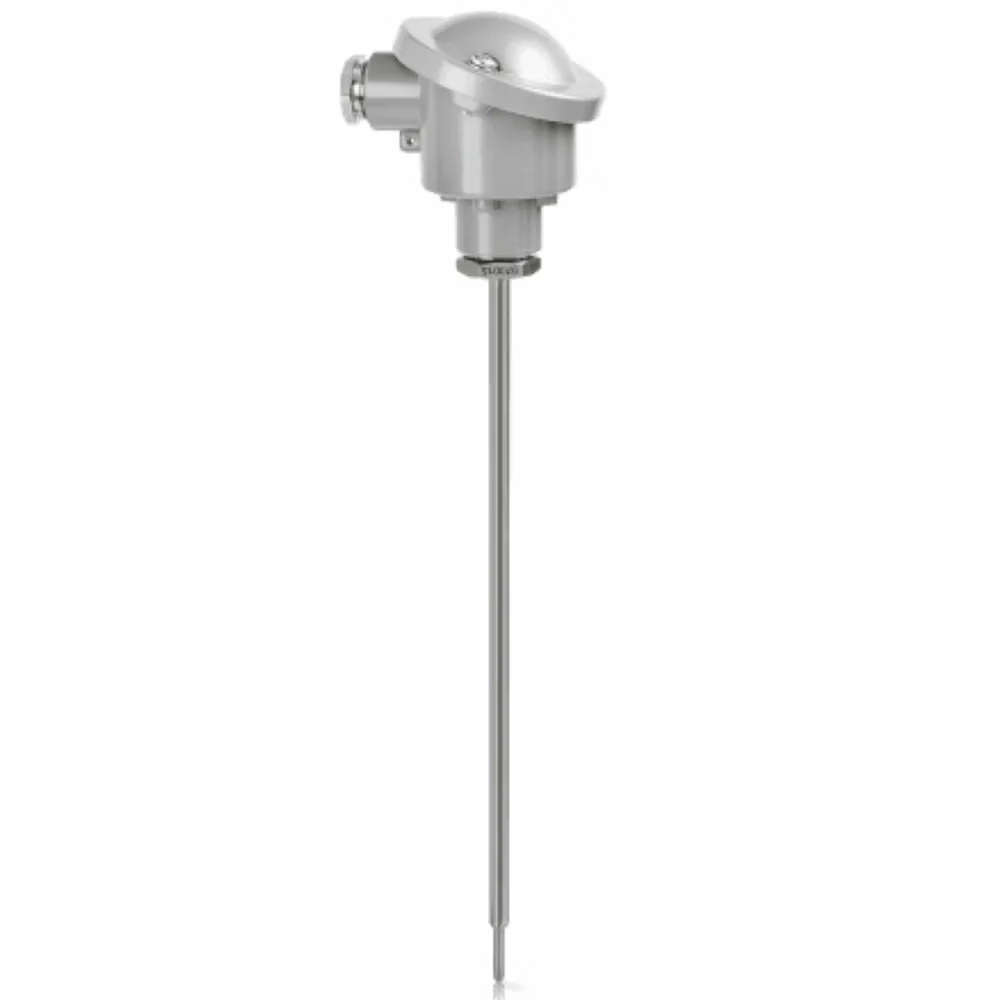
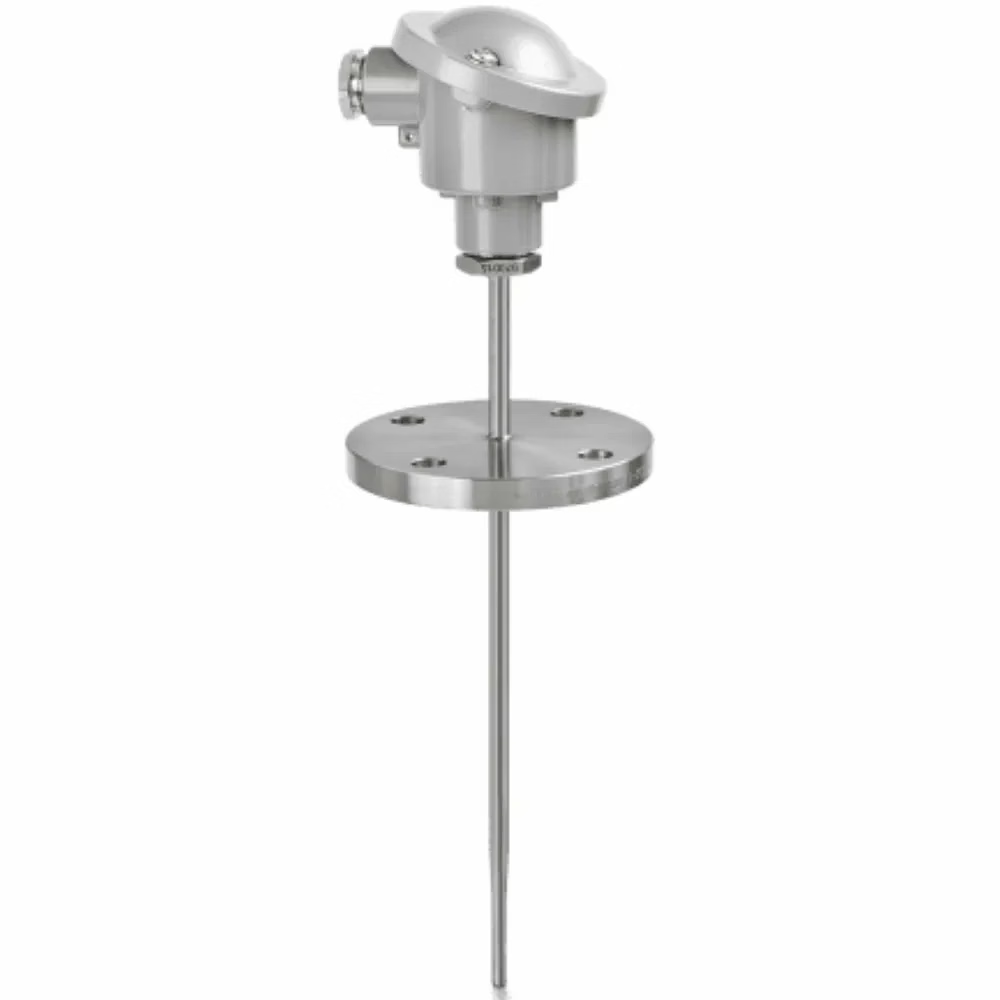
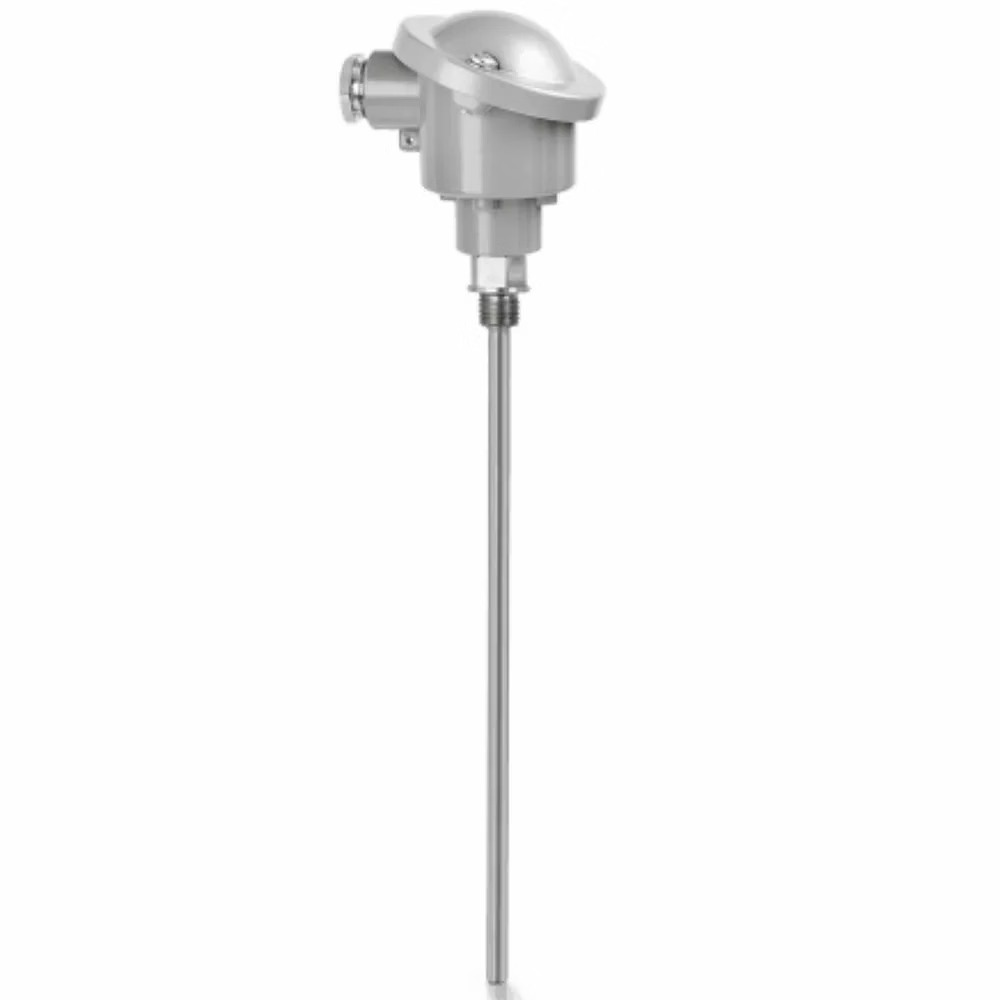
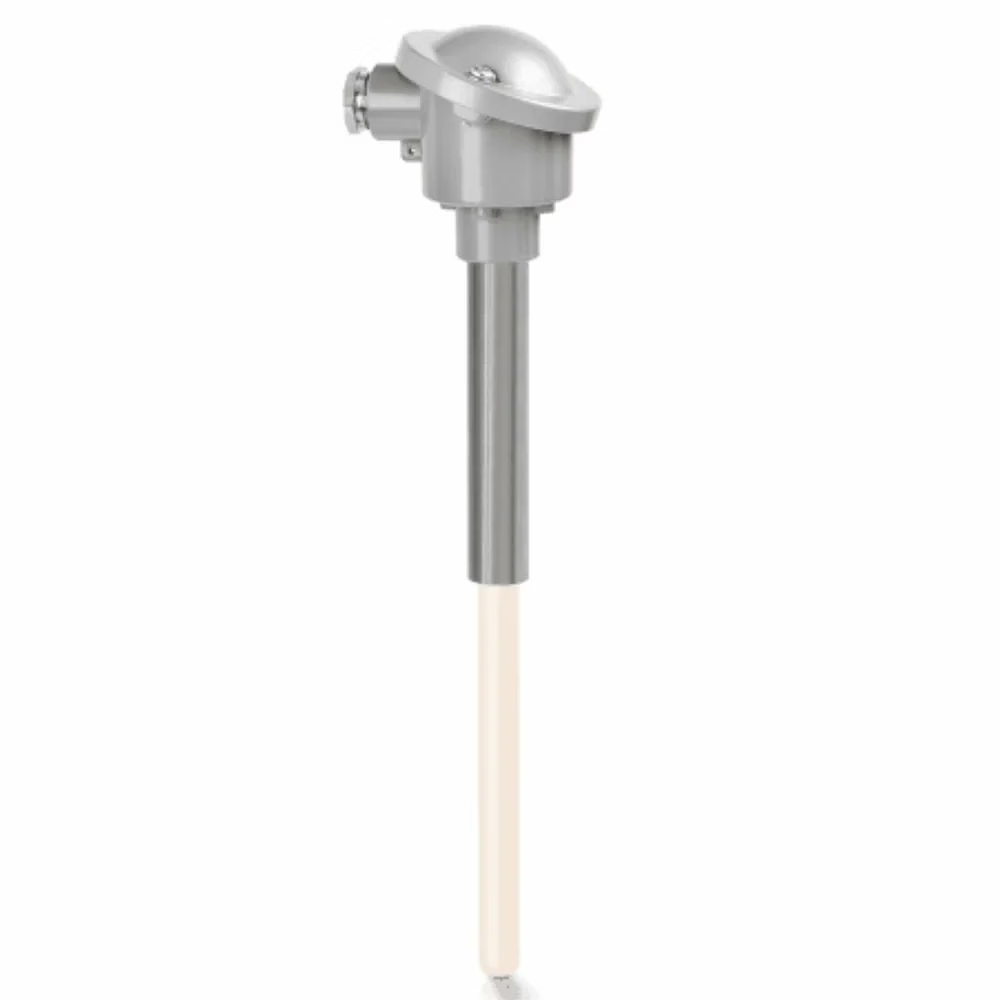
Sensor Architecture and Material Rationale of the OPTITEMP TRA-S50
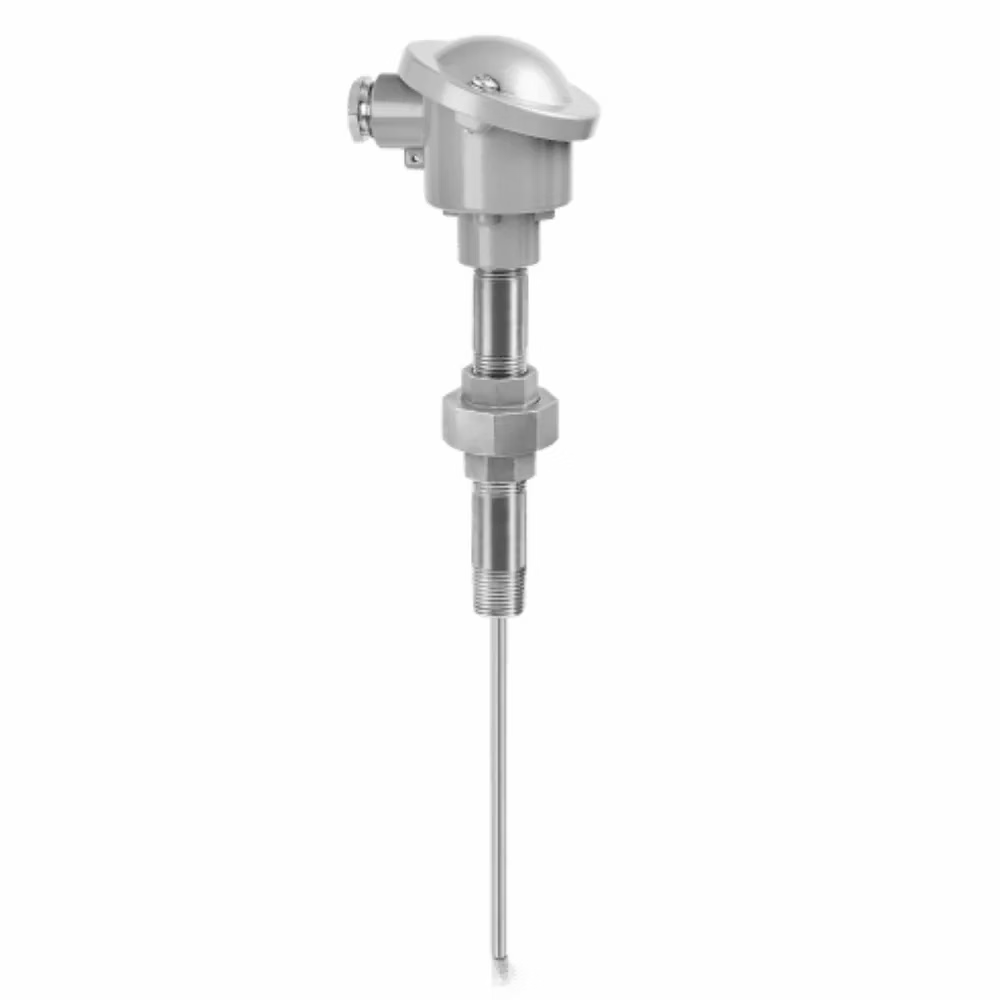
The technical framework of the OPTITEMP TRA-S50 utilizes a high-purity platinum resistance element encapsulated in a mineral-insulated or ceramic-based probe core. The structural reasoning for this encapsulation is to provide mechanical support for the fragile platinum wire while maintaining high thermal conductivity. Measurement physics rely on the linear increase in resistance as temperature rises; a failure in the element's insulation resistance (typically due to moisture ingress) leads to "shunting" and erroneous low-temperature readings. This failure mode can cause a PID controller to over-apply heat, leading to process vessel overheating and potential safety valve releases. The connection head is constructed from die-cast aluminum or stainless steel with an IP65/IP66 rating to isolate the terminations from humid plant environments. Internal lead wires are routed through specialized potting compounds that act as a moisture barrier. Quality consistency is managed through lot-level electrical testing where the element's resistance is verified at reference points. If the probe sheath material is incorrectly selected for the media (e.g., using standard stainless steel in a high-chloride brine), localized pitting corrosion will breach the sheath, poisoning the sensing element and decommissioning the sensor within weeks.
Functional Performance and Loop Integration in Process Control
Operational efficiency is enhanced through the use of 3-wire or 4-wire lead compensation, which effectively eliminates the measurement error caused by the resistance of the connecting cables. This is an essential operational standard for facilities where sensors are located hundreds of meters from the control room. Functional performance is characterized by the assembly's "time constant"—the speed at which the sensor reacts to a step change in temperature. In real operational scenarios, a slow response time can lead to "control oscillation," where the heater cycles on and off too slowly, resulting in process instability and reduced product quality. The TRA-S50 utilizes a thin-walled sheath to minimize thermal mass while maintaining structural integrity under process pressure. The sealed connection head includes a removable terminal block to facilitate rapid field replacement without disturbing the conduit wiring, effectively lowering the mean time to repair (MTTR). By providing a stable, low-drift signal, the RTD assembly ensures the accuracy of energy accounting and process validation, which is vital for regulated industries such as pharmaceuticals and food processing.
Institutional Deployment and Logistical Readiness for Instrumentation
Intended for process control panels, HVAC systems, and industrial machinery, the OPTITEMP TRA-S50 is configured for the logistical requirements of large-scale rollouts. Units are packaged with protective tubing and humidity-control materials to prevent the oxidation of the platinum elements during storage. Multimodal transit protection includes nested cartons with anti-vibration inserts to protect the internal ceramic insulators from mechanical shock. For international procurement, supply-readiness is supported by batch calibration certificates and assembly serial lists that facilitate institutional asset registration. Export-ready documentation includes technical specifications and compliance declarations provided with each consignment. Failure to implement moisture-controlled packaging can lead to a drop in insulation resistance during maritime freight, manifesting as erratic signal drift upon site startup. OEM assembly and private-label options are available, allowing system builders to specify custom probe lengths and termination styles to match their equipment build lists. This systematic approach ensures procurement teams receive verified, site-ready sensors that meet the technical performance and safety requirements of global manufacturing markets.
Frequently Asked Questions
- What calibration data is provided? Each batch includes a certificate listing resistance values at reference temperatures linked to assembly serial numbers.
- How does sheath material affect response time? Materials with higher thermal conductivity reduce response lag; selection must balance this with chemical resistance.
- Are custom lengths and connectors available? Yes, probe lengths, lead terminations, and conduit entries can be tailored for specific OEM equipment needs.
- Which termination configuration is best? 4-wire configurations provide the highest accuracy by completely compensating for all lead-wire resistance.
- What is the recommended storage life? Stored in dry conditions in original packaging, the sensors maintain stability for 24 months.
Description provided by Shakti Power Solutions Pvt Limited.
-40 to 600°C (-40 to 1100°F)
Stainless Steel (1.4404 / 316L or 1.4571 / 316Ti)
Replaceable spring-loaded mineral isolated measuring insert (OPTITEMP TC 100)
Multipart welded with tapered tip
Ceramic terminal block, Flying wires, Temperature transmitter
Liquids, gases, steam, and solids
Chemically resistant PTFE or similar coating for wetted parts
ATEX and IECEx approvals (intrinsically safe options available)
Standard or customized lengths available
Specifications
Product Type
Resistance Temperature Detector (RTD) Assembly
Operating Temperature
-40°C to 600°C
Material Construction
Stainless Steel 1.4404 / 316L or 1.4571 / 316Ti
Thermowell Design
Multipart welded, tapered tip based on form 3F per NAMUR
Measuring Insert Type
Spring loaded mineral isolated insert (OPTITEMP TC 100)
Sensor Connection Type
Ceramic terminal block, flying wires, or temperature transmitter
Applicable Media
Liquids, gases, steam, solids
Protection Class
IP54 to IP68 connection heads
Coating Options
PTFE or equivalent chemical resistant coating for wetted parts
Safety Certification
ATEX and IECEx intrinsic safety approvals
Installation
For use in existing thermowells or machinery
Availability
In Stock at Shakti Power Solutions Pvt Limited


 FIEO Registered
Export Ready
FIEO Registered
Export Ready