Sensing Architecture and Diaphragm-Seal Logic of the DP 7060
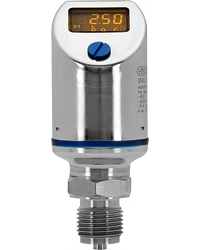
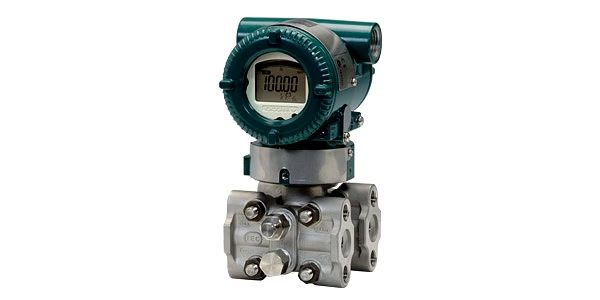
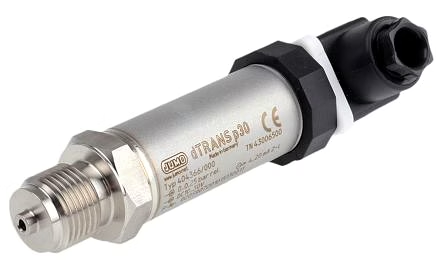
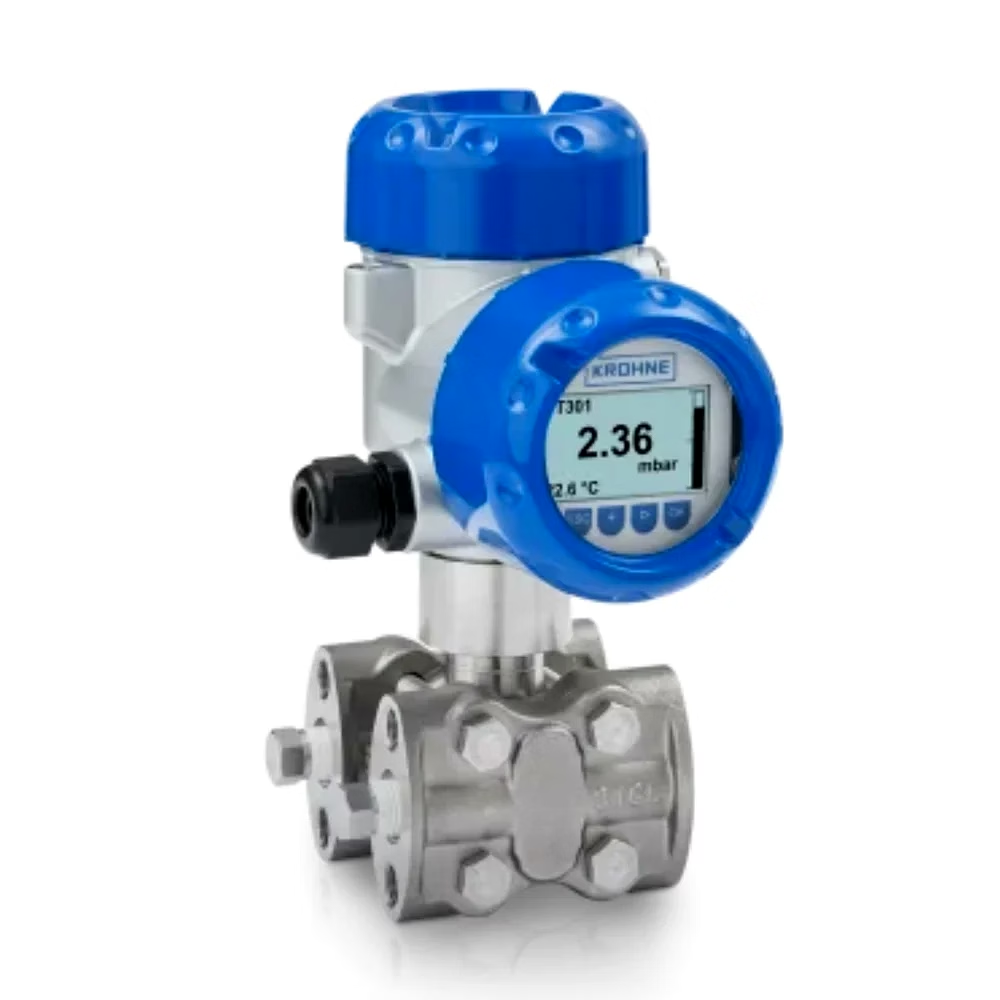
The technical framework of the DP 7060 Differential Pressure Transmitter utilizes a remote-sealed diaphragm architecture where a flexible metallic or polymer diaphragm is coupled to the transducer via a capillary system filled with a high-purity fill fluid (e.g., silicone oil). The structural reasoning for this design is to protect the sensitive silicon-based sensing element from "process poisoning"—a failure mode where viscous fluids solidify or corrosive chemicals etch the transducer, leading to permanent signal loss. Measurement physics rely on the displacement of the fill fluid as pressure is applied to the remote seal; a failure in the capillary seal—due to thermal expansion or mechanical stress—results in "oil leakage," manifesting as erratic zero-drift and a total loss of span accuracy. This leads to inaccurate tank level readings and potential overflow events. The transmitter utilizes "matched sensing modules" where both the high and low-pressure sides are electronically balanced to cancel out common-mode errors caused by static pressure shifts. Quality consistency is managed through serialized inspection reports that record the unit's linearity and hysteresis profile under full-range pressure cycles, ensuring the instrument meets the accuracy requirements of regulated process environments.
Functional Performance and Diagnostic Dynamics in Process Control
Operational efficiency is achieved through the unit’s integrated signal conditioning, which provides a linearized 4–20 mA output with optional HART diagnostics. Functional performance centers on the transmitter’s ability to maintain stable readings in variable-temperature environments; built-in routines compensate for the density changes in the fill fluid, preventing the "thermal drift" that commonly affects standard pressure sensors. In real operational scenarios, a failure to implement temperature compensation results in inaccurate density estimations, potentially causing procurement errors in custody-transfer applications. The DP 7060 features a modular electronics housing with sealed compartments to prevent atmospheric moisture from reaching the ADCs. If the electronics become compromised, the on-board diagnostics trigger a "hardware fail" alarm via the control loop, allowing for event-driven maintenance. The mounting flexibility of the remote-seal design allows B2B facility managers to locate the transmitter in accessible areas while the seals are mounted on tall vessels, effectively lowering the mean time to repair (MTTR) by eliminating the requirement for scaffolding during routine calibration checks.
Institutional Deployment and Logistical Readiness for Instrumentation
Designed for industrial flow and level measurement, the DP 7060 is configured for the logistical requirements of multimodal multi-site procurement. Units are packed in rugged instrument cases with foam-molded inserts and moisture-barrier film to protect the delicate diaphragms and electronics from environmental degradation during maritime transport. Failure to use shock-protected packaging results in "diaphragm denting," which irreversibly alters the sensor's spring constant and decommissions the unit before installation. For international procurement, supply-readiness is supported by lot-specific test certificates and compliance declarations (CE/IEC). Export-ready documentation includes technical specifications, zero/span configuration snapshots, and recommended impulse-line diagrams provided with each consignment. Packaging utilizes desiccant packs to prevent the oxidation of the electrical terminals during long-haul transit. OEM configuration options address unique process connection styles and branding requirements, allowing system integrators to deliver branded measurement suites. This high-authority approach ensures procurement teams receive verified, site-ready instruments that meet the safety and performance standards of global manufacturing markets, providing the technical transparency required for large-scale instrumentation upgrades and plant-wide standardization.
Frequently Asked Questions
- What process connections are available? Standard flange, threaded, and manifold-compatible options are provided per project specification.
- How is long-term stability managed? Matched sensing modules and built-in temperature compensation minimize drift over the sensor's lifecycle.
- What packaging protects the unit in transit? Rugged instrument cases with foam inserts and moisture barriers are used to safeguard diaphragms.
- Is moisture migration a concern? Sealed electronics compartments and IP-rated housings prevent moisture ingress into the transducer cavity.
- What documentation accompanies shipments? Each unit ships with technical specs, quality inspection reports, and factory calibration certificates.
Description provided by shakti power solutions pvt limited.