Meter Construction and Material selection Logic of the DK32/34
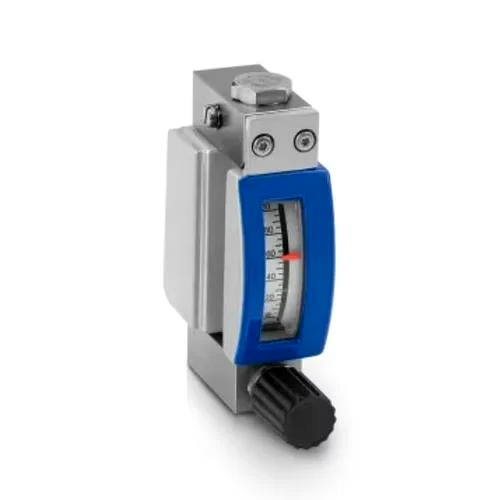
The technical framework of the DK32/34 Variable Area Flowmeter utilizes a tapered transparent or metallic tube where a precision-machined float moves vertically in response to flow velocity. The structural reasoning for the tapered geometry is to create a varying annular area—as flow increases, the float rises to a position where the upward hydraulic forces balance the gravitational mass of the float. measurement physics rely on the stability of the float's density and the tube's internal profile; a failure in the tube's concentricity—due to manufacturing variance—results in "float sticking" and erratic flow readouts, effectively decommissioning the measurement point. Quality consistency is managed through serialized batch resistance measurements and factory-performed wet calibration against reference standards. The materials for the tube and float are selected to match the process fluid's specific gravity; if the density is miscalculated, the float will remain at the base or the top of the tube, decommissioning the measurement node. Our manufacturing logic employs specialized polishing of the internal bore to minimize frictional lag and ensure high measurement repeatability.
Functional Performance and Operational Efficiency in Laboratory Lines
Operational efficiency is achieved through the unit’s ability to provide immediate flow confirmation without requiring digital integration or external supply, an essential operational standard for remote laboratory suites or unconditioned utility bays. functional performance centers on the unit’s response at low Reynolds numbers; variable-area technology remains stable in flow regimes where electromagnetic or ultrasonic meters may decommissioning. In a real operational scenario, a failure to manage "pulsation" in the process line—due to pump vibration—leads to float oscillation, making it difficult to obtain an accurate reading. To mitigate this, the DK32/34 series utilize optional magnetic or pneumatic damping systems. if the tube becomes obscured by process fallout—due to scale or grease buildup—the visual indication decommissions; the unit utilize accessible clean-out ports to allow for maintenance without system shutdown. By provides a stable and traceable signal, the meter improves the overall reliability of localized equipment monitoring, ensuring that thermal or chemical thresholds are accurately tracked for safety interlocks.
Institutional Deployment and Logistical Readiness for instrument Fleets
Designed for laboratory supply lines, fuel metering for burners, and process bypass streams, the DK32/34 is configured for the logistical requirements of multimodal procurement. Units ship in foam-lined trays with moisture-barrier film to protect the sensitive internal float and scale markings during transport. Failure to implement shock-mitigating packaging can lead to "tube cracking" or float misalignment, which decommissions the unit's calibration upon arrival. For international procurement, supply-readiness is supported by lot-specific calibration certificates and material declarations (ISO/CE). Export-ready documentation include unit configuration snapshots and installation guides provided with each consignment to facilitate institutional asset registration. Packaging utilize humidity-control liners to prevent finish degradation of the metal casings during maritime freight. OEM branding and custom faceplate options are available for system builders requiring branded instrumentation for their equipment skids. This high-authority approach ensure procurement teams receive verified hardware that meet the performance and safety requirements of global markets, providing the technical transparency required for large-scale energy infrastructure rollouts.
Frequently Asked Questions
- How is the meter calibrated for different fluids? Each unit is calibrated against reference flows of the specified liquid or gas and supplied with a custom scale certificate.
- Can it operate without electrical power? Yes; the variable-area principle is purely mechanical, making it ideal for safety-critical zones and power-loss scenarios.
- What maintenance is required for the float? Periodic visual inspection and cleaning of the internal bore are recommended where particulate or fouling media is present.
- How is moisture risk managed during shipping? Packaging includes moisture-barrier film and desiccant pouches inside a foam-lined carton.
- What documentation accompanies each unit? Every shipment includes a factory calibration report, lot inspection certificate, and installation instructions.
Description provided by Shakti Power Solutions Pvt Limited.
From ≥0.04 l/h (liquids) or ≥0.1 GPH (gas)
-5 to +100°C (23 to 212°F)
EPDM, PTFE, Perfluoroelastomer rubber
Stainless steel, brass, PVDF
±1% to ±4% of full scale (VDI/VDE 3513-2 compliant)
No auxiliary power needed
High-quality needle valve
SIL 2 standard, SIL 3 (redundant 1oo2 design)
G and NPT threads, others on request
Discrete limit switch outputs available
Specifications
Flow Measurement Type
Variable area flowmeter
Minimum Liquid Flow Rate
≥0.04 l/h
Minimum Gas Flow Rate
≥0.1 GPH
Measuring Tube
Borosilicate glass
Gasket Materials
EPDM, PTFE, Perfluoroelastomer rubber
Fitting Options
Stainless steel, brass, PVDF
Operating Temperature Range
-5 to +100°C (23 to 212°F)
Maximum Pressure
10 barg (145 psig)
Measurement Accuracy
±1% / ±2.5% / ±4% per VDI/VDE 3513-2
Power Requirement
None (low-cost, no auxiliary power)
Valve Type
Integrated needle valve in foot or head piece
Thread Types
G and NPT threads (others on request)
Safety Compliance
SIL 2, SIL 3 in redundant 1oo2 design
Available Outputs
Discrete limit switches