Measurement Architecture and Component Rationale of the OPTIFLUX 1050
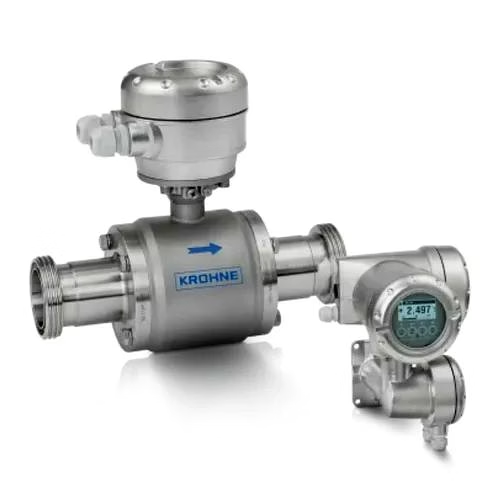
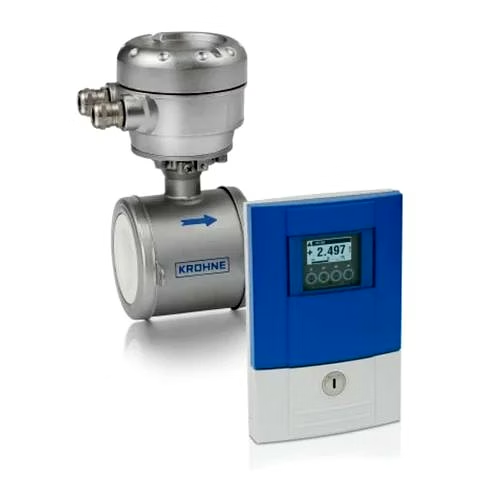
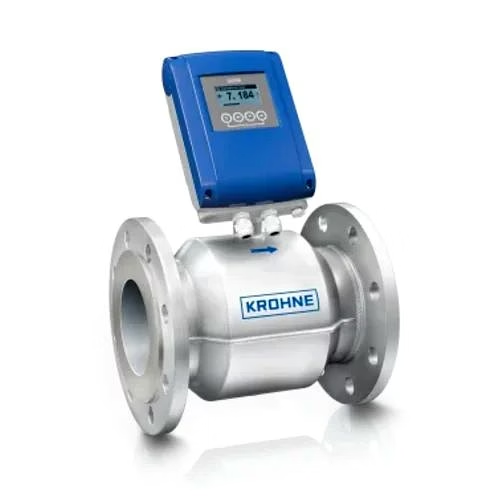
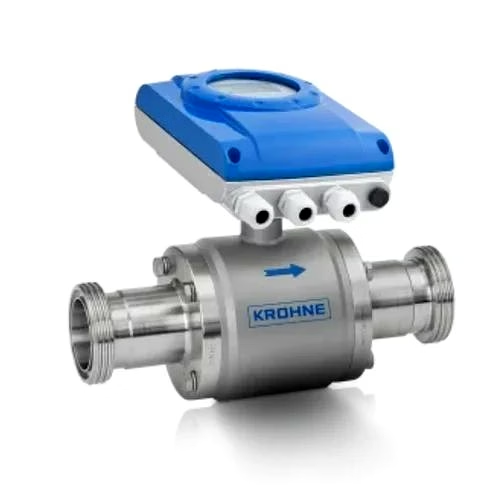
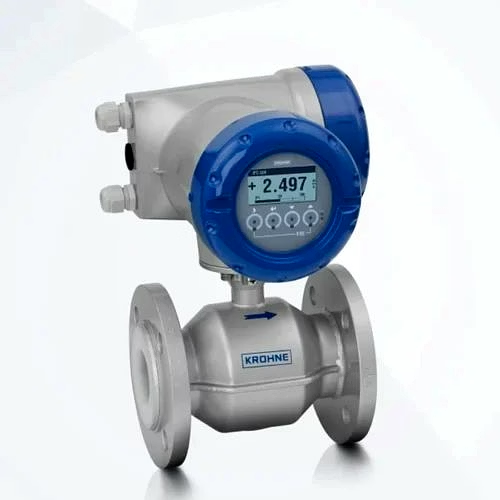
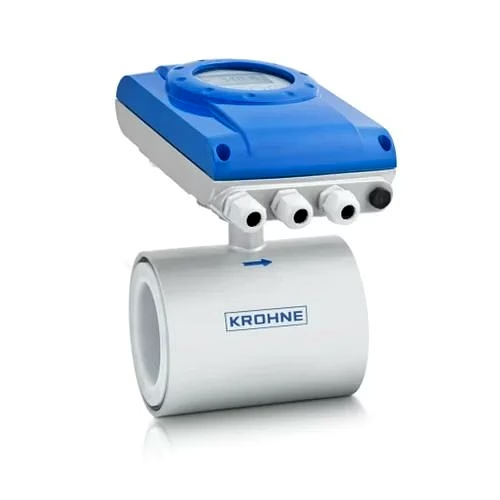
The technical framework of the OPTIFLUX 1050 - Electromagnetic flowmeter utilize a precision-wound bipolar excitation coil and high-purity electrodes housed within a stainless steel wafer body. The structural reasoning for the wafer design is to reduce the "face-to-face" dimension, facilitating retrofits where pipe space is limited. measurement physics rely on the interaction between the conductive fluid and the magnetic field; as the liquid flows, a potential proportional to velocity is sampled by the electrodes. A failure in the liner integrity—due to chemical attack or exceeding temperature limits—leads to "electrode shunting," where the signal is grounded by the metallic body. This failure mode decommissions the meter and results in erratic flow readouts in the centralized SCADA system. Quality consistency is managed through serialized dimensional control of the bore and 100% factory wet calibration. The internal layout utilizes high-grade dielectric materials to isolate the low-voltage signal paths from the high-current coil drivers, preventing internal noise from compromising the stable zero-point required for accurate low-flow measurement.

Functional Performance and Operational Efficiency in Process Skids
Operational efficiency is achieved through the unit’s near-instantaneous response time (typically <1s), which is critical for high-speed feedback control in dosing or blending loops. Functional performance centers on the unit’s integrated diagnostics; the transmitter monitors coil continuity, electrode grounding, and signal noise floor. In a real operational scenario, a failure to manage "signal noise"—caused by proximity to variable frequency drives (VFDs)—leads to measurement jitter. The 1050 utilizes high-speed digital filtering to suppress these disturbances, an essential operational standard for dense industrial equipment rooms. If the transmitter detects a coil fault or an empty pipe condition, it triggers a diagnostic alarm, providing B2B facility managers with event-driven maintenance data. maintenance procedures are simplified by the modular transmitter design, allowing for electronics replacement without removing the flow tube from the line, effectively lowering the mean time to repair (MTTR). By providing a stable and traceable signal, the meter provides the technical transparency required for facility energy accounting and maintenance planning.
Institutional Deployment and Logistical Readiness for Scaled Rollouts
Designed for municipal water systems, chemical metering skids, and industrial process monitoring, the OPTIFLUX 1050 is configured for the logistical requirements of programmatic multi-site procurement. Units ship on palletized skids with internal shock-absorbing crates and moisture-barrier film to protect the sensitive internal inductors and gold-plated electrodes during transit. Failure to implement shock-mitigating packaging can lead to "transformer humming" or loose joints in the wafer-to-terminal assembly, manifesting as intermittent faults upon site commissioning. For international procurement, supply-readiness is supported through serialized test records and compliance declarations (ISO/CE). Export-ready documentation include unit configuration snapshots and certificates of analysis (COA) provided with each shipment to facilitate institutional asset registration. OEM branding and custom firmware configurations are available, allowing system integrators to deliver branded suites with serialized records. This high-authority approach ensures procurement teams receive verified hardware that meet the performance and safety requirements of global manufacturing and healthcare water-treatment markets.
Frequently Asked Questions
- What liner materials are available for the 1050? Selection includes PTFE and specialized elastomeric polymers depending on the chemical and thermal profile of the media.
- Can it be installed in both horizontal and vertical pipes? Yes, provided the pipe remains full and the electrodes are not positioned at the top/bottom where air or sediment can interfere.
- How is moisture risk managed during sea freight? Units are enclosed in vacuum-sealed vapor-barrier bags with desiccant pouches inside a reinforced crate.
- Which communication protocols are supported? Standard 4–20 mA pulse output is provided, with optional Modbus RTU for digital integration.
- What is the typical lifespan of the electrodes? When matched to chemically compatible fluids, the non-mechanical electrodes are designed for a 10-15 year service life.
Description provided by Shakti Power Solutions Pvt Limited.
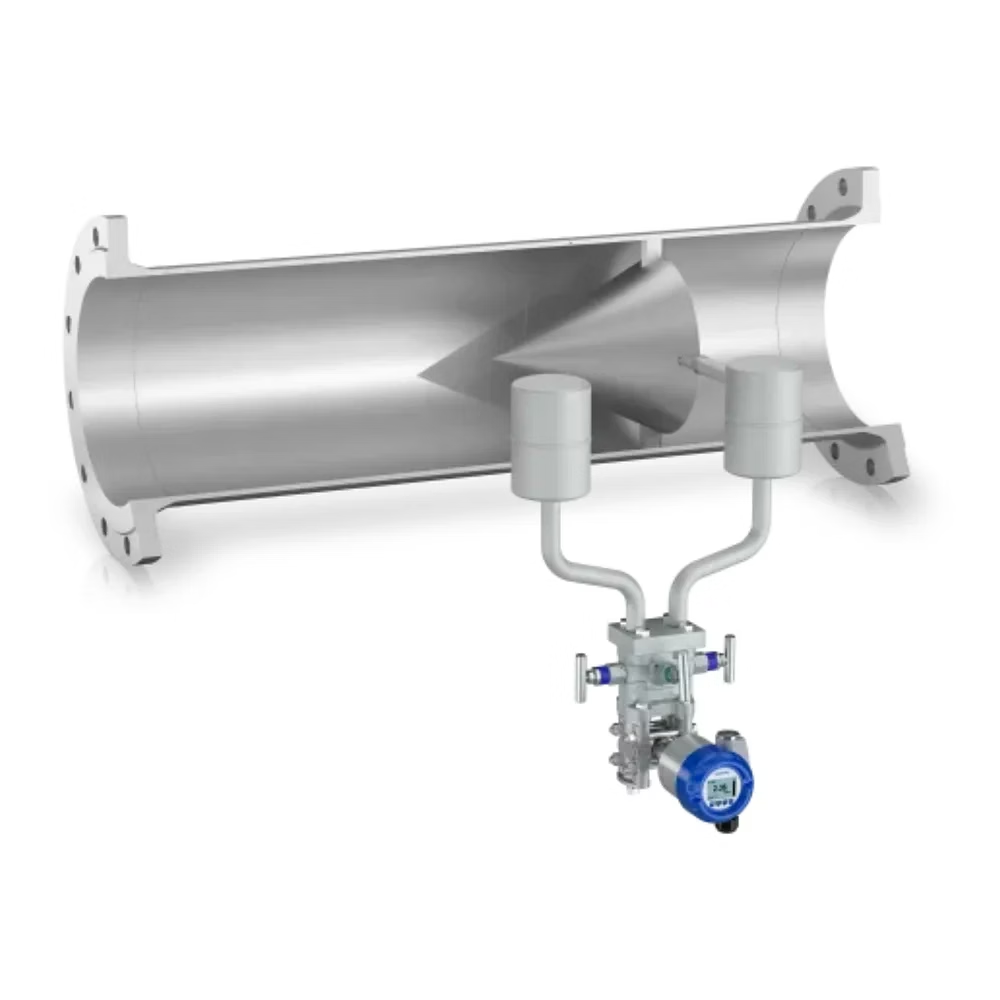
Limited space with minimal straight pipe sections
DN50 to DN600 / 2" to 20" (ISO 5167-5)
316L Stainless Steel, Alloy C276, Alloy 625, Alloy 400, Duplex, others on request
2-wire 4-20 mA, HART®, Foundation Fieldbus, Profibus-PA
SIL 2/3, Ex ia, Ex d approvals
Redundancy options (1oo2, 2oo3), Advanced 3-D linearised OPTIBAR transmitters, Factory calibration up to 48"
Specifications
Product Model
OPTIFLUX 1050
Measurement Principle
Differential Pressure
Applicable Media
Liquids, Gases, Steam
Max Process Pressure
400 bar
Process Temperature Range
-130°C to +550°C
Size Range
DN50 to DN600 / 2" to 20"
Material Options
316L Stainless Steel, Alloy C276, Alloy 625, Alloy 400, Duplex, custom materials
Output Signals
4-20 mA, HART®, FF, Profibus-PA
Safety Certifications
SIL 2/3, Ex ia, Ex d
Calibration Capability
Up to 48" size
Installation Requirements
Minimal straight inlet/outlet pipe length