Electrochemical Architecture and Mechanical Integration Logic of the 65ah External Battery Rack
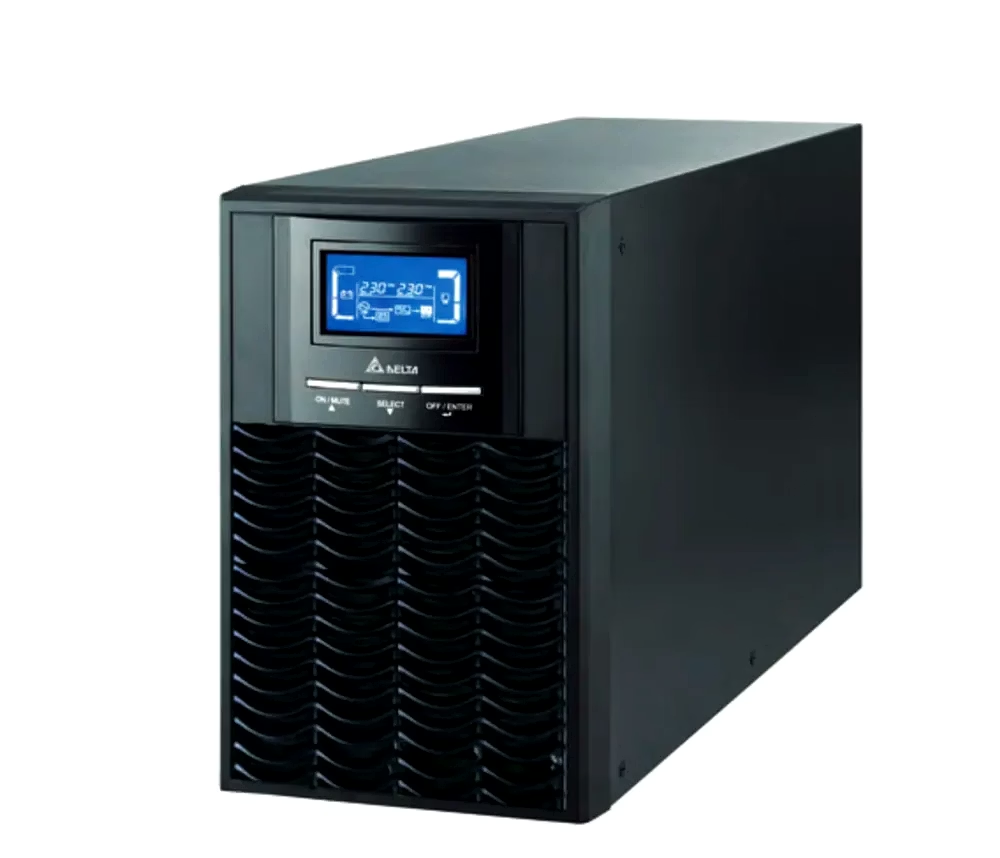
The technical framework of the Delta 3 kVA (External Battery) INX 65ah Exide with Rack for Battery utilize a series-connected arrangement of 12V Exide modules, precisely balanced to provide a high-fidelity DC source for the inverter power stage. The structural reasoning for the dedicated battery rack is to create a controlled thermal environment; by providing designated air gaps between cells, the system facilitates passive convection, which is vital for preventing "thermal runaway." In real operational scenarios, a failure to manage heat dissipation results in electrolyte dry-out and battery swelling—a failure mode that decommissions the autonomy window and can lead to hazardous gas venting or localized fires. Measurement physics rely on low internal resistance across the entire string; a failure in busbar torque—due to transport-induced loosening—results in "arcing joints," which generate high temperatures and can melt terminal posts during a full-load discharge. Quality consistency is managed through serialized string capacity checks and continuity verification recorded at the factory, ensuring that the B2B buyer receives an energy asset capable of meeting its design minutes upon commissioning. Without this matched-impedance logic, individual cells in the string would age unevenly, leading to a "premature low-voltage cutoff" where the UPS shuts down despite the battery bank having 40% energy remaining.

Functional Performance and Operational Stability in Telecom and Network Hubs
Operational efficiency is achieved through the system’s ability to provide deterministic runtime planning, allowing facility managers to accurately schedule graceful shutdown sequences for connected IT hardware. functional performance centers on the unit’s integrated protection architecture; each string utilize high-breaking-capacity (HBC) fuses to isolate electrical faults. If a cell develops an internal short-circuit, the fuse clears the fault without allowing the massive energy of the remaining cells to propagate, effectively protecting the facility from an uncontrolled energy release. In a real operational scenario, a failure to monitor the string voltage results in "sulfation" during prolonged standby, reducing the Ampere-hour (Ah) capacity by 50% over a 12-month period if float-charge parameters are not strictly maintained. The rack design include prewired harnesses with keyed connectors, which reduces installation error risk and effectively lowers the mean time to repair (MTTR) during battery refresh cycles. grounding points are integrated into the steel frame to protect against impulsive surges—a failure in the earthing logic can lead to static discharge buildup that interferes with the UPS communication ports. By establishing a documented baseline of capacity and internal resistance, the operator effectively improves the overall reliability of the critical power path, providing the technical transparency required for institutional energy accounting.
Institutional Deployment and Logistical Readiness for Scaled Power Systems
Designed for telecom exchanges, remote data closets, and medical facility power rooms, the INX 65ah rack system is configured for the logistical requirements of multimodal procurement. Units are dispatched on palletized bases with internal mechanical restraints to protect the batteries against the G-loads of rail and sea transport. Failure to implement shock-monitored packaging can result in "internal separator displacement" within the Exide modules, leading to localized short-circuits that manifest only after the unit is placed on float-charge. For international procurement, supply-readiness is supported through lot-specific test certificates and wiring schematics provided with each consignment. Export-ready documentation include material safety data sheets (MSDS) and certificates of conformity (CE/IEC) to facilitate customs review and institutional asset registration. Packaging utilize moisture-barrier covers and desiccants to prevent humidity-induced terminal oxidation during maritime freight. OEM branding and customized harness lengths are available for system builders requiring branded power modules for their infrastructure skids. This high-authority approach ensure procurement teams receive verified, site-ready energy assets that meet the safety and performance standards of global IT and telecom markets, providing the technical transparency required for large-scale infrastructure management.
Frequently Asked Questions
- Are the battery racks delivered pre-assembled? Yes, the racks are supplied with pre-installed busbars and internal cabling to minimize site installation time.
- What specific battery type is included? The system utilizes high-grade Exide 65 Ah sealed valve-regulated lead-acid (VRLA) modules.
- How is the system protected from overcurrent? Integrated high-breaking-capacity fuses are installed inline to isolate battery-side faults immediately.
- What documentation accompanies each shipment? Consignments include serialized string capacity reports, wiring diagrams, and installation manuals.
- How should the racks be stored before installation? Store in a cool, ventilated area; batteries must be refresh-charged every 6 months to prevent capacity loss.
Description provided by Shakti Power Solutions Pvt Limited.
External 65Ah Exide batteries
Three 26Ah Exide batteries included
Online double-conversion with pure sine-wave output
Power factor correction enabled
Up to 91% AC-AC efficiency
Included for external batteries
Reliable power backup for critical equipment