Ginger (Fresh/Adrak) — Structure, Quality Controls and Post-harvest Treatment
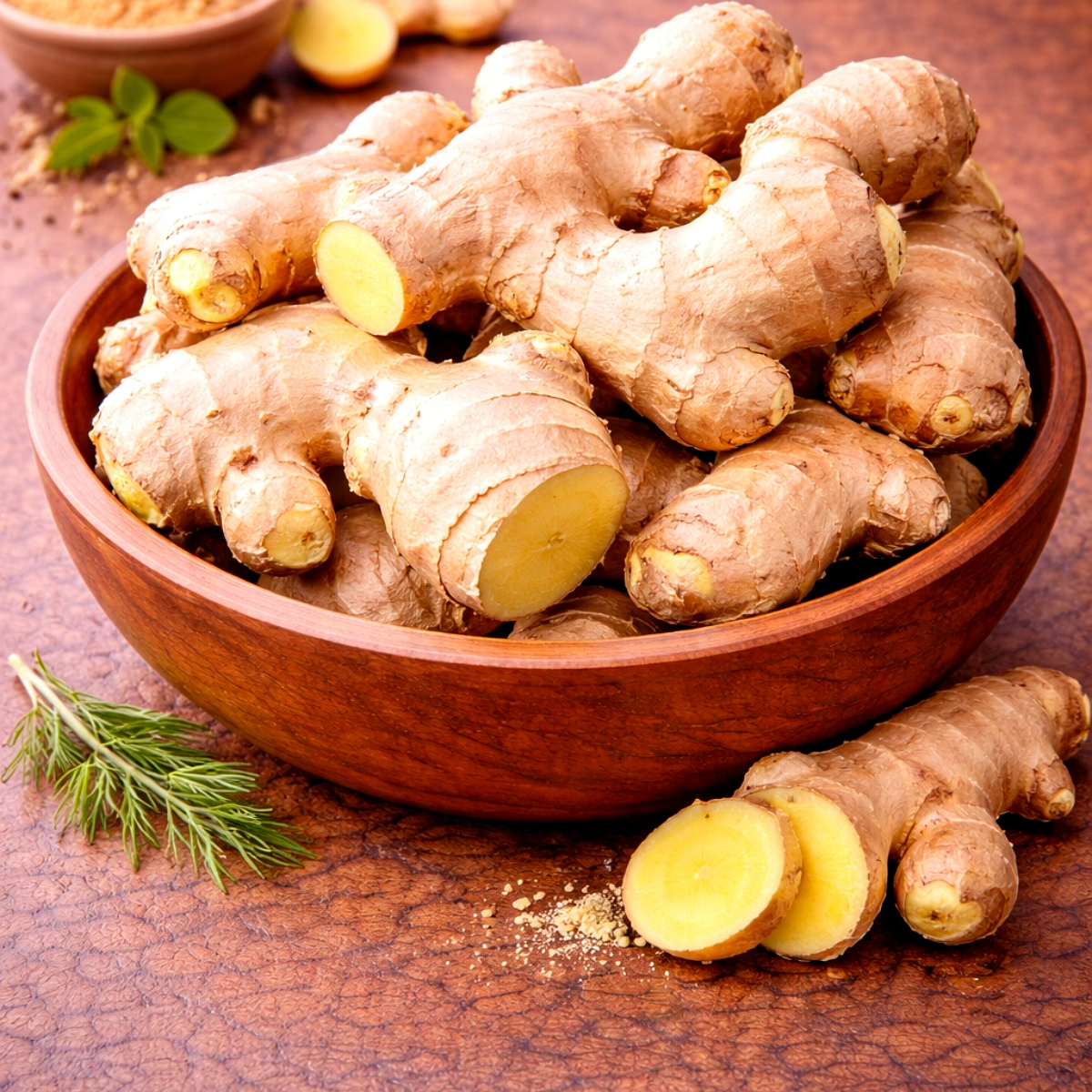
Fresh ginger rhizomes consist of a dermal skin layer, subdermal cortex and fleshy storage tissue; supply quality depends on minimizing mechanical damage and microbial entry points. Post-harvest handling emphasizes rapid cleaning, size grading and removal of extraneous rootlets. Quality controls include visual inspection for surface lesions, firmness testing to detect internal breakdown, and moisture checks to avoid excessive dehydration that reduces weight and pungency. Lot identification links origin farm, harvest date and packhouse batch to support traceability demanded by international buyers.
Functional Performance & Operational Efficiency
Uniform grading reduces variability in drying and slicing processes, translating to predictable throughput in industrial operations. Washed rhizomes with intact skin exhibit lower rates of microbial proliferation versus damaged roots, improving in-transit survival under refrigerated conditions. Recommended short-term storage at 10–15°C with high relative humidity limits desiccation, while refrigerated containers at controlled temperatures are used for longer ocean crossings. Packing in ventilated cartons and mesh sacks allows moisture equilibrium and prevents condensation build-up; palletization patterns are designed to facilitate air circulation and efficient container stowage consistent with cold-chain fresh produce wholesalers.
Application & Industry Deployment
Ginger is deployed across fresh retail channels, food processing (paste, puree, dehydrated powder) and ingredient supply for spice blenders. The handling and documentation package aligns with requirements for fresh produce export suppliers and supports contract supply arrangements with importers and distributors in priority markets including Australia, Canada, France and the United States. Where buyers require inputs for regulated food-grade manufacturing, batch traceability and phytosanitary conformity are provided to meet inspection and quality program prerequisites.
Frequently Asked Questions
- What sizing and grading options are available? Multiple size bands (small/medium/large) are offered to match processing equipment and retail merchandising standards.
- How should ginger be stored for transit? Short-term storage at 10–15°C with high humidity is recommended; refrigerated container transport is advised for extended international shipments.
- Which packaging formats are used to protect rhizomes? Ventilated cartons and mesh sacks (10–25 kg), palletized with breathable wrapping to maintain airflow and reduce condensation.
- What export documentation is provided? Phytosanitary Certificate and lot-based traceability documents accompany shipments; IEC and MSME registrations are available for customs purposes.
- How is moisture migration controlled in mixed-load containers? Pre-cooling, segregated loading and active temperature monitoring are used to prevent humidity imbalances and protect rhizome firmness.
Description provided by Mrk Global Trade.
Yes, suitable for bulk B2B procurement and export
Standardized naming for repeat order accuracy
Custom packaging available upon request
Grade, origin, and quality to be confirmed pre-order
Certificates such as COA or phytosanitary upon request
Standard fresh produce handling; details confirmed per order
Sample requests available subject to confirmation
Aligned with standardized product title and QC requirements
Specifications
Product Format
Fresh ginger root
Origin
To be confirmed based on buyer requirements
Packaging Types
Flexible, buyer-specified
Compliance Certificates
Available upon buyer’s request
Intended Use
Bulk procurement, manufacturing, repacking, blending
Storage Conditions
Standard fresh produce handling conditions
Labeling
Consistent trade labeling and SKU mapping
Supplier
MRK Global Trade


 FIEO Registered
Export Ready