Our Products
Latest
Name (A-Z)
Name (Z-A)
Showing 1-10 of 10 products
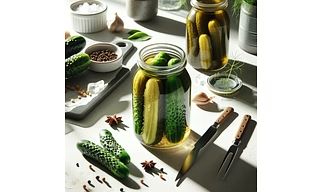
Pickles
Pickles are preserved vegetables or fruits soaked in vinegar, salt, and spices, offering a tangy flavor and extended shelf life. Common types include mango, lime, and mixed vegetable pickles. They serve as condiments or side dishes, enhancing meals with their unique taste. The pickling process retains nutritional value, providing probiotics for gut health and antioxidants. Versatile in use, pickles complement various dishes, adding depth and spice to flavors. Their preparation involves selecting fresh produce, precise seasoning, and proper fermentation to achieve the desired taste and texture.
Price on Request
1 unit
MOQ

Fruit Squash
Fruit squash is a concentrated syrup derived from fruit juice, sugar, and water, used as a base for beverages when diluted. Popular flavors include orange, lemon, and mango. The production process involves extracting juice, adding sugar and citric acid, pasteurizing, and bottling. Fruit squash is versatile, serving as a drink base, dessert topping, or flavoring agent. While convenient, it's advisable to consume in moderation due to potential high sugar content, and choosing varieties with higher fruit content and fewer additives is recommended for a healthier option.
Price on Request
1 unit
MOQ

Pork Meat
Pork meat, sourced from domesticated pigs, is a versatile and flavorful protein used globally. It offers various cuts like loin, ribs, and belly, suitable for methods such as roasting, grilling, and stewing. Pork is rich in high-quality protein, vitamins B12 and B6, and minerals like iron and zinc. Fat content varies by cut, with options like tenderloin being leaner. Proper cooking to 145°F (63°C) ensures safety. Pork's adaptability makes it integral to many traditional and festive dishes, accommodating diverse seasonings and pairings.
Price on Request
1 unit
MOQ

Pork Piglets
Pork piglets are young pigs raised for meat, known as 'suckling pig,' valued for tender texture and mild flavor. Typically weaned at 3-4 weeks, they are nurtured to market weight. Suckling pig is often roasted whole, featuring crispy skin and succulent meat, popular in celebratory meals. Rearing involves proper nutrition, housing, and healthcare, emphasizing ethical practices for quality pork. Demand varies regionally, with some cultures considering it a delicacy. Sourcing from reputable farms and cooking to 145°F (63°C) ensures safety and quality.
Price on Request
1 unit
MOQ

Poultry Meat
Poultry meat includes the flesh of domesticated birds like chickens and ducks, valued for its high-quality protein, vitamins B6 and B12, and minerals such as iron and zinc. Lower in fat than red meats, especially without skin, it's favored by health-conscious consumers. Available cuts like breasts and thighs suit various cooking methods, including grilling and roasting. Ethical poultry farming ensures quality and animal welfare. Proper handling and cooking to 165°F (74°C) are essential for safety. Its versatility makes poultry meat integral to diverse cuisines worldwide.
Price on Request
1 unit
MOQ
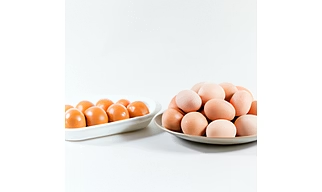
Poultry Eggs
Poultry eggs, mainly from chickens, are globally consumed for their high-quality protein, vitamins B12 and D, and minerals like selenium. Versatile in cooking, they can be boiled, fried, or baked, and are key in various recipes. Egg quality depends on the hens' diet and health, with free-range and organic options often preferred. Proper storage and handling are crucial for freshness and safety. While nutritious, those with high cholesterol should consume eggs moderately. Overall, eggs remain an affordable and adaptable nutritional source in diverse cuisines.
Price on Request
1 unit
MOQ

Dairy Milk
Dairy milk, primarily from cows, is a nutrient-rich beverage providing high-quality protein, calcium, and vitamin D, essential for bone health and overall well-being. It serves as a base for products like cheese and yogurt. Milk quality varies with cow breed, diet, and farming methods. Pasteurization ensures safety by eliminating bacteria, and homogenization provides uniform texture. Available in whole, reduced-fat, and skim varieties, milk caters to diverse dietary needs. Proper refrigeration is crucial for freshness. Dairy milk continues to be a versatile and vital part of a balanced diet.
Price on Request
1 unit
MOQ

Dairy Butter
Dairy butter is a creamy product created by churning cream to separate butterfat from buttermilk, widely used in cooking and baking for its flavor-enhancing qualities. Composed mainly of milk fat, it provides vitamins A, D, E, and K. Quality depends on the cream and production methods. Available in salted and unsalted forms, the latter is preferred in baking for salt control. Proper storage in cool conditions prevents rancidity. High in saturated fats, butter should be consumed in moderation. It remains a cherished ingredient, enriching flavors and textures in diverse cuisines.
Price on Request
1 unit
MOQ

Dairy Cheese
Dairy cheese is produced by coagulating milk proteins, separating curds from whey, and processing them into various types with distinct textures and flavors. Rich in protein, calcium, and vitamin B12, cheese supports bone health and nutrition. Varieties range from soft cheeses like mozzarella to hard ones like cheddar. Consumed alone or in dishes, cheese enhances flavors and textures. Proper refrigerated storage is essential to maintain quality. While nutritious, cheese can be high in saturated fats and sodium, so moderate consumption is recommended. It remains a versatile staple in global cuisines.
Price on Request
1 unit
MOQ

Dairy Yogurt
Dairy yogurt is made by fermenting milk with beneficial bacteria, resulting in a creamy, tangy product rich in protein, calcium, probiotics, and vitamins B2 and B12. It supports digestive health and bone strength. Enjoyed plain or flavored, yogurt is used in smoothies, desserts, and savory dishes. Varieties like Greek yogurt offer thicker texture and higher protein content. Refrigeration is crucial for freshness. Opting for low-sugar versions and moderate consumption as part of a balanced diet is recommended. Yogurt remains a versatile and nutritious staple in global diets.
Price on Request
1 unit
MOQ

 GL Trustmark