Sealed Immersion Architecture and Electrochemical Resilience of the LC 1010
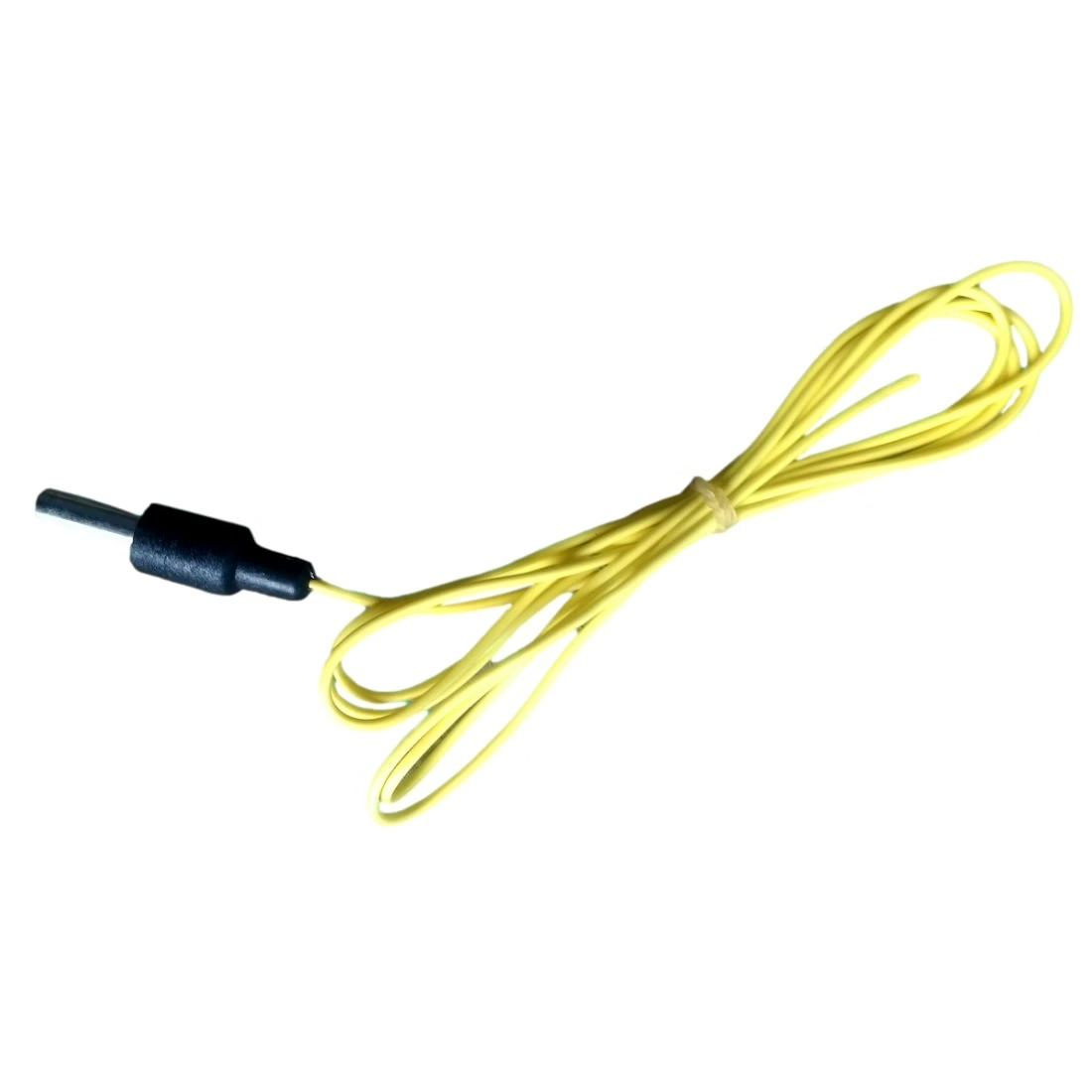
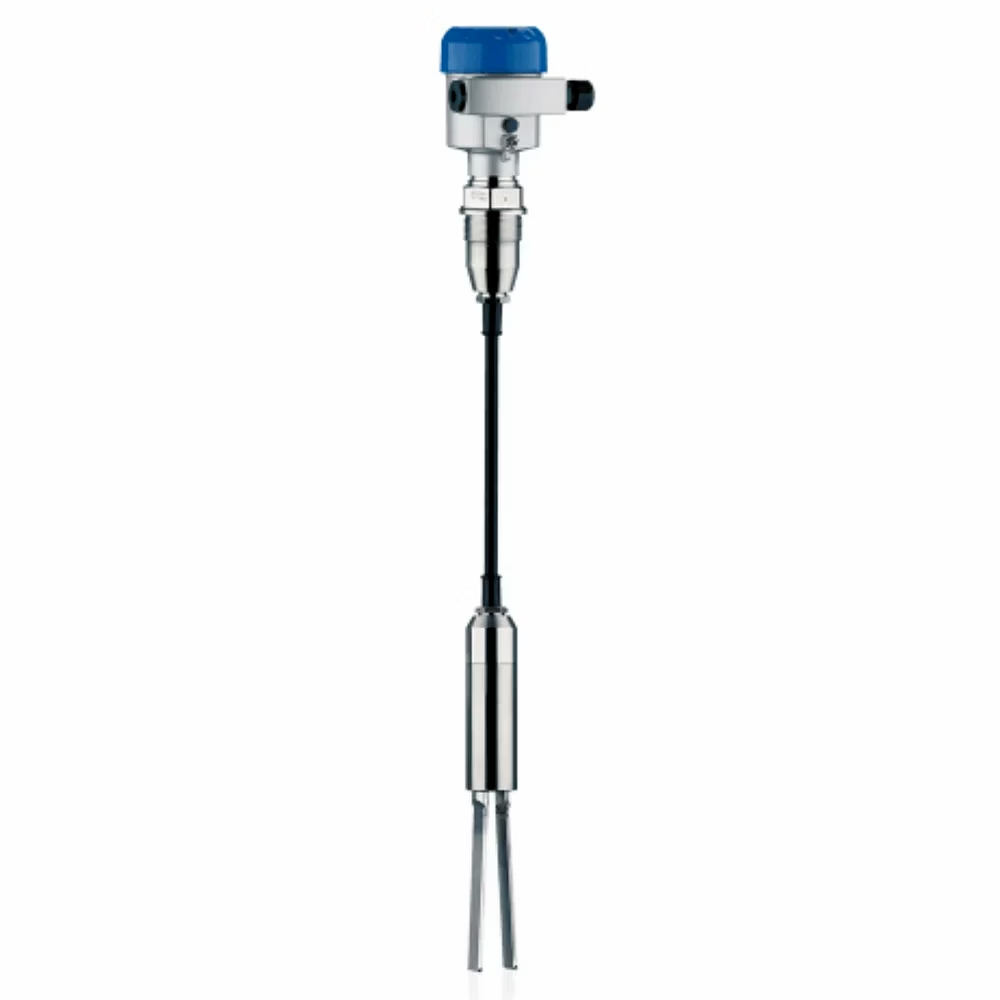
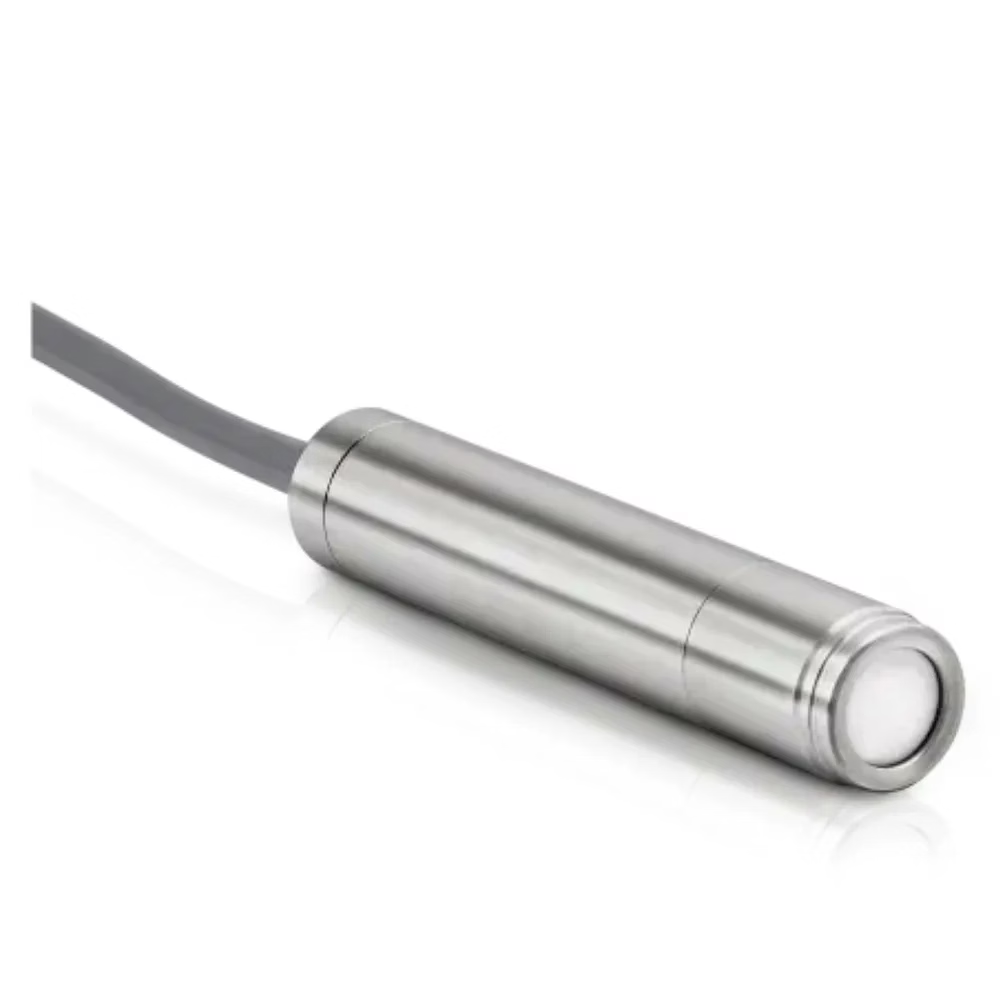
The LC 1010 Submersible level probe features a sealed sensing element and reinforced cable gland to ensure reliable operation in continuous immersion applications. Wetted components are selected to balance corrosion resistance against cost, with options for polymers or stainless alloys depending on nominal effluent chemistry. The molded cable gland creates a mechanical barrier to capillary action and reduces the risk of moisture wicking into internal cavities. Measurement stability is governed by the integrity of the pressure-sensing diaphragm; a failure in the structural seal results in electrolyte ingress, leading to "signal shunting" and erroneous level readings that can trigger false low-level pump shutdowns or overflow alarms in wastewater stations. Quality consistency is maintained via 100% factory pressure testing, ensuring that the sensor housing maintains its IP68 rating even at the maximum rated submersion depth. Without this rigorous structural verification, the probe is susceptible to "diaphragm fatigue," where the repetitive cyclic pressure of tank filling leads to microscopic fractures and sensor decommission.
Functional Performance and Operational Efficiency in Utility Networks
Reliability in submersible probes depends on cable integrity, gland sealing and material compatibility with process liquids. The LC 1010 provides stable output by isolating the sensing electronics within a pressure-tolerant head and by using jacketed cable to resist abrasion from suspended solids. Practical installation uses adequate strain relief and a guided anchor point to reduce cable movement that can fatigue both the cable and gland. Operational efficiency is enhanced by the probe’s "self-cleaning" diaphragm profile, which minimizes product retention. Failure to clean the probe face regularly in high-solids effluents results in "crust formation," where dried solids block the pressure port, causing a "measurement freeze" failure mode. To mitigate this, the probe architecture allows for tool-free removal and visual inspection. The integrated signal conditioning electronics compensate for thermal expansion of the fill fluid, ensuring that temperature shifts in outdoor sumps do not translate to level errors. This systematic approach ensures that utility operators have a stable, low-maintenance asset for pump control and telemetry aggregation, effectively improving the uptime of water distribution networks.
Institutional Deployment and Logistical Readiness for Remote Sumps
Suited to water-treatment plants, pump-sump monitoring and OEM skids, the LC 1010 integrates into PLCs and telemetry systems with straightforward wiring options. Deployment guidance covers anchoring, minimum bend radii and recommended cleaning cycles to prevent biofouling. Packaging for consolidated shipments uses protective cable reels and moisture-barrier film to prevent the polyurethane jacket from "blocking" (sticking) during multimodal transport. Failure to implement reel-based packaging results in cable kinks, which can breach the internal atmospheric vent tube, rendering the barometric compensation non-functional and leading to permanent level errors. For international procurement, supply-readiness is supported through per-lot insulation resistance records and functional test certificates. Export-ready documentation includes technical specifications, wiring diagrams, and compliance declarations documenting electrical safety. OEM branding and customized signal scaling are available under contract, providing system integrators with verified hardware that meets the performance requirements of global utility markets. This high-authority documentation facilitates customs clearance and institutional asset registration for large-scale infrastructure projects.
Frequently Asked Questions
- What cable types are recommended for abrasive wastewater? Polyurethane-jacketed cables are recommended for abrasion resistance; polyethylene offers chemical resistance.
- How is moisture migration prevented at the cable exit? Molded gland seals and strain reliefs are specified to prevent capillary ingress; potted terminations are available.
- What packaging protects the probe during shipments? Foam-lined cartons with cable reels and moisture barriers prevent abrasion and condensation during transit.
- Is surface biofouling a concern? Periodic cleaning and selection of non-stick wetted materials reduce biofouling; retrievable mounting simplifies maintenance.
- What documentation is provided for acceptance testing? Per-unit insulation resistance, continuity tests and inspection reports are supplied per shipment.
Description provided by shakti power solutions pvt limited.