Global Market Overview Countries & Product's Trade Names
• Asia:
o Indonesia: Liquid Ammonia
o South Korea: Ammonia
o China: Liquid Ammonia
• North America:
o United States: Anhydrous Ammonia
• Europe:
o Belgium: Ammonia
o Germany: Ammoniak
o Ukraine: Аммиак (Ammiak)
• South America:
o Brazil: Amônia
• Africa:
o Egypt: Industrial Ammonia
o Morocco: Anhydrous Ammonia
Available Product Types for International Trade
• Ammonia in aqueous solution (Ammonia water or Liquor Ammonia), typically traded with concentrations around 25% or 30%.
• High-Purity Ammonia, used in specialized applications such as semiconductor manufacturing, with purity levels often exceeding 99.999%.
________________________________________
HSN Code Specifics (Indian Government Rules)
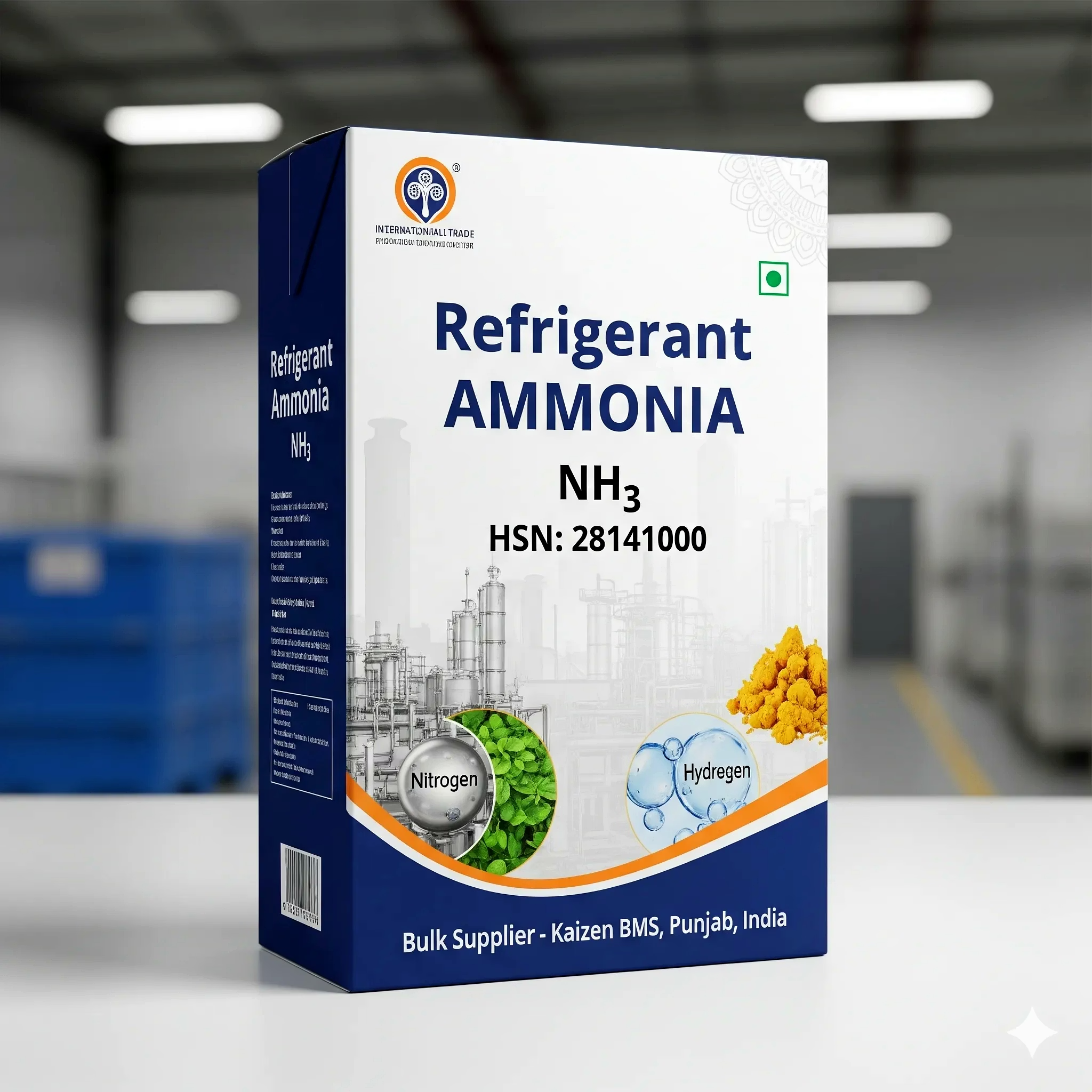
• Exact 8-digit HSN Code: 28141000
• Category: Inorganic chemicals; organic or inorganic compounds of precious metals, of rare-earth metals, of radioactive elements or of isotopes.
• Subcategory: Ammonia, anhydrous or in aqueous solution - anhydrous ammonia.
• HSN Justification: HSN 28141000 is the most precise and appropriate classification for Refrigerant Ammonia, as it specifically denotes "Anhydrous Ammonia." This clear distinction separates it from its aqueous counterpart (ammonia in solution) under HSN 28142000, ensuring accurate customs and GST compliance for international trade.
________________________________________
Technical Data Figures & Logistics• Physical Properties:
o Form & Color: At room temperature and standard atmospheric pressure, it is a colorless, pungent gas. It is a liquefied gas under pressure.
o Melting Point: The melting point is −77.7∘C (−107.9∘F).
o Boiling Point: The boiling point is −33.34∘C (−28.01∘F) at 1 atmosphere.
o Density: The liquid density is 682 kg/m3 at its boiling point.
o Solubility in Water: It is highly soluble, with one volume of water dissolving approximately 700 volumes of gas at standard temperature and pressure.
• Chemical Properties:
o Chemical Formula: The chemical formula is NH3.
o Reactivity: As a strong base, it readily reacts with acids to form ammonium salts.
o Corrosivity: It is highly corrosive to copper, brass, zinc, and other alloys, necessitating storage in steel containers.
o pH of Solution: A 1.0 M aqueous solution has a pH of approximately 11.6.
o Stability: The molecule is stable but can decompose into nitrogen and hydrogen at temperatures above 450∘C.
• Manufacturing Properties:
o Primary Production Method: The most prevalent industrial method is the Haber-Bosch process, which synthesizes ammonia from nitrogen and hydrogen under high pressure and temperature with a catalyst.
o Typical Commercial Purity: Refrigerant-grade ammonia is typically produced at a purity level of 99.98% or higher.
o Handling Requirements: Due to its toxicity and flammability, it requires specialized handling, storage in pressurized vessels, and a strict safety protocol.
o Forming Processes: The product is sold in its liquefied gas form, maintained under pressure in cylinders or tanks.
o Hazard Classification: It is a UN Class 2.3 (Toxic Gas) with a subsidiary risk of 8 (Corrosive).
Industrial Use
• Refrigeration & Cooling: Serves as a primary refrigerant (R717) in large-scale industrial cold storage, food and beverage processing, and air conditioning systems.
• Fertilizer Production: It is the foundational raw material for producing nitrogen-rich fertilizers such as urea and ammonium nitrate.
• Chemical Manufacturing: Used in the production of a wide range of chemicals, including nitric acid, plastics, fibers, and explosives.
• Water & Wastewater Treatment: Employed to control pH and produce monochloramine for disinfection, preventing taste and odor issues.
• Pulp and Paper: Used in the pulping process and for the de-inking of recycled paper.
Market Overview
• Global Demand Drivers: The primary drivers are rising global food demand, increased need for cold-chain logistics, and the shift towards environmentally friendly refrigerants.
• Leading Consumption Regions: The Asia-Pacific region, led by China and India, accounts for the largest share of global consumption, driven by its massive agriculture sector.
• Factors Influencing Price Volatility: Price is highly sensitive to the cost of natural gas, which serves as the primary feedstock for the Haber-Bosch process.
• Emerging Growth Trends: The production and adoption of "green ammonia," synthesized using renewable energy, is a significant trend supported by decarbonization initiatives.
• Regulatory Environment: The market is influenced by international regulations governing hazardous materials, such as the UN GHS and IMDG Code, which ensure safe handling and transport.
Packaging
• International Labeling Standards: All packaging must be labeled according to international standards, including a UN number (UN 1005) and hazard symbols indicating flammability, toxicity, and corrosivity.
• Handling Requirements: Requires specialized handling and storage to prevent leaks, with a focus on ventilation and personal protective equipment.
• Common Container Types:
o ISO Tank Containers: Standardized for international intermodal transport, with capacities typically up to 24 metric tons.
o Cylinders & Ton Containers: Used for smaller volumes, ranging from 50 kg to 1,000 kg.
o Refrigerated Tankers: Large-scale marine vessels for bulk international shipments.
Shipping
• Primary Mode of Transport: ISO tanks and specialized marine vessels are the primary modes for international export.
• Standard Container Types: ISO Tank Containers (T50) are the standard for flexible intermodal transport.
• Essential Safety Measures: Requires meticulous safety protocols, including pressure relief valves, leak detection systems, and specialized training for handlers and transporters.
Ports
• West Coast:
o Jawaharlal Nehru Port Trust (JNPT), Navi Mumbai: Strategically located as India's premier container port, it offers robust connectivity and modern infrastructure for efficient exports to Europe, Africa, and the Middle East.
o Deendayal Port (Kandla), Gujarat: Situated near major industrial corridors, this port provides a key logistical advantage for shipments to the Persian Gulf and Arabian Sea routes.
o Mundra Port, Gujarat: As India's largest private port, it offers deep-water berths and world-class handling facilities, facilitating high-volume exports to global destinations.
• East Coast:
o Visakhapatnam Port, Andhra Pradesh: One of India's deepest ports, its natural harbor and specialized chemical handling facilities make it a strategic hub for bulk exports to Southeast Asia and East Asia.
o Chennai Port, Tamil Nadu: With a long-standing history in trade, this port provides reliable connectivity to markets in Southeast Asia, Australia, and the Far East.
o Paradip Port, Odisha: A major bulk cargo port, it is ideally positioned for shipments to Asian markets, leveraging its modern infrastructure for efficient chemical exports.
INCOTERMS
INCOTERMS are standardized rules defining the responsibilities of buyers and sellers for the delivery of goods under sales contracts.
• FOB (Free on Board): The seller delivers the goods to a named port of shipment, and the buyer assumes all risk and costs from that point.
• CFR (Cost and Freight): The seller pays for the carriage of the goods to the named port of destination, while the risk of loss transfers to the buyer once the goods are loaded onto the vessel.
• CIF (Cost, Insurance, and Freight): The seller covers the cost, freight, and insurance for the goods to the named destination port. Risk transfers to the buyer upon goods being loaded onto the vessel at the port of origin.
Payment Terms
Common payment options for international B2B trade ensure transactional security and flexibility.
• Full Advance: The entire payment is made by the importer upfront before the shipment of goods.
• Sight Letter of Credit (LC): A bank-issued guarantee ensuring the exporter receives payment upon the presentation of all specified shipping documents.
• Combination: A hybrid approach, such as a partial advance payment to secure the order, with the remaining balance settled via a Sight LC upon shipment.
________________________________________
Required Export Certificates from India
• Commercial Invoice and Packing List
• Shipping Bill (filed with Indian Customs)
• Bill of Lading (BL)
• Certificate of Origin (COO)
• Material Safety Data Sheet (MSDS)
• Certificate of Analysis (CoA)
• DGFT-issued Export License (if required for specific destination countries or quantities)
• Fumigation Certificate (if wooden packaging is used)
• Insurance Certificate (for CIF shipments)
________________________________________
Implied Taxation (India)
• Domestic Trade in India: The sale of Anhydrous Ammonia (HSN 28141000) within India is subject to an 18% GST (Goods and Services Tax).
• Exports from India: All exports from India are considered "zero-rated supplies" under GST law. This means no GST is levied on the exported product, and Kaizen BMS can claim a refund of any input tax credit paid on goods and services used for the export.
________________________________________
Company Profile
Kaizen BMS: Your Trusted Global Partner for Industrial Exports As a Government of India-recognized global exporter, Kaizen BMS stands as a beacon of reliability in the industrial trade sector. We specialize in providing robust contract manufacturing solutions from a network of vetted, reliable producers, alongside our own dedicated merchant exporting services. Our core strength lies in a steadfast commitment to fostering long-term international trade relationships built on trust, transparency, and consistent quality. By leveraging our deep market insights and logistical prowess, we deliver not just superior products, but a seamless, end-to-end procurement experience that maximizes value for our international clients. Partner with us for industrial solutions that are globally competitive, professionally managed, and truly built to last.
Description provided by kaizen bms.

 FIEO Registered
Export Ready
FIEO Registered
Export Ready