For NGOs, SHG federations & livelihood missions

Help Self-Help Groups and Local Producers Sell Online

Help the groups you support establish a digital presence through online stores, product catalogues and shared marketplace models. GlobalLinker works with institutions to explore digital commerce technology for self-help groups, artisans and local producers.

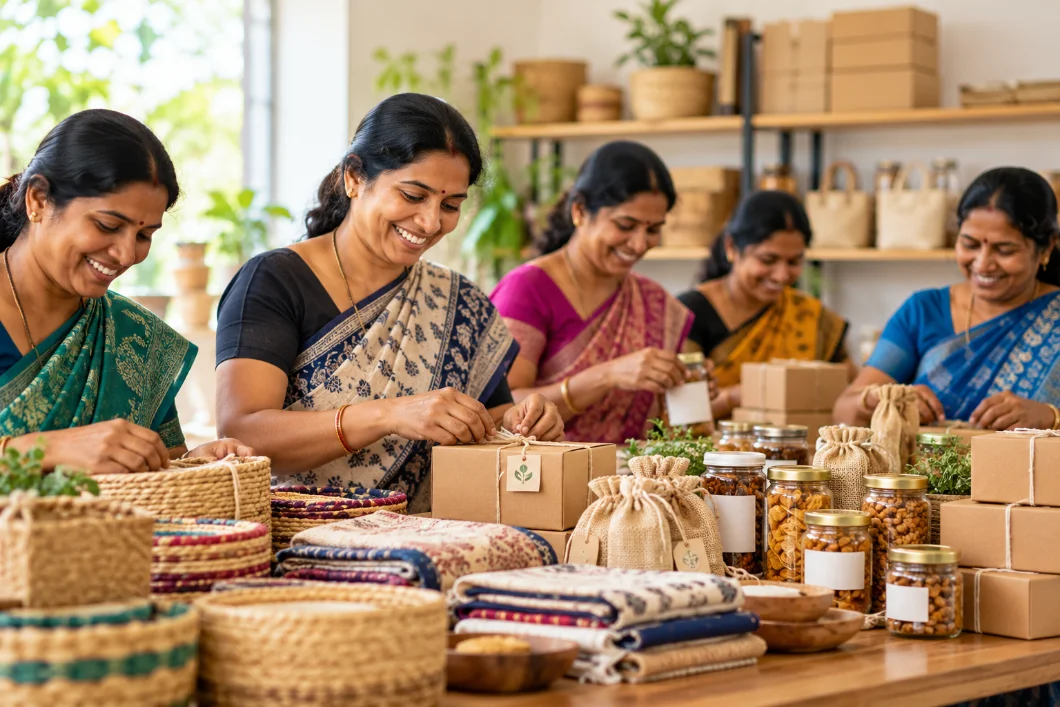
Women from self-help groups packing handmade products, textiles and food items for online orders

Helping Small Producers Move from Making Products to Selling Online

Technology is one part of a successful programme. Seller readiness, training, operations, logistics and ongoing promotion matter just as much.

  • Establishing an online presence for groups new to digital tools
  • Creating clear product photos, descriptions and catalogues
  • Helping sellers understand orders and manage their stores
  • Deciding between individual stores, a shared marketplace or both
  • Planning payments, delivery and customer support
  • Coordinating onboarding and support across many groups
  • Making sure someone owns promotion after launch

Choose the Right Online Selling Model for Your Programme

The right model depends on your objectives, how many groups take part, how ready they are and how operations will run. Not every model is part of every deployment.

Option 1

Individual online stores

Each participating group has its own online presence and product catalogue to showcase what it makes.

Option 2

A shared marketplace

Products from many groups are discoverable through one common platform.

Option 3

Individual stores connected to a shared marketplace

Each group keeps its own identity while taking part in a larger marketplace experience.

What It Takes to Launch and Sustain an SHG Marketplace

A practical sequence for planning your programme. Timelines and costs depend on the groups and scope involved.

  1. 1

    Identify participating groups

    Which groups will take part and the products they can reliably supply.

  2. 2

    Assess onboarding needs

    Decide which groups need managed onboarding support and which can set up themselves.

  3. 3

    Build product catalogues

    Create or organise product photos, descriptions and prices for each group.

  4. 4

    Set up payments and delivery

    Agree how payments, delivery and order handling will work for each seller.

  5. 5

    Agree ownership and support

    Who operates the platform, supports sellers and handles day-to-day questions.

  6. 6

    Plan how to reach buyers

    How the marketplace will be promoted so buyers find the groups’ products.

  7. 7

    Track participation

    Agree indicators such as groups onboarded, active listings and platform activity.

Common Questions About SHG Digital Commerce

How can self-help groups sell products online?

Through an individual online store, a listing on a shared marketplace, or both. Most groups also need help with product photos, descriptions, payments and delivery before they can sell reliably.

Can multiple SHGs have their own stores within a shared marketplace?

Yes, that is one possible model: each group keeps its own store and identity while its products also appear in a common marketplace. Whether it fits depends on the platform and programme requirements.

What does an institution need to do before launching an SHG marketplace?

Identify participating groups and products, decide the selling model, plan onboarding, agree payment and delivery arrangements, and decide who will run and promote the marketplace.

What role does a technology partner play?

A technology partner provides the stores, catalogues and marketplace platform, and can support seller setup. Training, logistics and promotion usually need to be planned with the institution.

How can institutions support product listing and seller onboarding?

Through workshops, in-person meetings and managed setup, where a team helps groups create stores, photograph products and write listings.

What should be considered when planning payments and delivery?

How each group will receive payments, who handles packing and shipping, delivery coverage and costs, and how returns and customer questions are managed.

How can an NGO or livelihood mission start a digital commerce programme?

Start with a small set of ready groups, pick a selling model, plan onboarding and operations, then expand as groups and processes mature. GlobalLinker can discuss options for your programme.

Guides for Organisations Supporting Small Producers

Guide

How can self-help groups sell online? A guide for the institutions that support them

Online selling models, what participating groups need to get started, and how institutions can plan onboarding, payments and delivery.

Read the guide to helping self-help groups sell online
Checklist

Marketplace RFP checklist: What to ask a technology partner

A practical checklist for assessing technology partners and defining requirements: model fit, onboarding, catalogues, integrations, security, data ownership, support and exit terms.

Explore the marketplace technology partner checklist

Planning a Digital Commerce Programme for SHGs or Local Producers?

Tell us about the groups you support, the products they make and what you want your digital programme to achieve.

See all GlobalLinker technology partnerships
We'll reply by email. Your details are used only to respond to this enquiry.