Product Specifications • Major Importing Countries & Product’s Trade Names
o Nigeria: Caustic Soda
o Uzbekistan: Natriy gidroksid
o Indonesia: Soda api cair
o Turkey: Sodyum hidroksit
o Côte d'Ivoire: Soude caustique
o Ghana: Caustic Soda
o Tanzania: Sodium hydroxide
• Available Product Types for International Trade
o Caustic Soda Lye (Liquid) is commonly available in concentrations such as 30% w/w, 32% w/w, 48% w/w, and 50% w/w.
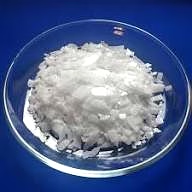
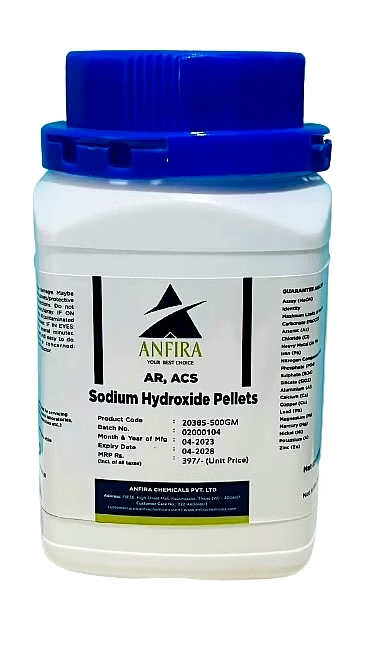
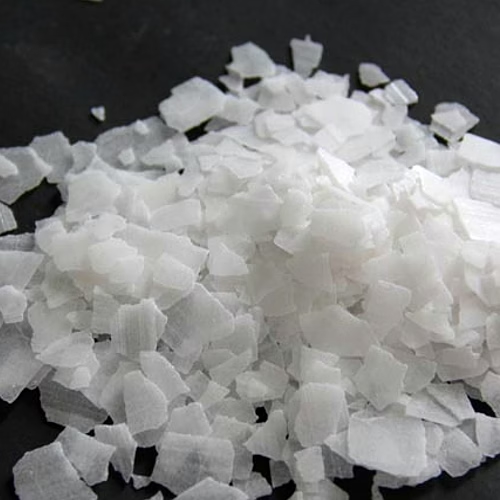
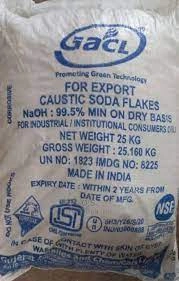
o Solid forms like flakes, pellets, and granules exist but are classified under different HSN codes.
• HSN Code, Category, and Subcategory from Indian Government Rules
o Exact 8-digit HSN Code: 28151200
o Category (Chapter 28): Inorganic chemicals; organic or inorganic compounds of precious metals, of rare-earth metals, of radioactive elements or of isotopes.
o Subcategory (Heading 2815): Sodium hydroxide (caustic soda); potassium hydroxide (caustic potash); peroxides of sodium or potassium.
o Subcategory (Sub-heading 281512): Sodium hydroxide (caustic soda): In aqueous solution (soda lye or liquid soda).
• Technical Data Figures for Properties o Physical Properties
Appearance: Clear, colorless liquid.
Odor: Typically odorless to faintly unpleasant.
Specific Gravity: Approximately 1.51 to 1.54 for a 48-50% solution.
Boiling Point: Around 145°C for a 50% solution, varying with concentration.
Solubility: Highly soluble in water, ethanol, and methanol, releasing significant heat upon dissolution.
Viscosity: A 50% solution can be 78 times more viscous than water, akin to olive oil.
o Chemical Properties
pH: Strongly alkaline, with a pH generally greater than 14.
Corrosiveness: Highly corrosive to organic compounds, metals (e.g., aluminum, zinc, tin), and certain plastics.
Reactivity: Exhibits a vigorous and highly exothermic reaction with acids.
Hygroscopicity: Readily absorbs moisture and carbon dioxide from the air, forming sodium carbonate.
Purity: Commercial grades typically ensure a minimum strength of 30%, 48%, or 50% w/w.
o Manufacturing Properties
Production Method: Primarily manufactured via the chlor-alkali process, involving the electrolysis of sodium chloride brine.
Key Feedstock: Concentrated brine (sodium chloride solution).
o Industrial Use
Pulp and Paper Industry: Essential for pulping wood and bleaching paper products.
Textile Industry: Used in mercerization of cotton to enhance strength, luster, and dye uptake.
Soap and Detergent Manufacturing: A crucial reagent in the saponification of fats and oils.
Water Treatment: Utilized for pH adjustment, neutralization of acidic effluents, and regeneration of ion-exchange resins.
Chemical Manufacturing: A fundamental chemical intermediate in the production of various organic and inorganic chemicals.
o Market Overview
Global Demand: Driven by growth in the pulp & paper, alumina, textiles, and water treatment industries.
Regional Consumption: Strong demand from Asia-Pacific, particularly China and India, for various industrial applications.
Price Volatility: Influenced by raw material costs (salt, electricity) and chlor-alkali plant operating rates.
Competitive Landscape: Key players operate globally with integrated production facilities.
Outlook: Stable growth projected due to continuous industrial expansion and infrastructure development.
o Packaging
UN Number: UN 1824 (Sodium hydroxide solution).
Hazard Class: 8 (Corrosive).
Packing Group: II
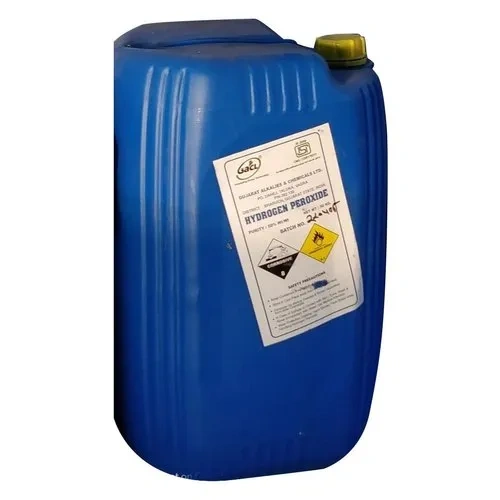
Container Types: Typically transported in dedicated tankers, Intermediate Bulk Containers (IBCs), or HDPE drums.
Labeling: Requires clear hazard symbols and handling instructions as per international regulations.
o Shipping
Mode of Transport: Predominantly shipped via bulk ocean freight for international trade.
Vessel Type: Chemical tankers equipped with specialized linings for corrosive liquids.
Documentation: Requires Material Safety Data Sheet (MSDS)/Safety Data Sheet (SDS), Certificate of Analysis (CoA), Commercial Invoice, Packing List, and Bill of Lading.
Temperature Control: May require temperature considerations to prevent freezing or crystallization, especially for higher concentrations.
Incompatible Materials: Strict segregation from incompatible chemicals, particularly acids and organic compounds, during transport.
o Ports (Indian Coastal Line Position)
Visakhapatnam Port: Located on the eastern coastline of India, facing the Bay of Bengal.
Mundra Port: Situated on the western coastline of India, in the Gulf of Kutch, Gujarat.
Nhava Sheva (Jawaharlal Nehru Port Trust - JNPT): Positioned on the western coastline of India, near Mumbai, Maharashtra.
Kandla Port: Also on the western coastline, in the Gulf of Kutch, Gujarat.
Chennai Port: Found on the eastern coastline of India, on the Bay of Bengal.
• INCOTERMS for FOB, CFR, CIF
o FOB (Free On Board): The seller fulfills their obligation when the goods are loaded on board the vessel nominated by the buyer at the named port of shipment, with the buyer bearing all costs and risks thereafter.
o CFR (Cost and Freight): The seller pays the costs and freight necessary to bring the goods to the named port of destination, but the risk of loss or damage transfers to the buyer once the goods are loaded onto the vessel.
o CIF (Cost, Insurance and Freight): The seller has the same obligations as under CFR but also procures marine insurance against the buyer's risk of loss or damage to the goods during carriage, with risk transferring upon loading.
• Payment for Full Advance, Sight LC, Combo of these two
o Full Advance: Payment is made by the buyer to the seller for the entire invoice amount before the goods are shipped, providing maximum security for the exporter.
o Sight LC (Letter of Credit): A bank-issued guarantee ensuring the seller receives payment upon presenting specified shipping documents to the bank, provided all terms and conditions are met.
o Combo: A hybrid payment structure, often involving a partial upfront payment (e.g., 20-30%) as an advance, with the remaining balance settled via a Sight Letter of Credit.
• Required Export Certificates from India
o Certificate of Origin (CoO): A document declaring the country where the product was manufactured.
o Material Safety Data Sheet (MSDS) / Safety Data Sheet (SDS): Provides comprehensive information about the substance for health, safety, and environmental protection.
o Certificate of Analysis (CoA): Confirms that the product meets specific quality and purity standards as tested.
o Bureau of Indian Standards (BIS) Certification (IS 252:2013): Ensures compliance with Indian national standards for caustic soda.
o Pre-shipment Inspection Certificate: May be required by the importing country to verify quality and quantity before shipment.
• Implied Taxation for India Domestic Trade and for Export from India
o India Domestic Trade: Caustic Soda Lye is subject to an 18% Goods and Services Tax (GST), comprising 9% Central GST (CGST) and 9% State GST (SGST) for intra-state sales, or 18% Integrated GST (IGST) for inter-state sales.
o Export from India: Exports are classified as "zero-rated supplies" under GST.
Company Profile for International Buyers
Kaizen BMS is a distinguished Government of India-recognized global exporter, specializing in a diverse portfolio of industrial products and raw materials. Headquartered in Amritsar, India, we excel in offering tailored contract manufacturing and efficient merchant exporting solutions designed for international markets. Our core philosophy revolves around cultivating robust, enduring trade relationships, underpinned by unwavering commitments to quality, reliability, and client satisfaction. We empower global businesses to optimize their procurement by leveraging India's competitive landscape, ensuring high-quality products and seamless supply chain experiences. Partner with Kaizen BMS for excellence in global trade.
Description provided by Kaizen Bms.

 FIEO Registered
Export Ready
FIEO Registered
Export Ready