Attar vs Perfume: What's the Difference?

Quick answer
Attar, also spelled ittar, is a concentrated perfume oil, traditionally distilled from flowers, woods and herbs into a base oil such as sandalwood oil, and worn without alcohol. Perfume is a blend of fragrance oils dissolved in alcohol and sold as a spray. Attar is dabbed on in small amounts, stays close to the skin and is usually made in small batches. Perfume is sprayed, usually projects further and is often made at scale. Which one suits you depends on how you wear it, how you sell it and what your customers expect.
The difference between attar and perfume, at a glance
Here is the attar and perfume difference in one table.
|
Feature |
Attar |
Perfume (eau de parfum) |
|
Base |
Oil, often sandalwood oil |
Alcohol and a little water |
|
Alcohol |
Usually none |
Yes |
|
Made from |
Flowers, woods, herbs and resins, distilled or blended |
Natural and synthetic aroma materials, blended and diluted |
|
How it is made |
Traditionally slow distillation in copper vessels, in small batches |
Blended and diluted, often at scale |
|
Strength |
Concentrated, so a little goes far |
Diluted; an eau de parfum typically holds about 15 to 20 per cent fragrance oil |
|
How you apply it |
A dab on the skin, or a roll-on or dropper |
A few sprays |
|
Projection |
Usually stays close to the skin |
Usually projects further |
|
How long it lasts |
Often a long time on skin, but it varies by attar and skin |
Varies by concentration and scent |
|
Usual pack |
Small bottles of a few ml |
Larger bottles, often 30 to 100 ml |
What is attar?
Attar, also called ittar, comes from the Arabic and Persian word for fragrance. The meaning in practice is a natural perfume oil made by capturing the scent of flowers, woods, herbs or resins in a base oil. Kannauj, in Uttar Pradesh, is India's best-known centre for attar making, and makers there supply perfumers, retailers and exporters.
How attar is made
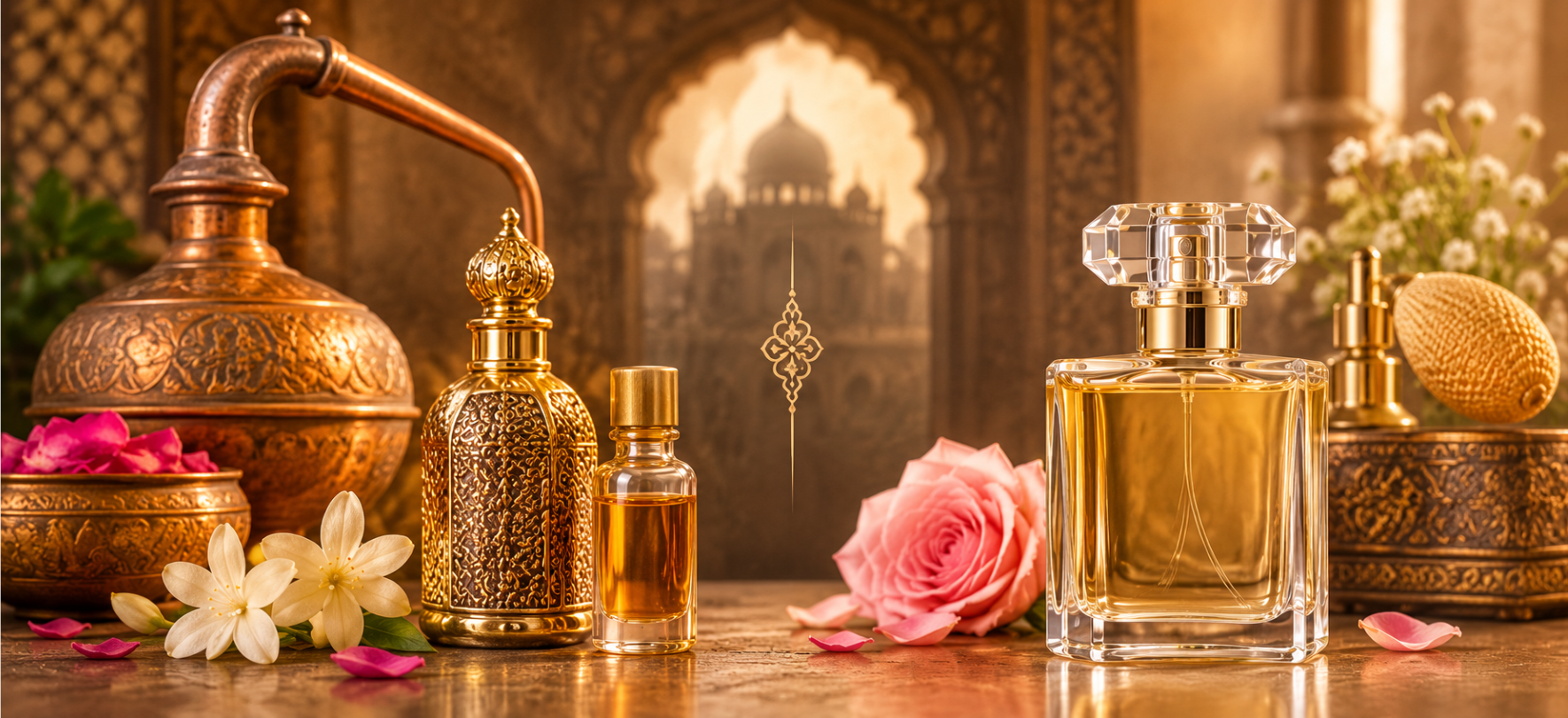
The traditional method is called deg-bhapka. Flowers or herbs are heated in a copper pot. The vapour travels through a bamboo pipe into a second copper vessel that holds sandalwood oil, and the oil absorbs the scent. The process can take many hours, and the attar is then rested before sale. Some modern makers blend materials instead of distilling. Ask any supplier which method it uses.
Is attar alcohol-free?
Most traditional attars are oil-based and contain no alcohol, which is why people who avoid alcohol often choose them. Some modern products mix attar with other ingredients, so read the label or ask the supplier. A spray perfume, by contrast, is built on alcohol.
Types of attar
Attars are named by the scent or the material they come from.
- Oud attar: a deep, woody scent from agarwood, popular with Gulf buyers.
- Mukhallat attar: a blend of several attars, so each maker's version smells different.
- Rose attar: a soft floral scent from rose petals.
- Sandalwood attar: a warm, creamy wood scent, often used as the base for other attars.
See attar manufacturers and wholesale suppliers in India for more types.
How to use attar
Apply a small dab to clean skin at the wrists, the neck or behind the ears. Warm skin helps the scent open. Do not rub it in, because rubbing can flatten the scent. Oils can mark light fabrics, so keep it off clothes. Start with one dab, because attar is concentrated.
Attar vs perfume oil: is there a difference?
Gulf buyers often say perfume oil where Indian makers say attar. Both are concentrated oils worn without alcohol. Attar is usually made by distilling natural materials, while some perfume oils mix natural and synthetic ingredients. Ask each supplier what its product contains.
Attar price and quality: what to ask
Prices vary widely. Oud and rose cost more than most because the materials cost more. When you compare attars, ask which materials the attar is made from, which base oil it uses, whether it is pure or blended, and whether the supplier can show test documents. "Pure attar" is not a regulated term, so ask what it means for that supplier.
Which one is right for your shop or brand?
- Stock attar if your customers want traditional, alcohol-free or Gulf-style scents, or you sell gifts in small bottles.
- Stock perfume if your customers want everyday sprays and larger bottles.
- Offer both if you serve mixed customers, and let the bottle size and price tell them apart.
- Make your own brand if you want your name on the bottle. See private label perfume manufacturers in India. [link to page 1]
Find attar suppliers in India
India has attar makers in Kannauj and across the country. On GlobalLinker you can compare suppliers and send one enquiry to several of them. Start with attar manufacturers and wholesale suppliers. Then see wholesale fragrance oils, perfume bottle wholesale and packaging for attar bottles, and private label vs white label vs OEM perfume if you plan your own brand.
FAQ
1. What is the difference between attar and perfume?
Attar is a concentrated perfume oil, usually made from natural materials in a base oil such as sandalwood oil, and worn without alcohol. Perfume is a scent blended with alcohol and sprayed. Attar is dabbed on, stays closer to the skin and comes in small bottles.
2. What is attar?
Attar, also called ittar, is a natural perfume oil. Makers capture the scent of flowers, woods, herbs or resins in a base oil, traditionally by slow distillation in copper vessels. Kannauj in Uttar Pradesh is India's best-known centre for attar making.
3. Is attar alcohol-free?
Most traditional attars are oil-based and contain no alcohol. Some modern products mix attar with other ingredients, so check the label or ask the supplier. If alcohol-free matters to your customers, ask each supplier to confirm the base oil and ingredients in writing.
4. How is attar made?
The traditional method is deg-bhapka. Flowers or herbs are heated in a copper pot, and the vapour passes through a bamboo pipe into a vessel of sandalwood oil, which absorbs the scent. Some modern makers blend materials instead. Ask each supplier which method it uses.
5. How do you use attar?
Apply a small dab to clean skin at the wrists, neck or behind the ears. Start with one dab, because attar is concentrated, and do not rub it in. Roll-on and dropper bottles make this easy. Oils can mark light fabrics, so keep it off clothes.
6. What is pure attar, and how can I check it?
There is no single legal meaning of pure attar, so ask the supplier what it means. Ask which materials and base oil it uses, whether it is blended, and whether test documents are available. Request a sample and compare suppliers before you order in bulk.
7. What affects the price of attar?
Price depends on the materials, the method and the pack size. Oud and rose cost more because the materials cost more, and small-batch distillation takes time. Attar is concentrated, so compare the price per ml and the quality, not the bottle size alone.
8. Is attar stronger than perfume?
Attar is more concentrated, so a little goes a long way, but it usually stays closer to the skin than a spray perfume, which projects further. How long each lasts depends on the scent, the quality and your skin, so test both before you stock them.
Image source: Open AI
Disclaimer: The views and opinions expressed in this article are those of the author and do not necessarily reflect the views, official policy or position of GlobalLinker.
My endeavour is to help business owners digitise, network and grow easily. Towards this I help organise webinars, curate articles and answer queries via our help centre.