
Our Products
Showing 1-24 of 195 products

FIGS DRIED
Dried figs are simply fresh figs that have had the majority of their water content removed through dehydration. This process concentrates the flavors, natural sugars, and nutrients of the figs, resulting in a sweet and chewy dried fruit. Here are some key points about dried figs:
Production: Dried figs are produced by allowing fresh figs to dry either naturally in the sun or through artificial drying methods like dehydrators. The figs may be left whole or sliced before drying.
AVOCADOS
Avocados are a popular and nutritious fruit that is known for its creamy texture and unique flavor. Here are some key points about avocados:
Botanical Information: Avocado (Persea americana) is a fruit that belongs to the Lauraceae family. While often treated as a vegetable in culinary contexts, it is botanically a berry.
Varieties: There are various avocado varieties, and they can be broadly categorized into two types: Hass and non-Hass avocados. Hass avocados are the most common, known for their dark, pebbly skin and creamy texture. Non-Hass varieties include Bacon, Fuerte, and Reed, each with its own characteristics.
GOOSEBERRIES
Avocados are a popular and nutritious fruit that is known for its creamy texture and unique flavor. Here are some key points about avocados:
Botanical Information: Avocado (Persea americana) is a fruit that belongs to the Lauraceae family. While often treated as a vegetable in culinary contexts, it is botanically a berry.
Varieties: There are various avocado varieties, and they can be broadly categorized into two types: Hass and non-Hass avocados. Hass avocados are the most common, known for their dark, pebbly skin and creamy texture. Non-Hass varieties include Bacon, Fuerte, and Reed, each with its own characteristics.
Nutritional Content: Avocados are nutrient-dense and are a good source of healthy monounsaturated fats. They also contain vitamins and minerals, including potassium, vitamin K, vitamin E, vitamin C, and B-vitamins.
BORE
Jujubes, also known as red or Chinese dates, are small, round fruits that come from the jujube tree (Ziziphus jujuba). These fruits have been cultivated for thousands of years and hold cultural and medicinal significance in various regions. Here are some key points about jujubes:
Botanical Information: Jujube trees belong to the buckthorn family (Rhamnaceae) and produce small, oval-shaped fruits. The jujube fruit is often referred to as a drupe, though it has a somewhat unique texture compared to traditional drupes.
Varieties: There are different varieties of jujubes, and they can vary in size, shape, and flavor. Common varieties include Li, Lang, Sherwood, and Honey Jar.
Appearance and Taste: Jujubes are typically small, with a diameter ranging from one to two inches. They can be round or elongated and have a thin, edible skin. The flesh is crisp and sweet, with a flavor reminiscent of apples.
Culinary Uses: Jujubes can be consumed fresh or dried. In their fresh form, they are often eaten as a snack, added to salads, or used in culinary dishes. Dried jujubes are commonly used in traditional Asian cuisine, and they have a chewy, date-like texture.
LITCHI
Lychee, also spelled as litchi, is a tropical fruit that belongs to the soapberry family (Sapindaceae). It is native to Southeast Asia and is known for its sweet and fragrant taste. Here are some key points about lychee:
Appearance: Lychee has a rough, pinkish-red or orange peel that is inedible. The flesh inside is translucent, juicy, and white. The fruit typically has a single large seed in the center.
Flavor and Aroma: Lychee has a sweet and floral flavor with a hint of tartness. Its aroma is often described as a combination of rose, grape, and pear.
Nutritional Content: Lychee is a good source of vitamin C, vitamin B6, niacin, riboflavin, folate, copper, potassium, phosphorus, magnesium, manganese, and antioxidants.
Culinary Uses: Lychee is commonly eaten fresh as a snack or dessert. It is also used in fruit salads, smoothies, cocktails, and various desserts like ice creams, sorbets, and sauces.
Processing: Lychees are often canned, dried, or made into jams and jellies. Canned lychees are widely available in many parts of the world.
ASAFOETIDA
Asafoetida, also known as hing, is a pungent spice derived from the resin of the Ferula species, particularly Ferula assa-foetida. Here are some key aspects of asafoetida:
Source:
Asafoetida is obtained from the resinous gum extracted from the roots of the Ferula plant, which is native to the Middle East and Central Asia.
Flavor and Aroma:
Asafoetida has a strong, pungent smell, often described as fetid or sulfuric. However, when used in cooking, it imparts a savory and umami flavor to dishes.
Forms:
Asafoetida is available in various forms, including powdered, resin, and compounded with flour or gum to reduce its intensity.
The powdered form is commonly used in culinary applications.
Culinary Uses:
Asafoetida is a key ingredient in many Indian, Middle Eastern, and Central Asian cuisines.
It is often used in vegetarian dishes, especially in lentil and legume preparations, to impart a flavor reminiscent of onion and garlic.
Digestive Aid:
Asafoetida has been traditionally used in Ayurveda and other traditional medicine systems as a digestive aid.
It is believed to help reduce flatulence and improve digestion.
Substitute for Onion and Garlic:
In certain cultures or during religious observances that restrict the use of onion and garlic, asafoetida is used as a substitute to add flavor to dishes.
BAY LEAVES
Bay leaves, also known as laurel leaves, come from the bay laurel tree (Laurus nobilis) and are commonly used as a culinary herb to add flavor to various dishes. Here are some key points about bay leaves:
Flavor and Aroma: Bay leaves have a subtle, aromatic flavor that adds depth to soups, stews, sauces, and other dishes. They are often used in Mediterranean, Indian, and other cuisines.
Usage: While bay leaves are used to infuse flavor into dishes during cooking, they are typically removed before serving. This is because bay leaves can be tough and have a sharp edge that can be unpleasant if eaten.
SORGHUM
Sorghum is a versatile and nutritious cereal grain that belongs to the grass family Poaceae. It has been cultivated for thousands of years and is known for its hardiness and adaptability to various climates. Here are some key points about sorghum:
Botanical Information: Sorghum bicolor is the most commonly cultivated species of sorghum. It is a tall grass with a cluster of grain at the top of the stem.
Cultivation: Sorghum is grown in many parts of the world, particularly in Africa, Asia, and the Americas. It is well-suited to arid and semi-arid regions and can tolerate heat and drought conditions better than many other crops.
Grain Types: Sorghum is grown for its grain, which comes in different varieties, including grain sorghum, sweet sorghum, and broomcorn. Grain sorghum is the type most commonly used for human consumption.
SOYA BEAN
Soybeans, often referred to as soya beans, are a legume native to East Asia. They have become one of the most widely cultivated and consumed crops globally. Here are key points about soybeans:
Nutritional Content: Soybeans are highly nutritious and are considered a good source of protein, healthy fats, vitamins, and minerals. They are particularly rich in protein, making them a valuable plant-based protein source.
Protein Source: Soybeans are unique among plant-based foods because they contain all the essential amino acids, making them a complete protein source. This makes soy a popular choice for vegetarians and vegans.
Uses: Soybeans have a wide range of uses. They can be consumed in various forms, including whole soybeans, soy milk, tofu, tempeh, miso, and soy sauce. Additionally, soy protein isolate and soy protein concentrate are used as ingredients in many processed foods.
Tofu: Tofu, also known as bean curd, is a popular soy product. It is made by coagulating soy milk and pressing the resulting curds into soft, white blocks. Tofu has a neutral taste and absorbs the flavors of the ingredients it is cooked with.
Soy Milk: Soy milk is a plant-based alternative to cow's milk. It is produced by soaking, grinding, and boiling soybeans. Soy milk is commonly used as a dairy milk substitute in beverages, cereals, and cooking.
Tempeh: Tempeh is a traditional Indonesian fermented soy product. It is made by fermenting cooked soybeans with a tempeh culture. Tempeh has a firm texture and a nutty flavor.
Miso: Miso is a traditional Japanese seasoning produced by fermenting soybeans with salt and koji (a type of fungus). It is commonly used in soups, sauces, and marinades.
Edamame: Edamame are young, green soybeans still in the pod. They are often boiled or steamed and served as a snack or appetizer. Edamame is a popular and nutritious food in many cultures.
Soybean Oil: Soybean oil is extracted from soybeans and is widely used in cooking and food processing. It is a versatile oil with a high smoke point.
Environmental Impact: Soybeans are a major crop worldwide and have raised environmental concerns, particularly related to deforestation. In some regions, soy cultivation is associated with clearing land for agriculture, leading to habitat loss.
Genetically Modified (GM) Varieties: A significant portion of commercially grown soybeans is genetically modified to enhance traits such as resistance to pests or herbicides. This has led to debates and concerns regarding the environmental and health impacts of genetically modified organisms (GMOs).
Soybeans play a crucial role in global food production, providing a sustainable source of protein and serving as a versatile ingredient in various cuisines. However, it's essential to be mindful of the environmental and social considerations associated with soy cultivation, especially in regions where its production has led to deforestation and other ecological issues.
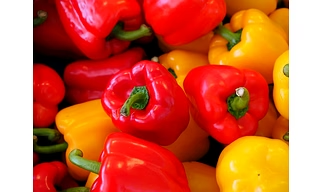
RED BELL PEPPER
Bell peppers: advantages, dangers, preparation, and more
They are a great source of vitamin C, particularly the reddest, most ripe peppers. In addition, peppers are a good source of fiber and vitamin A. Additionally, bell peppers contain antioxidants that may help prevent diseases like cardiovascular disease and some
AMLA
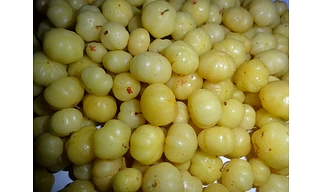
Phyllanthus Malacca tree, Indian gooseberry, myrobalan, emblica, emblic, and amla. It strengthens eyesight, burns fat, and aids in the fight against the common cold. It strengthens defenses. Amla enhances the beauty of hair.
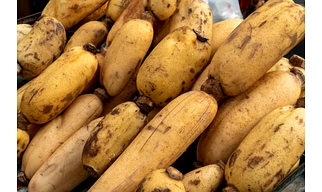
BOTTLE GOURD
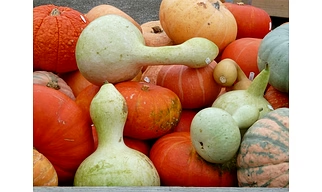
Gourds such as calabash, bottle, white-flowered, long melon, New Guinea, and Tasmanian beans
FRESH METHI LEAVES
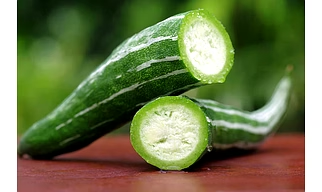
SPONGE GOURD
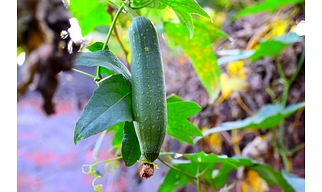
Pusa Chikni variety: It has significant levels of iron, magnesium, zinc, thiamine, vitamin C, riboflavin, and dietary fiber.
BRINJAL (BAINGAN)
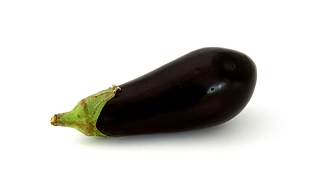
We offer a large assortment of fresh veggies, including high-quality varieties of brinjal.
Long Pusa Purple, Pusa Purple,
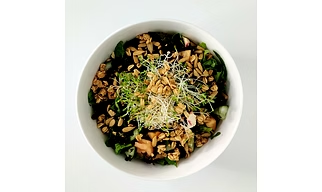
SUNFLOWER SPROUT
Packed with Antioxidants.
Could Offer Protection Against Cancer.
Rich in Fibre.
High in K-complex vitamin
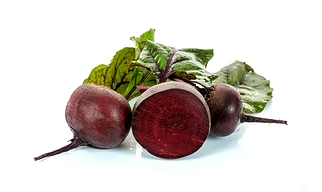
BEETROOT
Compounds in Beetroot Have Strong Medicinal Effects.We offer an extensive selection of hygienic and fresh.
The Red Ace...
Cylindra, Detroit Dark Red...
The Ruby Queen.
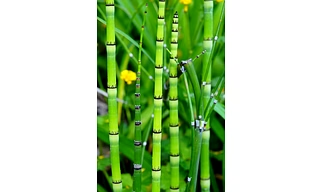
BAMBOO SHOOT
There are reports of antiviral, anticancer, and antibacterial properties for the shoots.We provide consumable bamboo shot of the highest caliber.
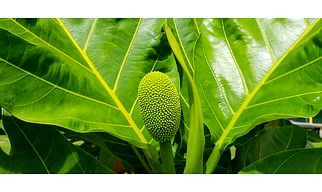
BREADFRUIT
We offer a large selection of the highest quality breadfruit in order to maintain our outstanding position in the market.
three different species: Artocarpus mariannensis Trécu, Artocarpus altilis (Parkinson) Fosberg, and Artocarpus camansi Blanco
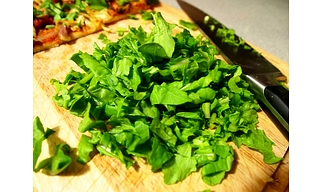
FRESH ARUGULA
It has vitamin C, which is an effective antioxidant that boosts immunity.
vitamin K, which facilitates the coagulation of blood. We promise that the arugula is fresh.
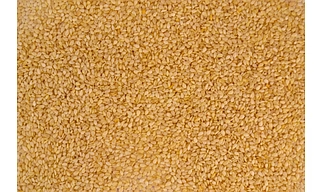
LINSEED OR FLAX
Available in every kind of lineseed: Nilam, Garima, Gaurav, Sweta, Shikha, Lukshami, Meera, and Sharada
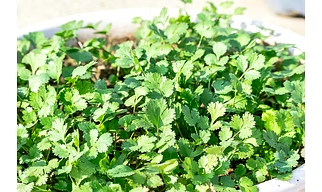
CORIANDER LEAF
We always provide the highest quality coriander leaf because it's a very important vegetable.

SUN FLOWER
All types of sun flower available :- Sankul-moden, LS-11, jwalamukhi, MSFH-9