
Our Products
Showing 1-24 of 49 products
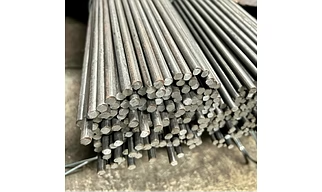
STAINLESS STEEL ROUND BAR
STAINLESS STEEL ROUND BAR
Stainless Steel Round Bar Specification: ASTM A276 / A479, ASME SA276 / A479
Grades : SS 300,SS 200,SS 400 series , 904L, Nickel Alloys Monel, Inconel, Hastelloy, Duplex, Super Duplex.
SS 304/304L/304H//309/310/310S/316/316L/316Ti/317/317L/321/321H/
347/347H/409/410/420/430/431/440A/440B/440C/446/904L/15-5PH/17-4PH
Dimension Standard :EN, DIN, JIS, ASTM, BS, ASME, AISI
Size :1mm- 400mm Thickness
length: 50 mm to 6000 mm Long,1 To 6 Meters, Custom Cut Length
Finish: bright, export bright, black, forged etc.
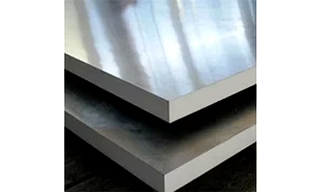
Stainless Steel Sheets & Plates
Specification of Stainless Steel Sheets and Plates:
Stainless Steel Sheets and Plates Specification :�ASTM A240 / ASME SA240.
Grades :SS 253MA/304/304L/304H/309/310/310S/316/316L/316Ti/317/317L/321/321H/
347/347H/409/410/420/430/446/904L
Above all we also stock SS 409, SS 410, SS 420, SS 430, SS 904L Sheets, Plates, Strips & Circles.
Dimension Standard :JIS, AISI, ASTM, GB, DIN, EN, etc
Width :1000mm, 1219mm, 1500mm, 1800mm, 2000mm, 2500mm, 3000mm, 3500mm Custom as per requirement
Length :2000mm, 2440mm, 3000mm, 5800mm, 6000mm, etc Custom as per requirement
Thickness :0.3 mm to 120 mm
Form :Coils, Foils, Rolls, Plain Sheet, Shim Sheet, Perforated Sheet, Chequered Plate, Strip, Flats, Blank (Circle), Ring (Flange) etc.
Surface Finishing :Hot rolled plate (HR), Cold rolled sheet (CR),2B, 2D, BA, NO.1, NO.4, NO.8, 8K, mirror, Chequered, embossed, hair line, sand blast, Brush, etching, SATIN (Met with Plastic Coated) etc.
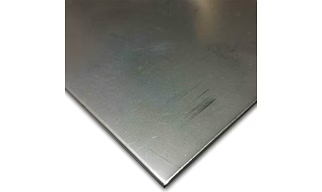
Hastelloy C22/C276 Sheets and Plates
STANDARD UNS WNR. JIS EN
Hastelloy C22 N06022 2.4602 NW 6022 NiCr21Mo14W
Hastelloy C276 N10276 2.4819 NW 0276 NiMo16Cr15W
Dimension Standard :JIS, AISI, ASTM, GB, DIN, EN, etc
Width :1000mm, 1219mm, 1500mm, 1800mm, 2000mm, 2500mm, 3000mm, 3500mm, etc
Length :2000mm, 2440mm, 3000mm, 5800mm, 6000mm, etc
Thickness :0.3 mm to 120 mm
Form :Coils, Foils, Rolls, Plain Sheet, Shim Sheet, Perforated Sheet, Chequered Plate, Strip, Flats, Blank (Circle), Ring (Flange) etc.
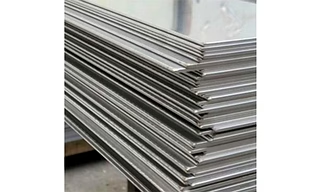
Duplex Steel S31803/S32205 Sheets and Plates
Duplex steel grades S31803 (also known as 2205) and S32205 are highly versatile and widely used types of duplex stainless steel sheets and plates. They belong to the family of stainless steels that have a mixed microstructure of austenite and ferrite, typically in a roughly 50/50 ratio. This combination provides them with enhanced properties compared to standard austenitic or ferritic stainless steels.
Key Characteristics and Properties:
Composition:
S31803 (2205): Typically contains around 22% Chromium (Cr), 5-6% Nickel (Ni), 3% Molybdenum (Mo), and 0.14-0.20% Nitrogen (N).
S32205: This is an enhanced version of S31803 with a slightly higher Chromium content (22-23%), similar Nickel (4.5-6.5%) and Molybdenum (2.5-3.5%) content, and a similar Nitrogen range (0.08-0.20% or 0.14-0.20% depending on the specific standard). The higher Cr and often Mo and N contribute to slightly improved corrosion resistance.
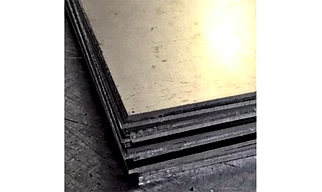
Carbon Steel Sheets & Plates
Carbon steel sheets and plates are flat-rolled products composed mainly of iron and carbon, with small percentages of other elements like manganese, silicon, and copper. The carbon content is the primary determinant of the steel's properties.
Carbon Steel Sheets & Plates: Composition and Properties
Steel Sheets: Typically have a thickness of less than 6 mm (0.236 inches).
Steel Plates: Generally thicker than 6 mm (0.236 inches).
Carbon Content: Carbon steel is broadly classified based on its carbon content:
Low Carbon Steel (Mild Steel): 0.05% to 0.25% carbon. Known for its high ductility, toughness, machinability, and weldability. It is relatively low in cost and easy to form.
Medium Carbon Steel: 0.25% to 0.60% carbon. Offers a balance of strength and ductility, with improved hardenability compared to low carbon steel.
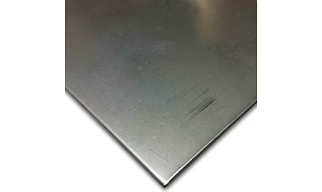
Aluminum & Aluminum Alloy Sheets & Plates
Aluminum and aluminum alloy sheets and plates are flat-rolled products available in various thicknesses and sizes, distinguished by their aluminum content and the addition of other elements to enhance specific properties.
Aluminum Sheets & Plates: Composition and Properties
Aluminum Sheets: Typically have a thickness ranging from 0.006 inches (0.15 mm) up to 0.249 inches (6.3 mm).
Aluminum Plates: Generally thicker than 0.250 inches (6.35 mm).
Pure Aluminum (1xxx series): These sheets and plates are made of 99% or more aluminum. They are known for:
Excellent corrosion resistance
High thermal and electrical conductivity
Good workability
Low strength
Aluminum Alloys (2xxx-8xxx series): Aluminum is often alloyed with other elements like copper, manganese, silicon, magnesium, zinc, and lithium to improve its strength, hardness, and other properties. Each series has a primary alloying
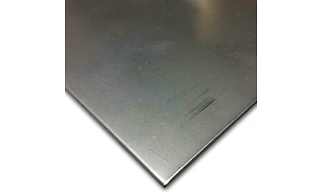
Titanium Alloy Sheets and Plates
Specification of Titanium Sheets and Plates:
Titanium Sheets and Plates Specification :ASTM B265 / ASME SB265
Dimension Standard :JIS, AISI, ASTM, GB, DIN, EN, etc
Width :1000mm, 1219mm, 1500mm, 1800mm, 2000mm, 2500mm, 3000mm, 3500mm, etc custom as per requirement
Length :2000mm, 2440mm, 3000mm, 5800mm, 6000mm, etc custom as per requirement
Thickness :0.3 mm to 120 mm
Form :Coils, Foils, Rolls, Plain Sheet, Shim Sheet, Perforated Sheet, Chequered Plate, Strip, Flats, Blank (Circle), Ring (Flange) etc.
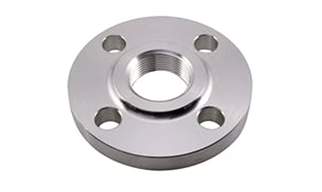
Stainless Steel Flanges
Stainless steel flange simplified as SS flange, it refers to the flanges that made of stainless steel. It is a mechanical component used primarily in piping systems to connect two sections of pipe or other equipment, providing a robust and reliable junction.
The common material standards and grades for stainless steel are ASTM A182 Grade F304/L and F316/L, with pressure ratings ranging from Class 150 to Class 2500. Stainless steel is utilized in more industries than carbon steel because it offers superior corrosion resistance and an aesthetically pleasing appearance.
304 Stainless Steel: General-purpose; good corrosion resistance.
316 Stainless Steel: Higher corrosion resistance, suitable for marine environments.
410 Stainless Steel: Martensitic; often used in applications requiring high strength.
Applications:
Oil and Gas: Used in pipelines and processing facilities.
Water Treatment: Common in systems handling potable water.
Chemical Processing: Essential for systems requiring low contamination and corrosion resistance.
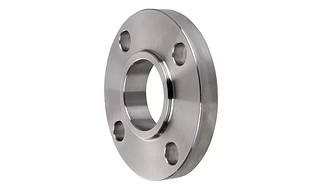
Carbon Steel Flanges
Carbon steel flanges are robust, cost-effective components used to connect pipes, valves, and other equipment in industrial settings. They are typically made from carbon steel, an iron-carbon alloy, and offer good strength, durability, and corrosion resistance. These flanges come in various types, including slip-on, weld neck, blind, and lap joint, each suited to different applications and construction methods.
Key Characteristics of Carbon Steel Flanges:
Strength and Durability:
Carbon steel provides a good balance of strength and toughness, allowing flanges to withstand the pressures and stresses of industrial piping systems.
Corrosion Resistance:
Carbon steel offers reasonable resistance to corrosion, making it suitable for many industrial environments.
Cost-Effectiveness:
Compared to other materials like stainless steel, carbon steel flanges are generally more affordable, making them a preferred choice for many applications.
Versatility:
Carbon steel flanges are available in various sizes, shapes, and face types (raised face, flat face, ring-type joint)
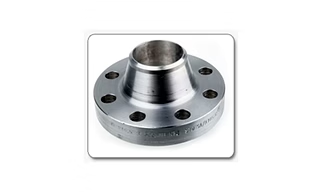
Titanium & Titanium Alloys Flanges
Specification of Titanium Gr.1/Gr.2/Gr.5/Gr.9 Flanges:
Titanium Flanges Specification :ASTM B363 / ASME SB363
Dimension Standard :ANSI/ASME B16.5, B 16.47 Series A & B, B16.48, BS4504, BS 10, EN-1092, DIN, etc.
Standard :ANSI Flanges, ASME Flanges, BS Flanges, DIN Flanges, EN Flanges, etc.
Size :1/2 (15 NB) to 48" (1200NB)
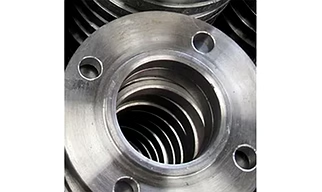
Hastelloy Flanges
Hastelloy flanges are pipe fittings designed for secure connections in corrosive environments, offering excellent resistance to a wide range of chemicals and high temperatures. They are made from Hastelloy, a nickel-based alloy, and come in various types like slip-on, weld-neck, and blind flanges, each suitable for different piping systems.
Key Features:
Corrosion Resistance:
Hastelloy flanges are known for their exceptional resistance to corrosion from a wide range of chemicals, including oxidizing and reducing agents.
High-Temperature Strength:
They can withstand high temperatures, making them suitable for various industrial applications.
Versatility:
Available in different types (slip-on, weld-neck, blind) and sizes, they can be used in various piping systems and applications.
Reliability:
They provide leak-free connections and are durable in challenging environments.
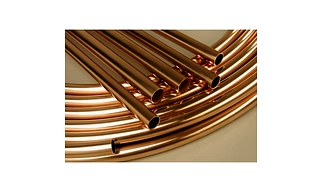
Copper Nickel Alloy Pipes Tubes
Copper-nickel alloy pipes and tubes are robust metal pipes and tubes made from a blend of copper and nickel, often with additions of iron and manganese for enhanced strength and corrosion resistance. They are particularly valued for their durability and resistance to corrosion in harsh environments, making them ideal for marine applications, industrial use, and more.
Key features and benefits:
High corrosion resistance:
Copper-nickel alloys are highly resistant to corrosion from seawater and other aggressive environments, making them suitable for applications like marine piping, heat exchangers, and desalination plants.
Strength and durability:
The combination of copper and nickel provides good strength and durability, allowing them to withstand various stresses and pressures.
Welding and fabrication:
Copper-nickel alloys are generally weldable and easily fabricated, allowing for customized designs and applications.
Thermal conductivity:
They exhibit good thermal conductivity, making them suitable for heat transfer applications like heat exchangers and condensers.
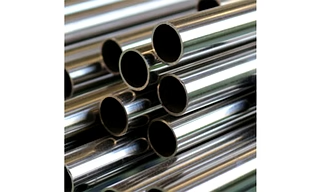
Hastelloy Pipes Tubes
There are two types of Hastelloy C22/C276 Pipes &tubes. The first one is Hastelloy Seamless Pipes and Tubes- These pipes and tubes are manufactured by drawing out them from a quarter and after that give it to the final size by6 cold-drawing. These are having features like uniform dimensions, corrosion resistance, cost-effectiveness, and consistency. These pipes are manufactured by plate rolling and then weld the seamless alloy to make pipes. Methods like laser, high-frequency process of welding and TIG is used for making pipes.
ASTM B622 Hastelloy Alloy C276 Seamless Pipes, Alloy C22 Tubing, ASTM B619 Hastelloy C22 Welded Tube Supplier, Hastelloy C276 Tubes Exporter, UNS N06022 Pipes, DIN 2.4819 Tubing, Hastelloy C22 Pipes Manufacturer in India.
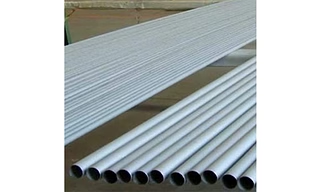
Titanium Alloy Pipes Tubes
Titanium alloy pipes and tubes are highly valued for their exceptional corrosion resistance, high strength-to-weight ratio, and ability to withstand various temperatures and environments. They are commonly used in industries like chemical processing, aerospace, and marine due to their durability and resistance to harsh conditions.
Here's a more detailed look at titanium alloy pipes and tubes:
Key Properties and Advantages:
Corrosion Resistance:
Titanium is highly resistant to corrosion in various media, including chlorides, hypochlorites, and other aqueous solutions, making it suitable for challenging environments.
Strength and Durability:
Titanium alloys offer a good balance of strength and ductility, with Grade 5 being particularly strong.
Lightweight:
Titanium is significantly lighter than steel, contributing to its high strength-to-weight ratio.
Temperature Resistance:
Titanium can withstand both high and low temperatures, making it versatile for various applications.
Welding and Fabricability:
Titanium is generally considered weldable, and can be formed into various shapes and sizes.
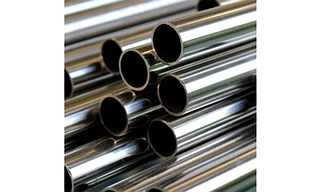
Stainless Steel Pipes Tubes
Stainless steel pipes and tubes are cylindrical products, primarily used for fluid conveyance and structural support, made from stainless steel alloys. They come in various forms like seamless and welded, and are known for their corrosion resistance and durability. Stainless steel pipes and tubes are versatile and find application in diverse industries such as construction, marine, chemical processing, and automotive.
Key Features and Properties:
Material
Stainless steel alloys containing chromium and nickel, providing corrosion resistance
Form
Seamless: Produced without welding, offering high strength and integrity.
Welded: Manufactured using a welding process, often TIG welding, on a continuous tube mill.
Applications
Heat Exchangers: Used as tubes in shell and tube heat exchangers for fluid passage and heat exchange.
Fluid Conveyance: Transporting fluids or gases in various industrial settings.
Structural Support: Used in construction and other structural applications.
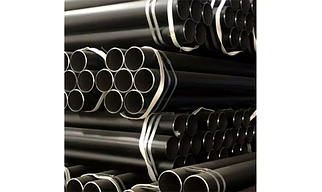
Carbon Steel Pipes Tubes
Carbon steel pipes and tubes are hollow structural components made from an alloy of iron and carbon. They are known for their strength, durability, and cost-effectiveness, making them suitable for various applications like construction, manufacturing, and infrastructure.
Key Features and Benefits:
High Strength and Durability:
Carbon steel offers excellent tensile strength, allowing it to withstand high pressures and loads.
Cost-Effective:
Compared to other materials like stainless steel, carbon steel is generally more affordable.
Versatility:
It can be used in various industries and applications, including oil and gas, chemical processing, water treatment, and construction.
Corrosion Resistance:
While carbon steel can corrode in humid environments, it performs well in dry conditions and can be protected through surface treatments like galvanizing or coating.
Welding and Fabrication:
Carbon steel pipes and tubes are relatively easy to weld and shape, making them suitable for complex applications.
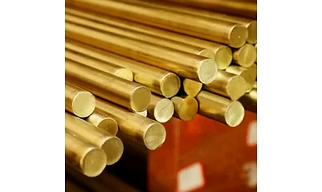
COPPER ROUND BAR
COPPER ROUND BAR
Size : 3mm-300mm
Length :50 mm to 6000 mm Long, 1 To 6 Meters, Custom Cut Length
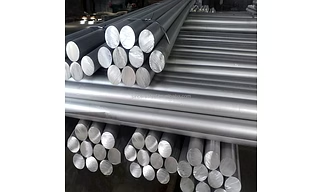
Aluminium & Aluminium Alloy Round Bars
Aluminium Round Bars/Rodsare used in many general purposes such as nuclear reactors, cryogenic storage tanks, pollution control components, gas turbine parts, marine engineering, aircraft components, gas drilling, rocket motors, pumps, and many production industries. These bars and rods are applicable in various industries offshore oil drilling companies, power generation, gas processing, chemical processing, pharmaceuticals, chemical equipment, pharmaceutical equipment, sweater equipment, heat exchanger, paper industry, dairy industry, mining, and pulp industry.
Specification of Aluminium Round Bar
Aluminium Round Bar Specification :ASTM B211, ASME SB211
Dimension Standard :EN, DIN, JIS, ASTM, BS, ASME, AISI
Size :14mm-300mm
Length :50 mm to 6000 mm Long,1 To 6 Meters, Custom Cut Length
Form :Round, Square, Hex(A/F), Rectangle, Billet, Ingot, Forging Etc.
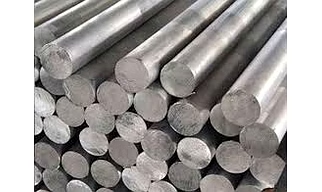
Titanium & Titanium Alloys Round Bars
Specification of Titanium Round Bar
Titanium Round Bar Specification:ASTM B348 / ASME SB348, ASTM B863 / SB863
Dimension Standard:EN, DIN, JIS, ASTM, BS, ASME, AISI
Size:1mm-300mm
Length: 50 mm to 6000 mm Long, 1 To 6 Meters, Custom Cut Length
Form:Round, Square, Hex (A/F), Rectangle, Billet, Ingot, Forging Etc.
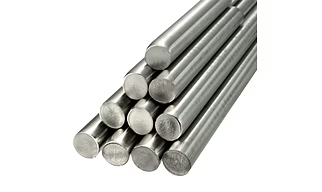
Inconel 600/601/625/718 Round Bar & Rods
Specification of Inconel 600/601/625/718 Round Bar
Inconel Round Bar Specification:ASTM B166, ASME SB166
Dimension Standard:EN, DIN, JIS, ASTM, BS, ASME, AISI
Size:14mm-300mm
Length: 50 mm to 6000 mm Long, 1 To 6 Meters, Custom Cut Length
Form:Round, Square, Hex (A/F), Rectangle, Billet, Ingot, Forging Etc.
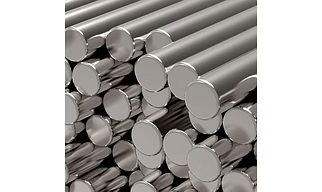
Super Duplex S32750/S32760 Round Bar & Rods
Specification of Super Duplex Steel S32750/S32760 Round Bar
Super Duplex Steel Round Bar Specification :ASTM A276 / A479, ASME SA276 / A479
Dimension Standard :EN, DIN, JIS, ASTM, BS, ASME, AISI
Size :14mm-300mm
Length :50 mm to 6000 mm Long, 1 To 6 Meters, Custom Cut Length
Form :Round, Square, Hex(A/F), Rectangle, Billet, Ingot, Forging Etc.
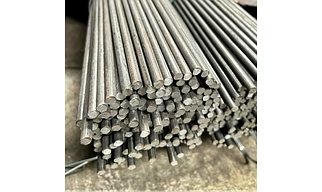
Duplex Steel S31803/S32205 Round Bar & Rods
Specification of Duplex Steel S31803/S32205 Round Bar
Duplex Steel Round Bar Specification :ASTM A276 / A479, ASME SA276 / A479
Dimension Standard :EN, DIN, JIS, ASTM, BS, ASME, AISI
Size :14mm-300mm
Length :50 mm to 6000 mm Long, 1 To 6 Meters, Custom Cut Length
Form :Round, Square, Hex(A/F), Rectangle, Billet, Ingot, Forging Etc.
Nickel 200/201 Round Bar & Rods
Specification of Nickel 200/201 Round Bar
Nickel Round Bar Specification: ASTM B160, ASME SB160
Dimension Standard : EN, DIN, JIS, ASTM, BS, ASME, AISI
Size : 14mm-300mm
Length : 50 mm to 6000 mm Long, 1 To 6 Meters, Custom Cut Length
Form : Round, Square, Hex(A/F), Rectangle, Billet, Ingot, Forging Etc.
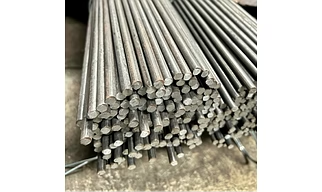
Mild Steel Round Bar
Specification of Carbon Steel Round Bar
Standards :ASTM, ASME, AISI, EN, IS, ETC
Grades :IS 2062 GR.A/B, A/SA105, A/SA 350 GR. LF 1/ LF 2 /LF 3 /LF 5/ LF 6/ LF 9, A/SA 516 GR.60/65/70 , C 45, EN 8, EN 9, P235GH, ASTM A131 GR.A/B/D/E , AH/DH/EH 32/36/40, ETC
Range :3 MM TO 350 MM DIA
Finish :Bright, Polish & Black
Form :Round, Square, Hex (A/F), Rectangle, Wire (Coil Form), Wire-mesh, Billet, Ingot, Forging Etc.
Application :Framework, Braces, Supports, Shafting, Axles, Marine and etc.


 GL Trustmark