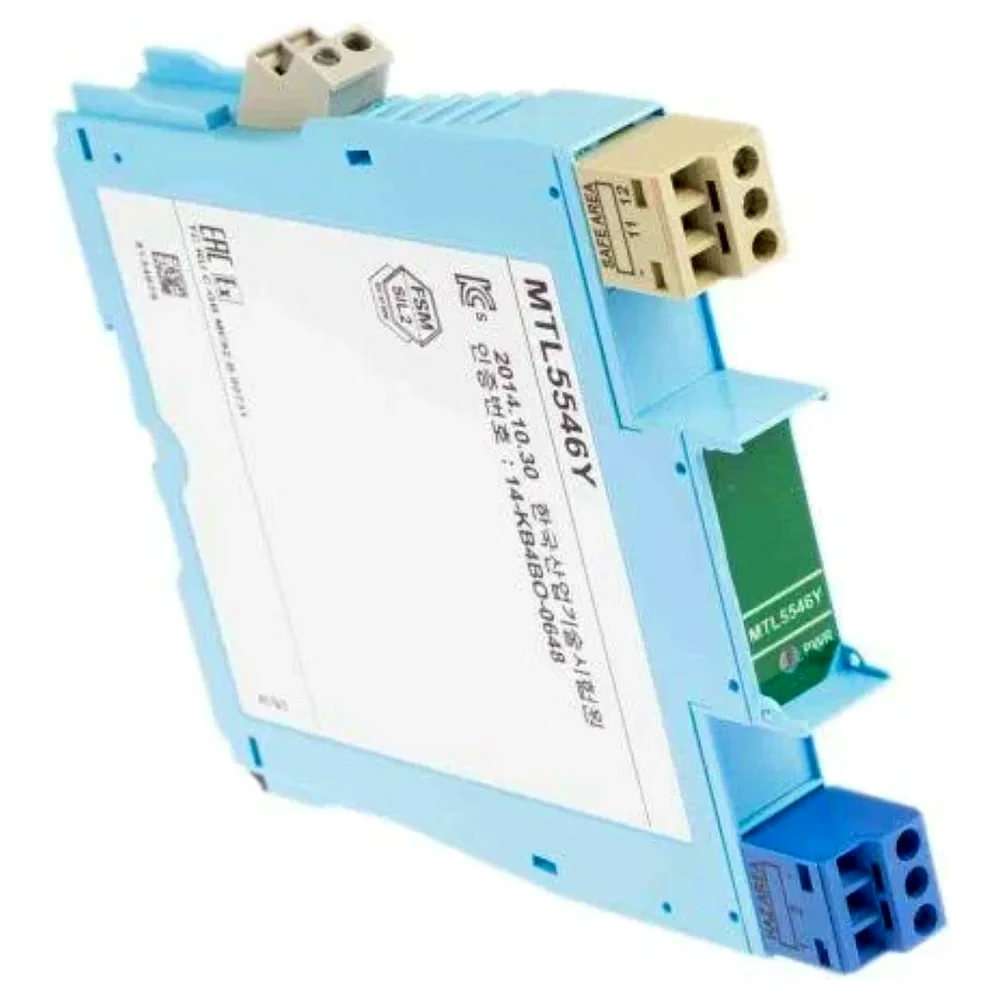
Structural Role and Material Rationale of Vertical Dummy Isolators
The technical framework of the MTL4599-MTL5599 Dummy Isolator utilizes a structural geometry that mirrors the external dimensions and mechanical interfaces of active signal conditioners. The structural reasoning for this design is to provide "thermal containment"—by occupying vacant slots, the dummy isolators prevent cooled air from "leaking" through empty spaces rather than the populated modules. failure to implement dummy isolators in high-density racks results in "short-circuit airflow," which commonly causes the internal temperatures of adjacent active modules to rise by 15-20°C, accelerating the failure of their electrolytic capacitors. Materials are selected based on the specific environmental and electrical requirements of the cabinet; painted steel variants provide high mechanical stiffness and EMI shielding, while engineered polymer options reduce the overall weight of the rack and minimize EM reflectivity. Quality consistency is managed through per-batch finishing inspections and dimensional verification. A failure to maintain precise mounting tolerances results in "component binding," where new active modules cannot be installed without disturbing the entire logic rail—effectively decommissioning the expansion potential of the instrument rack.
Functional Performance and Operational Efficiency in Instrument Racks
Operational efficiency is enhanced through the dummy isolator’s role as a mechanical spacer; by maintaining designate clearances, it limits the transfer of torque and vibration between adjacent housings during facility maintenance events. functional performance centers on the unit’s ability to preserve the integrity of the cabinet's cooling logic. In a real operational scenario, a failure to use dummy modules leads to "unbalanced pressure drops" across the rack face, resulting in localized hotspots that trigger premature equipment shutdowns. The MTL4599-5599 series utilize captive fasteners that prevent hardware from falling into the cabinet logic during installation—a critical safety standard for live control rooms. grounding and EMI continuity are supported in the metal variants through contact points with the rack frame, preventing the blank module from becoming an isolated antenna. If a dummy isolator is damaged or becomes loose, it can interfere with the service access to neighboring modules; our design utilize reinforced mounting tabs to prevent this failure mode. By providing a clean and organized appearance, the dummy module effectively improves the institutional value of the control assembly, facilitating professional asset management and future system upgrades.
Institutional Deployment and Logistical Readiness for OEM Programs
Used primarily in control rooms, instrumentation racks, and modular cabinets, the MTL4599-5599 is configured for the logistical requirements of project-scale multi-unit procurement. Units are shipped in segmented foam trays with desiccant pouches to protect the surface finish from moisture-induced oxidation or scuffing during long-haul logistics. Failure to implement finish-protected packaging can lead to localized corrosion on the metal variants, compromising the aesthetic and environmental seal of the cabinet. For international procurement, supply-readiness is supported through material declarations and lot-level packing lists provided with each consignment. Export-ready documentation include unit configuration snapshots and certificates of conformity (ISO/UL). OEM marking and custom labeling are available under private-label programs, allowing integrators to deliver branded cabinet builds with finished aesthetics. This systematic approach ensure the procurement team receives verified components that meet the mechanical and branding standards of global manufacturing markets, providing the technical transparency required for institutional asset registration. For multi-site rollouts, units are packaged in group cartons with unit-level identifiers to streamline warehouse inventory and site staging processes.
Frequently Asked Questions
- What material options are offered? Painted steel and engineered polymer variants are available per order specification.
- Do dummy isolators affect the cooling efficiency? Yes; occupying vacant slots prevents bypass airflow and ensures cooling reaches populated modules.
- Are mounting points standardized? Mounting holes and captive fasteners exactly mirror active module geometry for repeatable installation.
- Can these be included in OEM faceplate programs? Yes, private-label branding and custom finish options are supported under production agreements.
- What documentation accompanies shipments? Every consignment include a material declaration, packing list, and batch-level inspection certificate.
Description provided by Shakti Power Solutions Pvt Limited.
Zone 0, IIC, T4-6 hazardous area, Div. 1, Group A hazardous location
Green LED for power indication
Open/short circuit detection with LED indication
Changeover relay contacts
Selectable via side switches
Specifications
Model Number
MTL4599 - MTL5599
Hazardous Location Certification
Zone 0, IIC, T4-6, Division 1, Group A
Input Standard
BS EN60947-5-6:2001 compliant
Power Dissipation
0.84 Watts @ 24V
Fault Detection
Line Fault Detect (LFD): open/short circuit
Indicators
Green LED (power), LED for each channel fault
Phase Reversal
Selectable on unit
Output Type
Changeover relay contacts
Operating Temperature
Suitable for hazardous environments up to T6 rating
Dimensions
Vertical mounting footprint
Resistor Requirements
500Ω to 1kΩ in series and 20kΩ to 25kΩ in parallel for LFD with contact input