Fiber-reinforced plastics (FRP) are manufactured through various processes that combine reinforcing fibers with a polymer matrix resin, followed by curing to form strong composites.
Main Manufacturing Methods
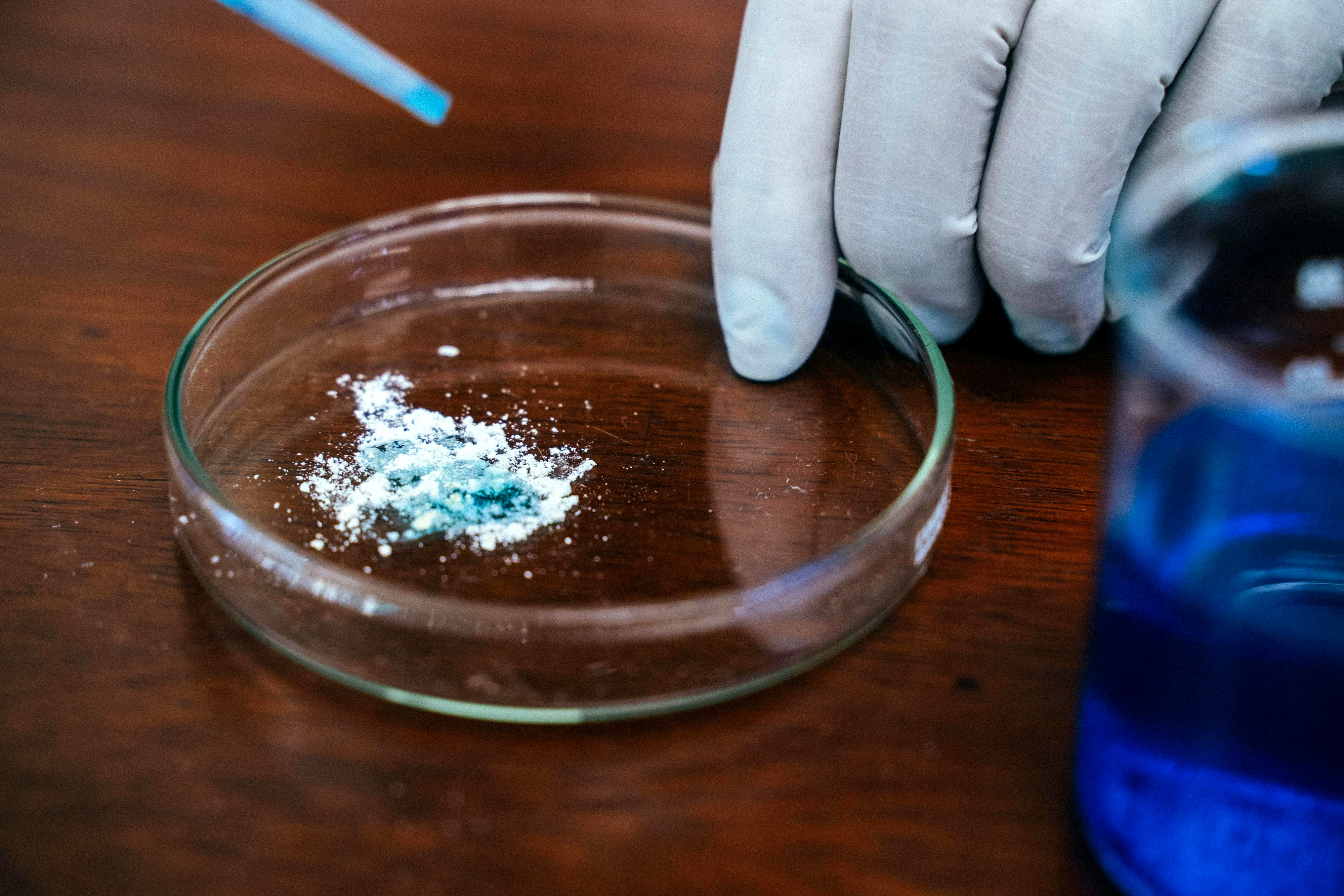
Common techniques include hand lay-up, where dry fibers are placed in a mold and manually saturated with wet resin, then cured at room temperature or with heat.
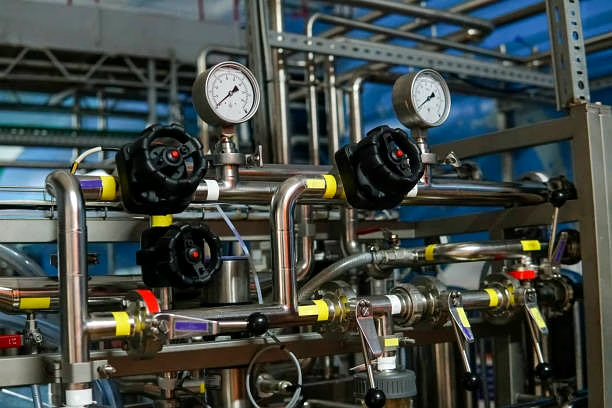
Pultrusion pulls continuous fiber rovings through a resin bath, shapes them in a die, and cures them under heat for profiles like beams or tubes.
Filament winding wraps fibers around a rotating mandrel, applies resin, and cures to create hollow cylindrical parts like pipes.
Key Process Steps
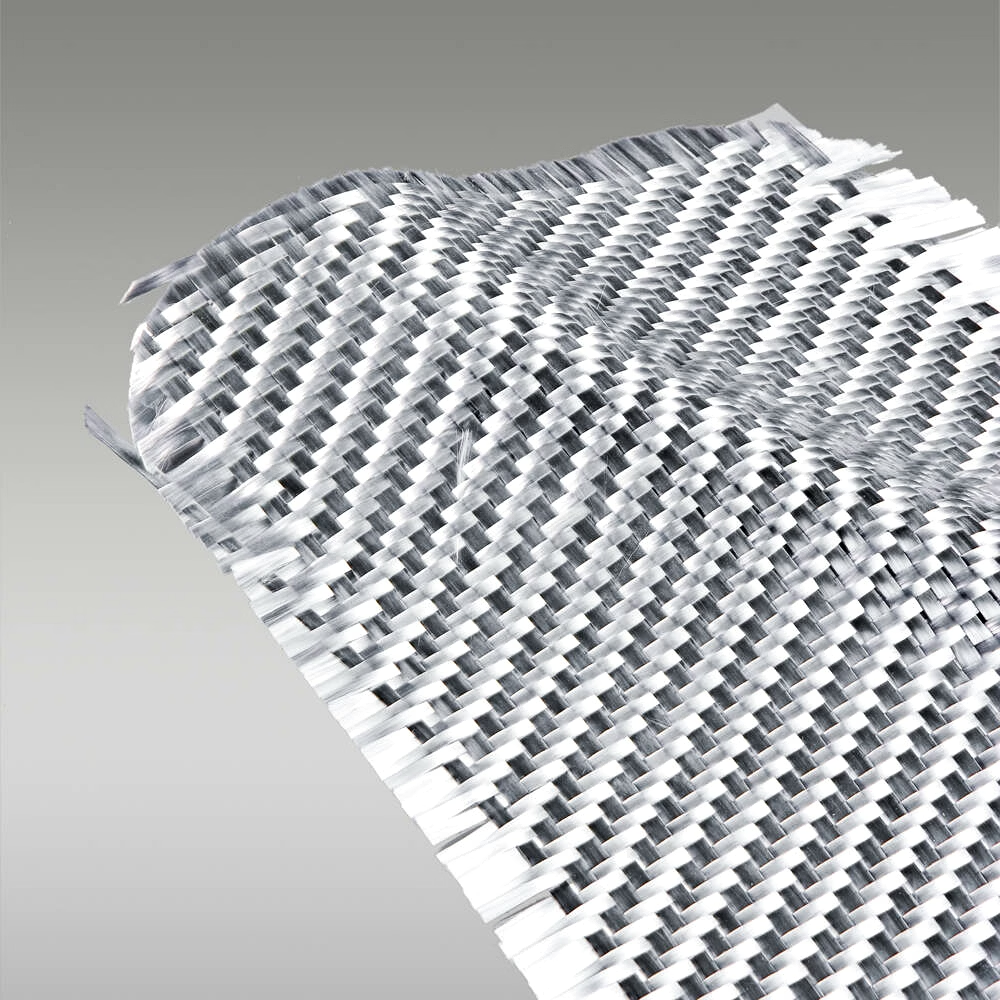
Most methods start with fiber preforms (dry or pre-impregnated with resin), wet them via resin infusion or spraying, and compact under vacuum or pressure to remove air voids.
Curing uses heat, pressure, or autoclaves to harden the resin, bonding fibers into the final shape; post-processing may include trimming.
Glass fibers, the most used, are extruded from molten glass into filaments before weaving or roving preparation.
Open vs. Closed Molding
Open molding, like spray-up, uses a chopper gun to deposit chopped fibers and resin into an open mold for large, low-volume parts.
Closed molding, such as resin transfer molding (RTM), injects resin into a sealed mold with pre-placed fibers for higher precision and volume.
Description provided by Indian Stalwart Global Sourcing Company.