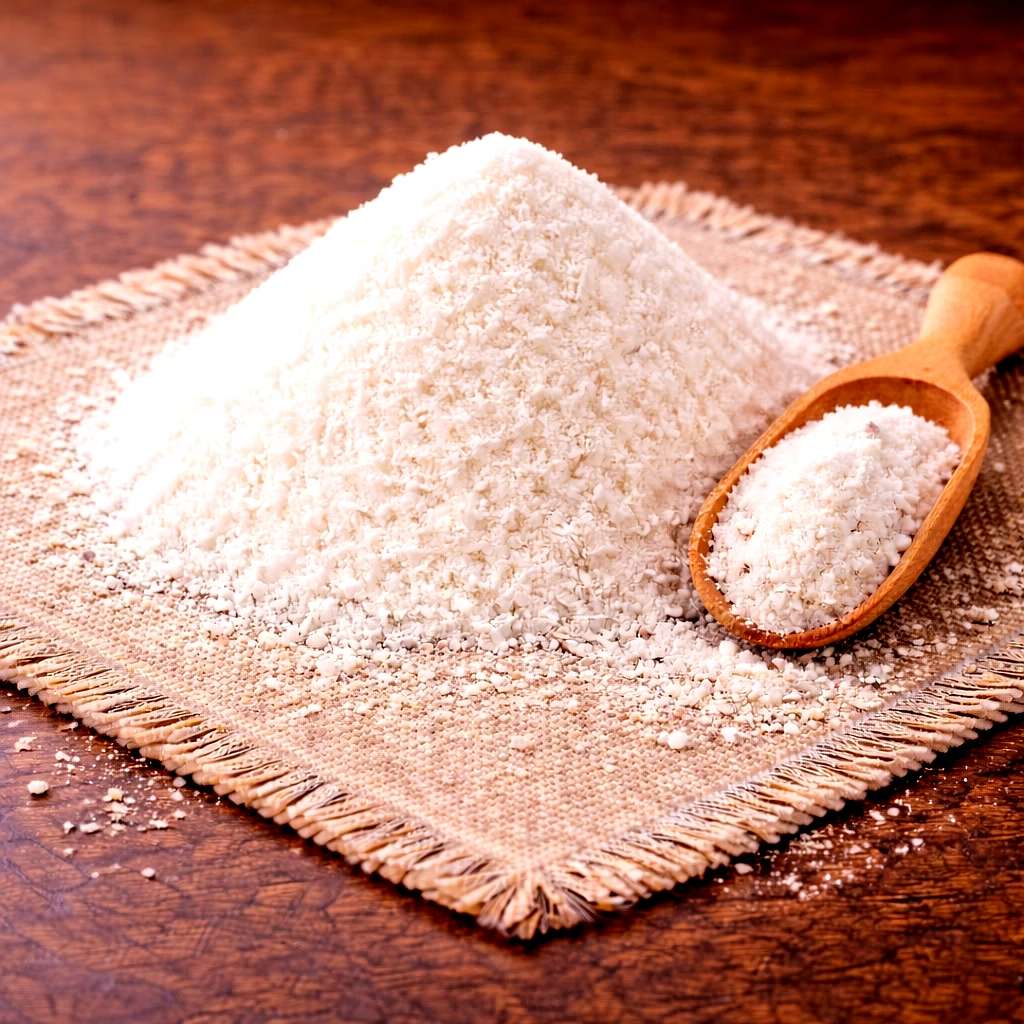
Dried Coconut (Copra) – Indian Coconut Kernel for Bulk Buyers
Dried Coconut, also known as Copra or Sukha Nariyal, is produced by removing moisture from mature coconut kernel obtained from Cocos nucifera L. It is an established agricultural commodity used in food processing, coconut oil extraction, confectionery and wholesale distribution. Padmashree Exim presents dried coconut for international business buyers seeking clearly defined product grades, moisture specifications, suitable packaging and reliable shipment planning.
Typical commercial uses
Dried Coconut is purchased by edible dry-food importers, wholesalers, food ingredient manufacturers, confectionery businesses and coconut oil processors. Edible-grade copra can be used in traditional sweets, selected bakery preparations, culinary applications and further processing. Milling copra is mainly used as a raw material for coconut oil extraction and related manufacturing operations.
For international procurement, buyers should first establish whether they require edible copra or milling copra. The two applications may involve different quality and safety specifications. Moisture, kernel condition, rancidity, mould contamination, oil characteristics and packaging are important considerations when evaluating a shipment.
Product characteristics and quality
Dried Coconut is prepared from the mature white kernel of coconut. After drying, the kernel becomes relatively firm and concentrated in natural coconut oil. Commercial copra may be supplied in whole, half, cup or cut forms depending on processing method and buyer requirements. Good-quality copra is evaluated for adequate drying, characteristic colour and aroma, cleanliness and freedom from unacceptable deterioration.
Appearance
Dried, firm coconut kernel with white to cream-coloured flesh and a naturally brown outer skin where retained.
Moisture and oil
Well-dried copra commonly targets approximately 4–6% moisture. Natural oil content and quality depend on the kernel and processing conditions.
Quality selection
Checks may include moisture, cleanliness, mould, foreign matter, rancid odour, insect damage and grade-specific food-safety parameters.
Packing and order planning
Packing
Dried Coconut may be packed in suitable food-grade bags, lined sacks or bulk containers based on product grade and shipment requirements. Buyers should confirm net weight, material, sealing, labelling and moisture protection.
Minimum order
Minimum order quantity depends on the selected copra grade, form, packaging, available stock and logistics. Buyers should share their required volume and destination for commercial evaluation.
Availability
Dried coconut is traded throughout the year through processing and storage. Actual availability depends on the required grade, harvest conditions, inventory and shipment schedule.
Uses and buyer benefits
Indian dried coconut is relevant to several commercial procurement and processing segments:
- Edible coconut trade: Edible-grade copra for dry-food wholesalers, retail repacking and suitable consumer food applications.
- Confectionery and sweets: Ingredient use in selected traditional sweets, fillings and coconut-based preparations.
- Food processing: Further cutting, grinding or ingredient preparation using food-grade dried coconut.
- Coconut oil extraction: Milling-grade copra for oil mills and coconut oil processing operations.
- Wholesale and industrial supply: Bulk purchasing by commodity traders, ingredient distributors and manufacturing businesses.
- Hospitality and culinary use: Edible-grade dried coconut for selected foodservice preparations.
Export quality and shipment considerations
Dried coconut quality depends on raw material maturity, drying method, moisture reduction, hygienic handling and storage conditions. Inadequately dried or poorly stored copra may become susceptible to mould growth, undesirable odours and quality deterioration.
Moisture content is a particularly important parameter. Commercial guidance for well-dried copra commonly refers to a moisture level in the approximate range of 4–6%. However, exact acceptable limits must follow the applicable grade specification and buyer contract.
Buyers should also evaluate physical impurities, fungal contamination, potential mycotoxins including aflatoxins, rancidity indicators and oil quality where relevant. For edible copra, the requirements for direct food use must be clearly distinguished from those for oil milling.
Appropriate packaging, protection from humidity, good warehouse practices and careful shipping-container selection support product preservation. Destination-specific food-safety, import, labelling and documentation requirements should be confirmed before shipment.
Request a bulk export quotation
Padmashree Exim welcomes commercial enquiries for Dried Coconut (Copra) from international agricultural commodity importers, wholesalers, food ingredient distributors, food manufacturers and coconut oil processors.
For an accurate quotation, provide the required grade (edible or milling), product form, quantity, moisture specification, packing weight, destination country or port, shipment schedule and applicable inspection or laboratory-testing requirements.
Final quality specifications, stock availability, packaging, commercial terms and export arrangements are subject to confirmation.
Frequently Asked Questions
Common questions from international buyers sourcing dried coconut from India.
What is dried coconut or copra?
Dried Coconut, also known as copra, is the dried kernel of mature coconut fruit from Cocos nucifera L. It is commercially used for edible coconut preparations and coconut oil extraction, depending on its grade and processing quality.
What is the difference between edible copra and milling copra?
Edible copra is intended for suitable food applications and must meet the relevant food-grade quality and safety requirements. Milling copra is primarily used as a raw material for extracting coconut oil. Their accepted quality specifications and processing applications may differ.
What is the botanical name of dried coconut?
Dried coconut is produced from the coconut palm, botanically known as Cocos nucifera L., a member of the Arecaceae family.
What is the typical moisture content of copra?
Well-dried copra commonly targets approximately 4–6% moisture to support storage stability. The final permitted moisture content depends on the specified grade, applicable standard and buyer agreement. Testing is required to verify the moisture level of an individual lot.
Is dried coconut the same as desiccated coconut?
No. Copra generally refers to dried coconut kernel sold in whole, half, cup or piece forms. Desiccated coconut is a separately processed product made from prepared coconut kernel, typically supplied as finely or coarsely grated dried coconut. The products have different commercial specifications and applications.
What are the major uses of Indian dried coconut?
Indian dried coconut is used in edible food preparations, traditional sweets, confectionery, ingredient processing and wholesale commodity trade. Milling-grade copra is widely used for coconut oil extraction and related manufacturing operations.
What quality checks are important when importing dried coconut?
Buyers should evaluate moisture, colour, cleanliness, foreign matter, mould, insect damage, odour and signs of rancidity. Depending on the grade and destination, mycotoxin testing, oil-quality parameters and other food-safety checks may also be required.
How is dried coconut packed for international shipping?
Dried coconut may be packed in suitable food-grade bags, lined woven sacks or other bulk packaging selected for the grade and shipment route. Moisture protection, bag weight, sealing, marking, warehouse handling and container condition should be confirmed before dispatch.
Can international buyers purchase dried coconut in bulk from India?
Dried coconut is an established agricultural trade commodity from India. Padmashree Exim welcomes bulk enquiries from international wholesalers, food ingredient buyers, distributors and coconut oil processing businesses, subject to grade availability and confirmed shipment terms.
How can buyers request a dried coconut quotation from Padmashree Exim?
Buyers should share the required product form, edible or milling grade, quantity, moisture target, packing preference, destination country or port, delivery timeline and any applicable laboratory, inspection or documentation requirements. These details support commercial quotation preparation.