1/3
Export Ready

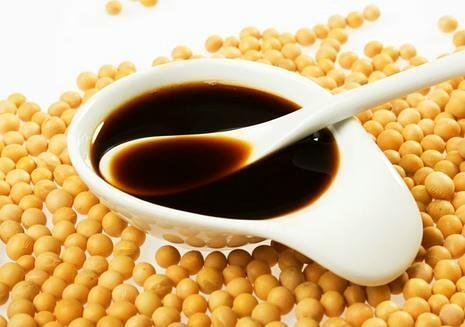
SOYA SAUCE

Sold by ganesh enterprises · Professional Services, Retailer, Distributor, Exporter, Importer, Wholesaler, Startup · Pune, Maharashtra, India

Price
₹ 1.64 /Kilogram
In stock
MRP ₹ 1.70
Inclusive of all taxes
You Save: ₹ 0.06
Minimum order: 1 Kilogram

Export Snapshot

MOQ
1 Kilogram
Lead time
On request
Packaging
Standard export packaging
Shelf life / longevity
As per product specification
HS Code
On request
Origin
India
Port of dispatch
On request
Export markets served
Global markets
Values shown are for ganesh enterprises.
Compliance & Certifications
Suitable for

Importers · Distributors · Wholesalers

Know your supplier

ganesh enterprises is a Professional Services, Retailer, Distributor, Exporter, Importer, Wholesaler, Startup based in Pune Maharashtra India.

Pune Dispatch on request Verified seller
ganesh enterprises logo

Professional Services, Retailer, Distributor, Exporter, Importer, Wholesaler, Startup · Pune, Maharashtra, India

Registered address: Pune, India.

Established
Not shared
Employees
GST
27AFFPT3619A1ZM
IEC code
Not shared
Export markets
Global markets
GlobalLinker Member Since
Not shared
Turnover
Incorporation Type
On request
Product details

What are the specifications of this product?

Overview

Soy sauce is traditionally made by fermenting soybeans, wheat, salt, and water. The process involves incubating soybeans and wheat with a mold (like Aspergillus) to create a mash called koji. This koji then undergoes a long brine fermentation with salt, where enzymes break down proteins into amino acids and starches into sugars, developing flavor. Finally, the fermented liquid is pressed to extract the soy sauce, which is then pasteurized, filtered, and bottled. Key Steps in Soy Sauce Production Prepare the Ingredients: Whole soybeans are soaked and steamed, while wheat is roasted and ground. Make Koji: The cooked soybeans and wheat are mixed with a mold culture, such as Aspergillus, and incubated for a few days. This mixture is called koji. Brine Fermentation: The koji is mixed with a salt solution and allowed to ferment for several months or even up to a year. Aging and Pressing: During fermentation, the mold's enzymes break down the soy and wheat, creating amino acids for umami and simple sugars. Pressing and Refining: After fermentation, the mash is pressed to extract the liquid soy sauce. Pasteurization: The extracted liquid is heated to kill any remaining bacteria or yeasts, ensuring a stable product. Packaging: The pasteurized soy sauce is then filtered and bottled for sale. Variations Traditional vs. Acid Hydrolysis: Most high-quality soy sauces are naturally brewed through fermentation, while some commercial versions use a faster, chemical method called acid hydrolysis. Tamari: A Japanese soy sauce made with only soybeans, omitting wheat for a gluten-free option. Dark vs. Light: Dark soy sauces are aged longer, are thicker, and often have molasses or caramel added for a sweeter, richer flavor and color. How Is Soy Sauce Made and Is It Bad for You? - Healthline 7 Dec 2017 — Traditional Production. Traditional soy sauce is made by soaking soybeans in water and roasting and crushing the wheat. Healthline Different Types of Soy/Soya Sauce Explained - Spice Nest Soy sauce is traditionally made from four primary ingredients: soybeans, wheat, salt, and water. The soybeans provide proteins, wh... Spice Nest Soy sauce - Wikipedia Traditional soy sauces are made by mixing soybeans and grain with mold cultures such as Aspergillus oryzae and other related micro...

Product Description

Soy sauce is traditionally made by fermenting soybeans, wheat, salt, and water. The process involves incubating soybeans and wheat with a mold (like Aspergillus) to create a mash called koji. This koji then undergoes a long brine fermentation with salt, where enzymes break down proteins into amino acids and starches into sugars, developing flavor. Finally, the fermented liquid is pressed to extract the soy sauce, which is then pasteurized, filtered, and bottled.

Key Steps in Soy Sauce Production

Prepare the Ingredients: Whole soybeans are soaked and steamed, while wheat is roasted and ground.

Make Koji: The cooked soybeans and wheat are mixed with a mold culture, such as Aspergillus, and incubated for a few days. This mixture is called koji.

Brine Fermentation: The koji is mixed with a salt solution and allowed to ferment for several months or even up to a year.

Aging and Pressing: During fermentation, the mold's enzymes break down the soy and wheat, creating amino acids for umami and simple sugars.

Pressing and Refining: After fermentation, the mash is pressed to extract the liquid soy sauce.

Pasteurization: The extracted liquid is heated to kill any remaining bacteria or yeasts, ensuring a stable product.

Packaging: The pasteurized soy sauce is then filtered and bottled for sale.

Variations

Traditional vs. Acid Hydrolysis: Most high-quality soy sauces are naturally brewed through fermentation, while some commercial versions use a faster, chemical method called acid hydrolysis.

Tamari: A Japanese soy sauce made with only soybeans, omitting wheat for a gluten-free option.

Dark vs. Light: Dark soy sauces are aged longer, are thicker, and often have molasses or caramel added for a sweeter, richer flavor and color.

How Is Soy Sauce Made and Is It Bad for You? - Healthline

7 Dec 2017 — Traditional Production. Traditional soy sauce is made by soaking soybeans in water and roasting and crushing the wheat.

Healthline

Different Types of Soy/Soya Sauce Explained - Spice Nest

Soy sauce is traditionally made from four primary ingredients: soybeans, wheat, salt, and water. The soybeans provide proteins, wh...

Spice Nest

Soy sauce - Wikipedia

Traditional soy sauces are made by mixing soybeans and grain with mold cultures such as Aspergillus oryzae and other related micro...


Description provided by ganesh enterprises.

Specifications

Soybean Preparation Soaked and steamed whole soybeans
Wheat Processing Roasted and ground wheat
Koji Culture Aspergillus mold species
Salt Percentage Salt brine concentration optimized for fermentation
Fermentation Time Typically 6 to 12 months
pH Level Approximately 4.5 to 5.0
Protein Content High amino acid concentration post-fermentation
Shelf Life 12 to 18 months if unopened and stored properly
Color Shade Deep brown
Viscosity Medium-bodied liquid

Use cases

Category Food & Beverages > Condiments & Sauces > Soy Sauce
Primary application Wholesale, distribution, and international sourcing
Brand Not specified
Product type Product

Logistics & handling

Lead time On request
Packaging As per buyer requirement
Storage condition As recommended by supplier
Origin India
Form As listed by supplier

Commercials (this seller)

Minimum order 1 Kilogram
Lead time On request
Payment terms As per negotiated commercial agreement.
Checkout type enquiry
Buyer questions

Frequently asked by buyers

Common questions B2B buyers ask before sourcing SOYA SAUCE. Answers compiled from verified sellers' commercial terms and platform data.

Q: What distinguishes this soya sauce from chemically processed alternatives?
A: This soya sauce undergoes a natural fermentation process with Aspergillus mold over several months, unlike chemically hydrolyzed soy sauces, resulting in a richer, more complex flavor without artificial additives.
Q: Is this soya sauce suitable for gluten-free consumers?
A: No, our soya sauce contains roasted wheat, making it unsuitable for gluten-free diets. For gluten-sensitive needs, tamari-based soy sauces are recommended.
Q: What is the typical shelf life of this traditionally brewed soya sauce?
A: When stored properly unopened, the soy sauce maintains its quality and flavor for 12 to 18 months due to pasteurization and filtration.
Q: Can this soya sauce be used in large-scale food manufacturing?
A: Yes, available in bulk packaging, our traditionally brewed soy sauce is tailored for industrial kitchens and food manufacturers seeking authentic flavor enhancement.
Q: Does the product contain any artificial preservatives or flavor enhancers?
A: No, it is free from artificial preservatives and chemical flavor enhancers, relying solely on natural fermentation for taste development.
Question not answered? Ask sellers directly — typical response within 4 hours.
SOYA SAUCE
SOYA SAUCE
₹ 1.64/Kilogram · MOQ 1Kilogram