1/4
Export Ready

PLA or Polylactic acid

Sold by santulal and sons · Brand Owner, Exporter, Wholesaler, Startup · Indore, Madhya Pradesh, India

Price
₹ 2.83 /Kilogram
In stock
MRP ₹ 3.06
Inclusive of all taxes
You Save: ₹ 0.23
Minimum order: 1 Kilogram

Export Snapshot

MOQ
1 Kilogram
Lead time
On request
Packaging
Standard export packaging
Shelf life / longevity
As per product specification
HS Code
On request
Origin
India
Port of dispatch
On request
Export markets served
Rwanda flag RW
Values shown are for santulal and sons.
Compliance & Certifications
Suitable for

Importers · Distributors · Wholesalers

Know your supplier

santulal and sons is a Brand Owner, Exporter, Wholesaler, Startup based in Indore Madhya Pradesh India.

Indore Dispatch on request Verified seller
santulal and sons logo

Brand Owner, Exporter, Wholesaler, Startup · Indore, Madhya Pradesh, India

Registered address: Indore, India. Industry: Rubber, Plastics & Polymers > Plastic Products.

Established
2008
Employees
1–10
GST
23ABBPJ7383F1ZT
IEC code
Not shared
Export markets
Rwanda flag RW
GlobalLinker Member Since
Jun 2025
Turnover
10000001 - 50000000.
Incorporation Type
On request
Product details

What are the specifications of this product?

Overview

Polylactic acid, also known as PLA, is a thermoplastic monomer derived from renewable, organic sources such as corn starch or sugar cane. Using biomass resources makes PLA production different from most plastics, which are produced using fossil fuels through the distillation and polymerization of petroleum.

Product Description

PLA is the talk of the sustainable packaging town. And for good reason, it’s a bioplastic made from renewable, plant-based materials like corn, cassava and sugarcane. This article will dive into PLA bioplastic, how it’s made, the environmental benefits and how it fits into the circular economy.


Polylactic acid or polylactide (PLA) is a polyester made from renewable biomass, typically from fermented plant starch like corn, cassava, sugarcane or sugar beet pulp. While the feedstock (raw material) currently doesn’t compete with food production, manufacturers are already investigating the use of non-agricultural feedstocks. 


The environmental and economic advantages of PLA bioplastics over conventional plastics are measurable and significant.


Description provided by santulal and sons.

Specifications

Chemical Structure Polyester polymer of lactic acid monomers
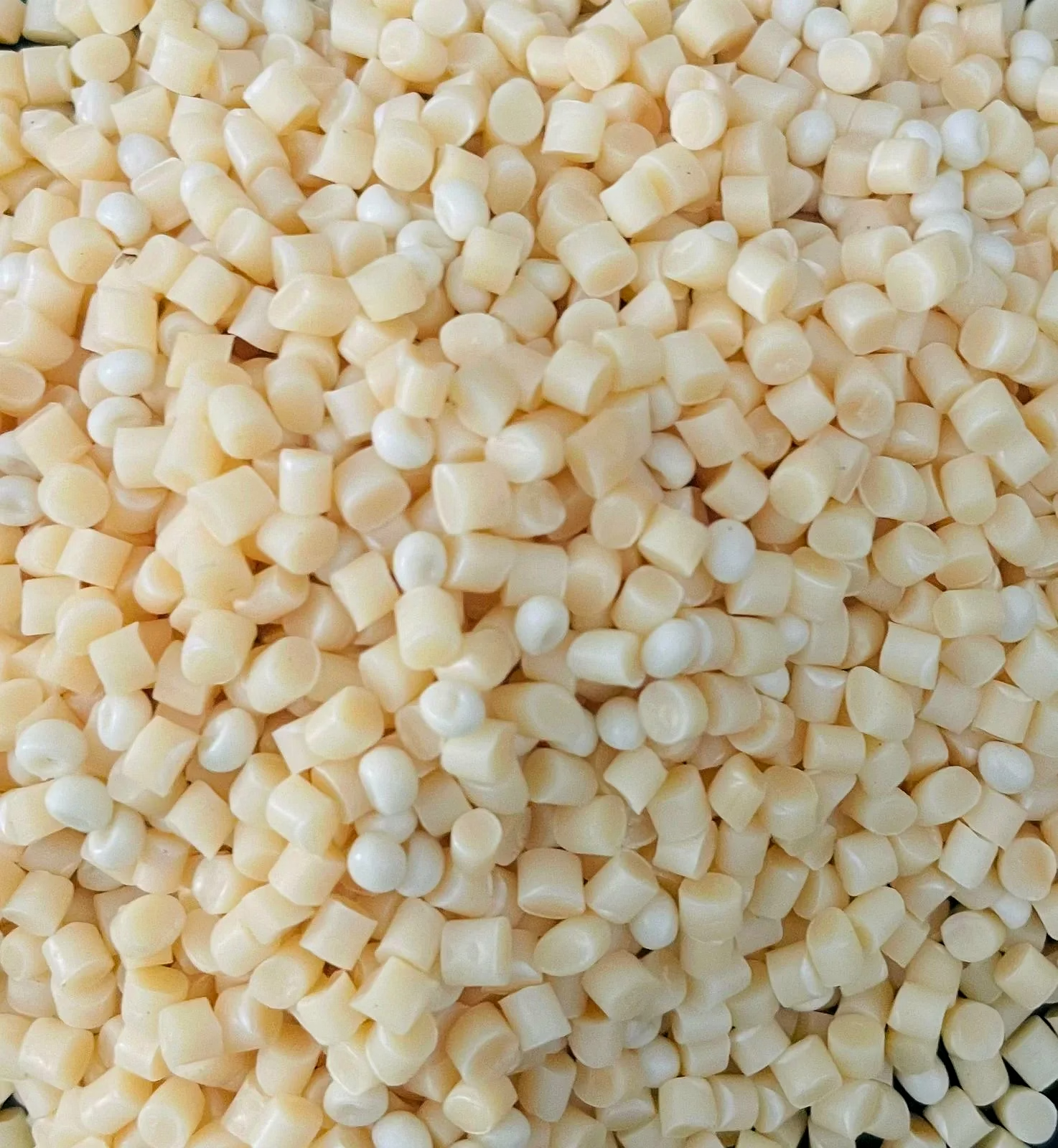
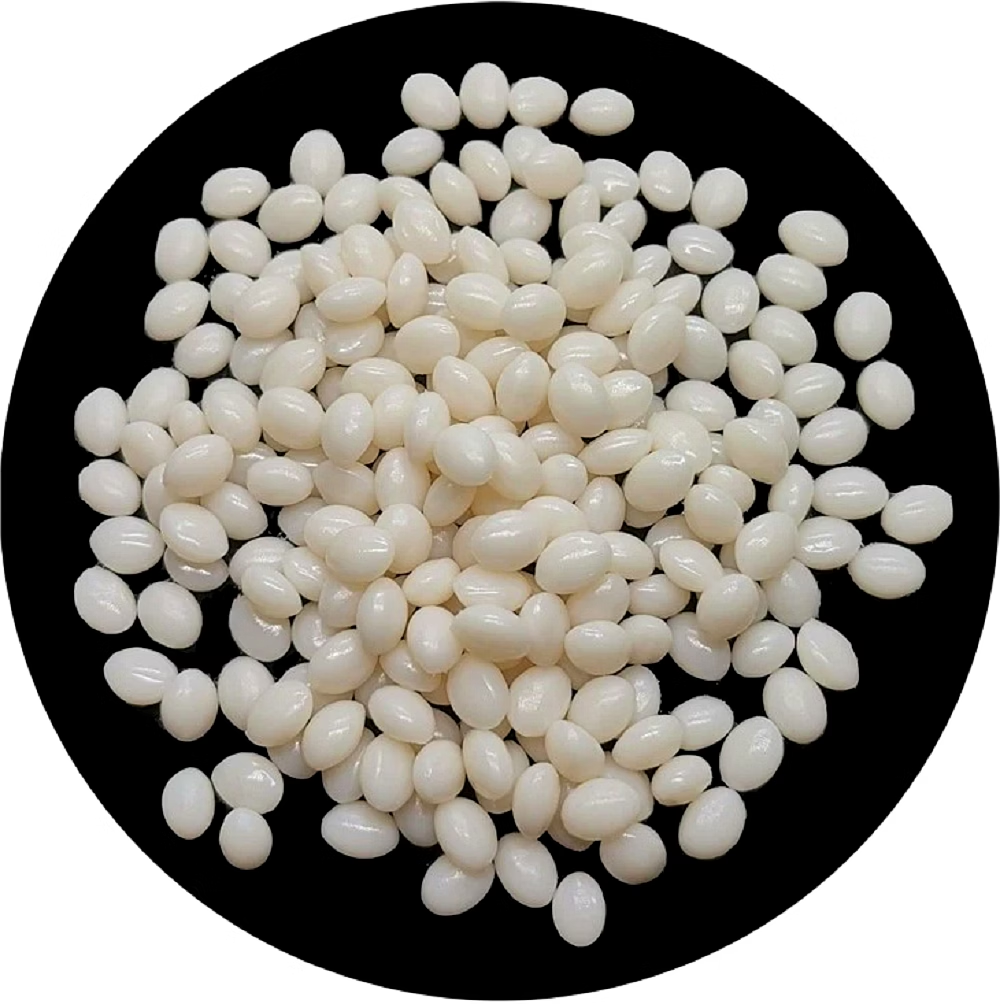
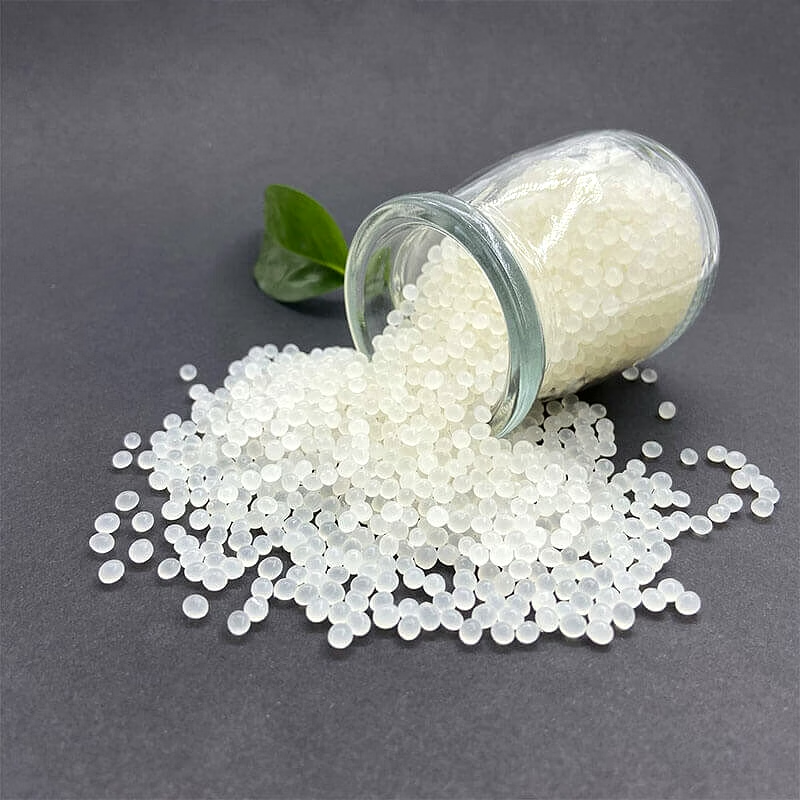
Form Granules, pellets, or filament form for processing
Melting Temperature Approximately 150-160°C
Density Approximately 1.24 g/cm³
Tensile Strength Typically 50-70 MPa
Elongation at Break Less than 10%
Processing Methods Injection molding, extrusion, blow molding, 3D printing
Degradation Conditions Industrial composting environment with heat and moisture
Sustainability Made from 100% renewable feedstock

Use cases

Category rubber and plastics > plastic raw materials > general plastics
Primary application Wholesale, distribution, and international sourcing
Brand Not specified
Product type Product

Logistics & handling

Lead time On request
Packaging As per buyer requirement
Storage condition As recommended by supplier
Origin India
Form Granules, pellets, or filament form for processing

Commercials (this seller)

Minimum order 1 Kilogram
Lead time On request
Payment terms As per negotiated commercial agreement.
Checkout type enquiry
Buyer questions

Frequently asked by buyers

Common questions B2B buyers ask before sourcing PLA or Polylactic acid. Answers compiled from verified sellers' commercial terms and platform data.

Q: What are the primary renewable sources used in PLA production?
A: PLA is predominantly produced from renewable biomass such as corn starch, cassava, sugarcane, and sugar beet pulp through fermentation and polymerization.
Q: How does PLA contribute to sustainability in packaging applications?
A: PLA is bio-based and compostable under industrial conditions, reducing dependence on fossil fuels and minimizing plastic waste, thereby supporting environmental sustainability in packaging.
Q: What processing methods are compatible with PLA materials?
A: PLA can be processed through injection molding, extrusion, blow molding, and is commonly used in 3D printing filament production.
Q: Is PLA biodegradable in natural environments or only under industrial conditions?
A: PLA biodegrades efficiently under industrial composting conditions with controlled heat and moisture, but it degrades very slowly in natural environments like soil or marine settings.
Q: Are there any alternative feedstocks being explored for PLA production to avoid competition with food sources?
A: Yes, manufacturers are investigating the use of non-agricultural feedstocks and alternative biomass sources to enhance sustainability and reduce competition with food production.
Q: What mechanical properties make PLA suitable for packaging and industrial use?
A: PLA offers good tensile strength (50-70 MPa) and high clarity, allowing it to be used for sturdy packaging and clear containers while maintaining ease of processing.
Question not answered? Ask sellers directly — typical response within 4 hours.
PLA or Polylactic acid
₹ 2.83/Kilogram · MOQ 1Kilogram