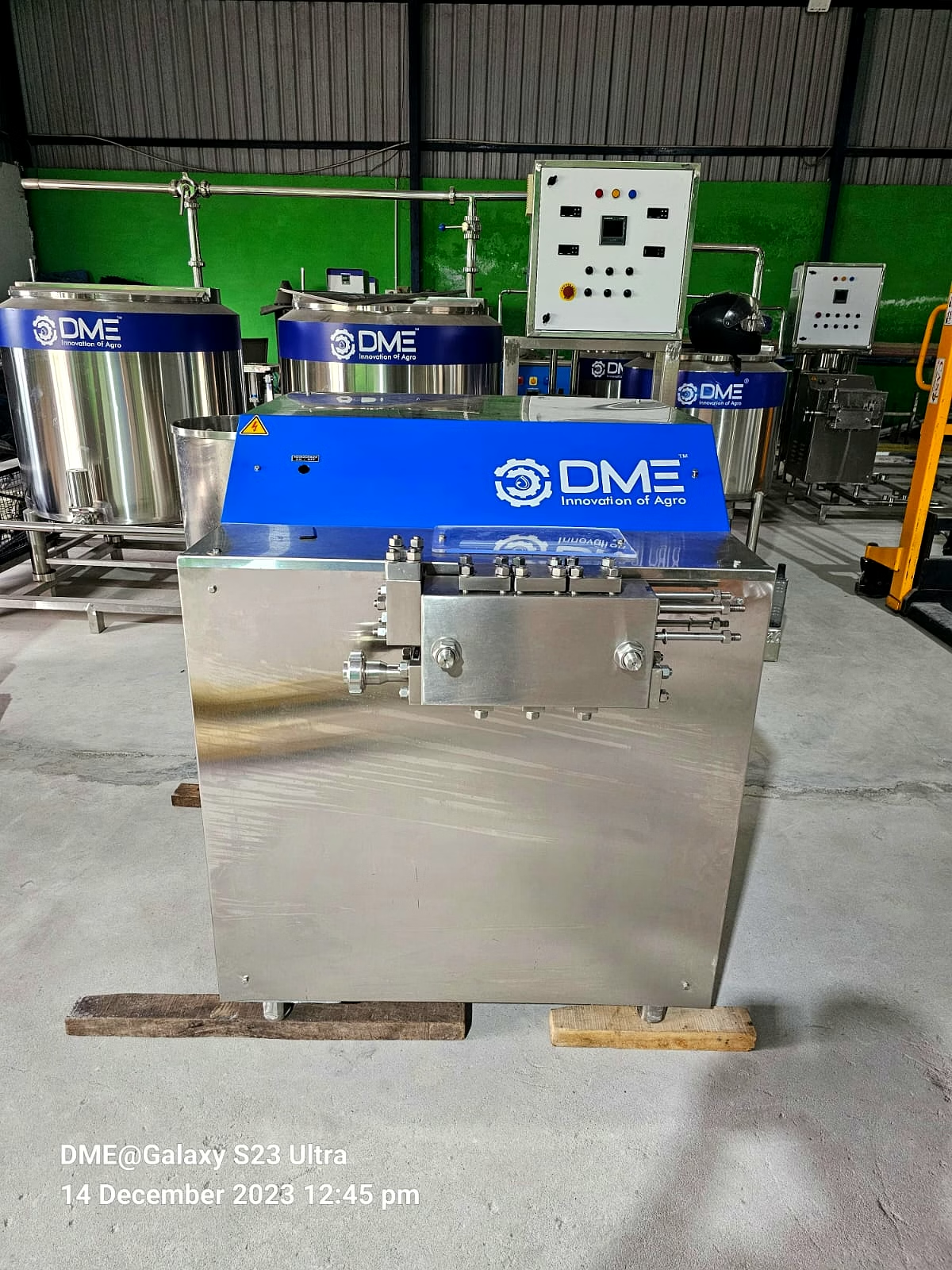
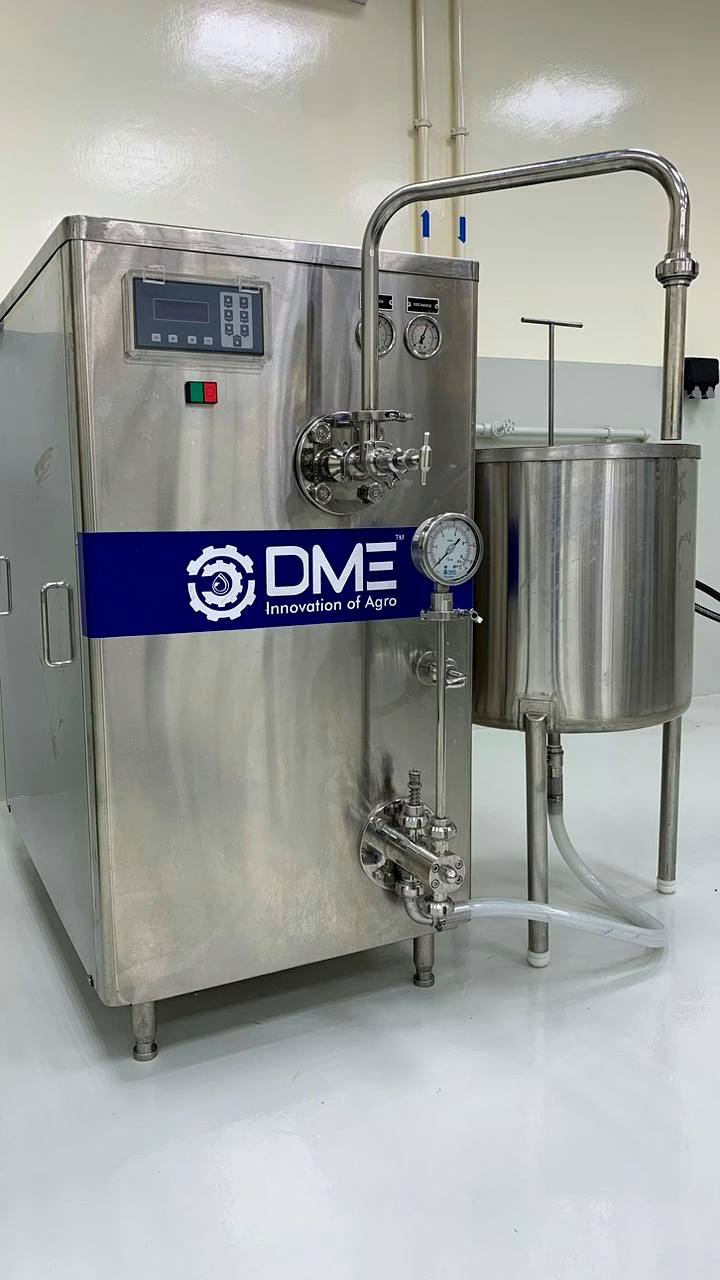
Homogenizer Applications: A Versatile Tool Across Industries
Homogenizers are essential pieces of equipment used to break down particles into smaller, more uniform sizes.
They are widely employed in various industries to create consistent and high-quality products.
Key Applications of Homogenizers
Food and Beverage Industry:
Dairy Products: Homogenizers are used to prevent the separation of cream in milk, ensuring a smooth and consistent texture.
Sauces and Dressings: They help create emulsified mixtures, such as mayonnaise and salad dressings.
Beverages: Homogenizers are used in the production of fruit juices, smoothies, and other blended drinks.
Pharmaceutical Industry:
Drug Development: Homogenizers are employed to prepare and analyze drug formulations.
Nanoencapsulation: They are used to create nanoparticles for drug delivery systems.
Particle Size Reduction: Homogenizers help reduce the size of particles in pharmaceutical ingredients.
Cosmetic Industry:
Emulsions: Homogenizers are used to create stable emulsions of oil and water in products like creams, lotions, and makeup.
Particle Dispersion: They help disperse pigments and other ingredients in cosmetics.
Biotechnology:
Cell Disruption: Homogenizers are used to disrupt cells and extract their contents for analysis.
Tissue Homogenization: They help prepare tissue samples for various biological experiments.
Chemical Industry:
Emulsions: Homogenizers are used to create emulsions in various chemical processes.
Particle Dispersion: They help disperse pigments and other additives in paints, inks, and other chemical products.
Environmental Science:
Sample Preparation: Homogenizers are used to prepare environmental samples for analysis, such as soil, water, and biological materials.
Types of Homogenizers
Rotor-Stator Homogenizers: These use a rotating rotor and a stationary stator to create shear forces and break down particles.
High-Pressure Homogenizers: These force materials through a narrow orifice at high pressure, causing mechanical disruption.
Ultrasonic Homogenizers: These use ultrasonic waves to create cavitation, which breaks down particles.
Bead Mills: These use grinding beads to disrupt particles through mechanical action.
In conclusion, homogenizers are versatile tools with a wide range of applications across various industries. They play a crucial role in creating consistent, high-quality products and are essential for many manufacturing processes.
Description provided by Dairy Man Engineering.
Suitable for food & beverage, pharmaceutical, cosmetic, biotech, chemical, and environmental fields
Supports rotor-stator, high-pressure, ultrasonic, and bead mill homogenizing techniques
Achieves uniform particle size for improved texture, stability, and bioavailability
Produces high-quality emulsions for creams, sauces, dressings, and chemical emulsions
Enables effective tissue homogenization and cell content extraction for biotech analysis
Delivers reproducible results for pharmaceutical formulations and industrial products
Prepares soil, water, and biological samples for accurate testing
Designed for user-friendly operation with minimal downtime
Allows adjustment of speed, pressure, and cycle time for tailored homogenization
Specifications
Homogenizing Technologies
Rotor-Stator, High-Pressure, Ultrasonic, Bead Mill
Material Compatibility
Compatible with liquids, semi-solids, emulsions, and suspensions
Particle Size Range
Nanometer to micrometer scale depending on settings
Power Supply
220V/380V, 50Hz/60Hz options available
Operation Mode
Continuous and batch processing
Control System
Digital interface with adjustable homogenization parameters
Construction Material
Stainless steel body with hygienic design
Application Areas
Food processing, pharmaceuticals, cosmetics, biotech research, chemical mixing, environmental sample prep
Maintenance
Easy to disassemble and clean components for hygiene and upkeep


 FIEO Registered
Export Ready
FIEO Registered
Export Ready