Overview
The Teleprompter Advantage in Digital Communication
For any modern organization or content creator seeking to elevate its online presence, the teleprompter has transitioned from a niche broadcasting tool to an indispensable asset for digital promotion. At its core, a teleprompter is a transformative technology that resolves the fundamental challenge of creating high-impact video content: how to read a prepared script while simultaneously maintaining authentic, direct eye contact with the viewer. This is a critical element for building trust and establishing a genuine connection. By serving as an invisible guide, the technology enhances professionalism, ensures unwavering message control, and dramatically boosts production efficiency, making it an essential component for any strategy aimed at producing polished, high-quality promotional videos. While historically confined to the domain of broadcast news, the proliferation of affordable, app-based solutions has democratized its power, making it a strategic imperative for solo creators, small businesses, and large corporate teams alike.
How the Beam-Splitter Glass Creates a Seamless Experience
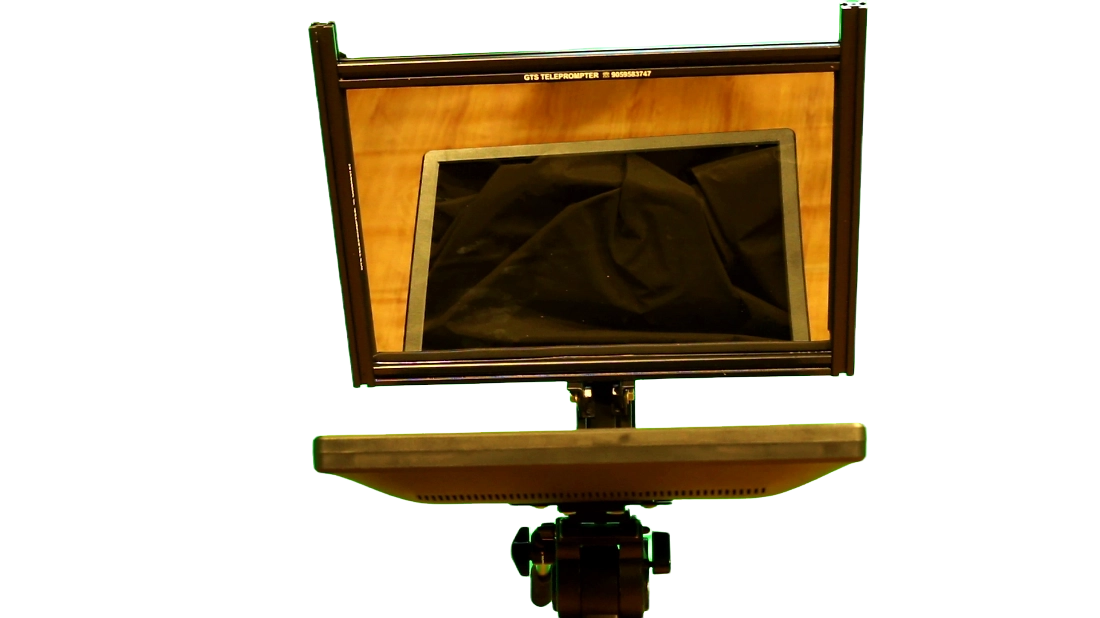
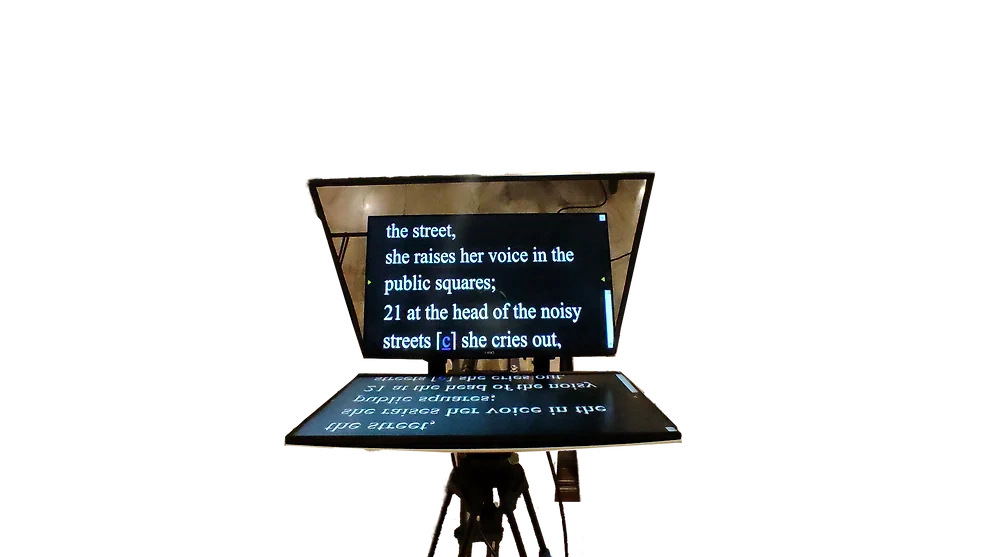
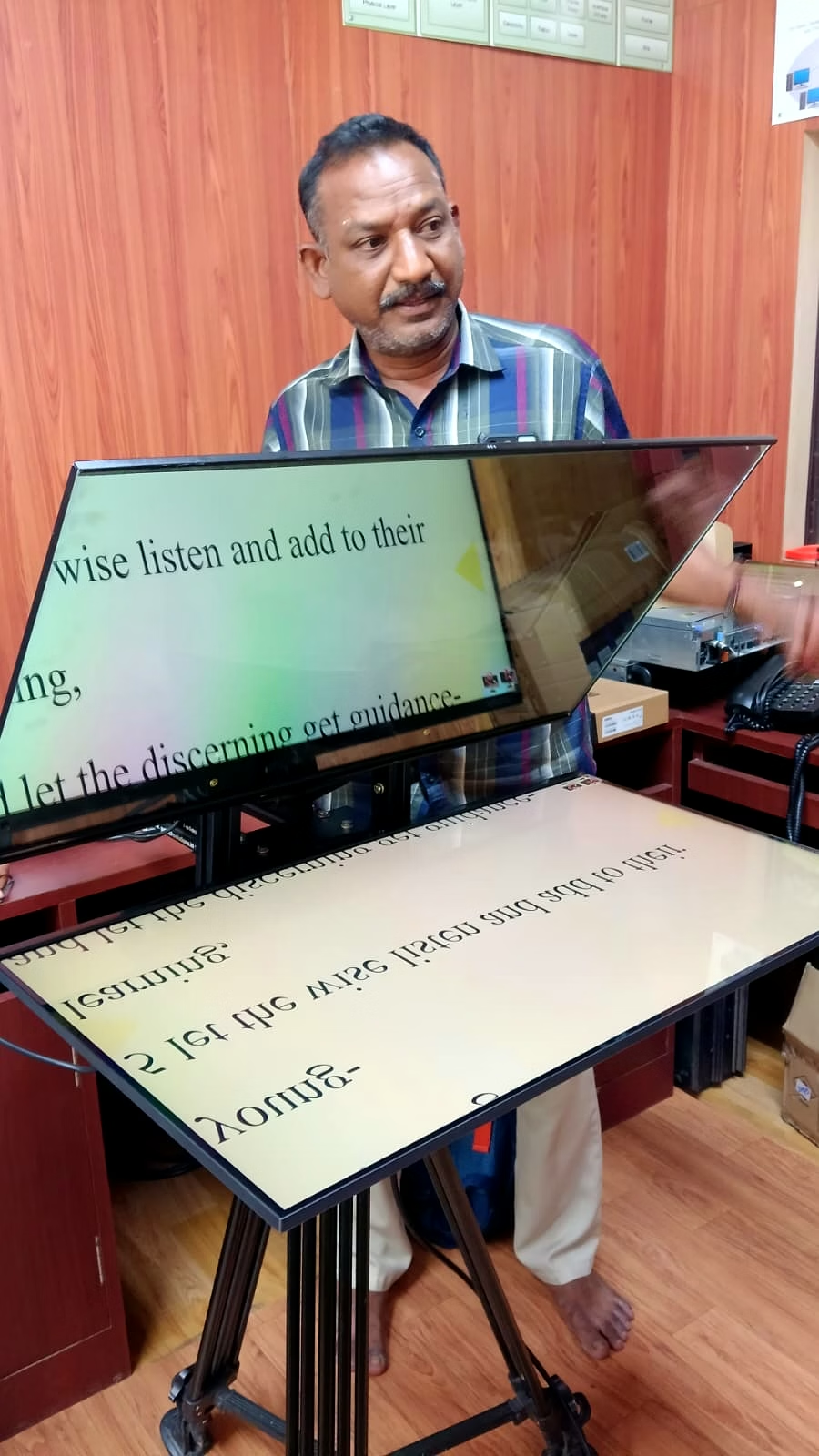
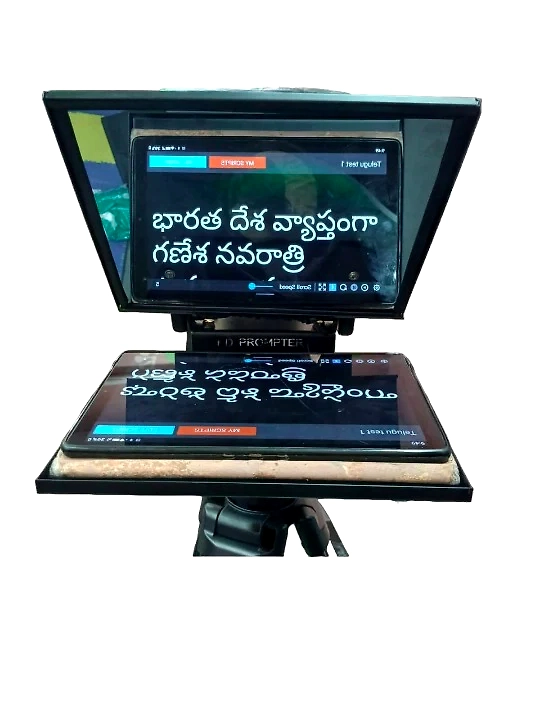
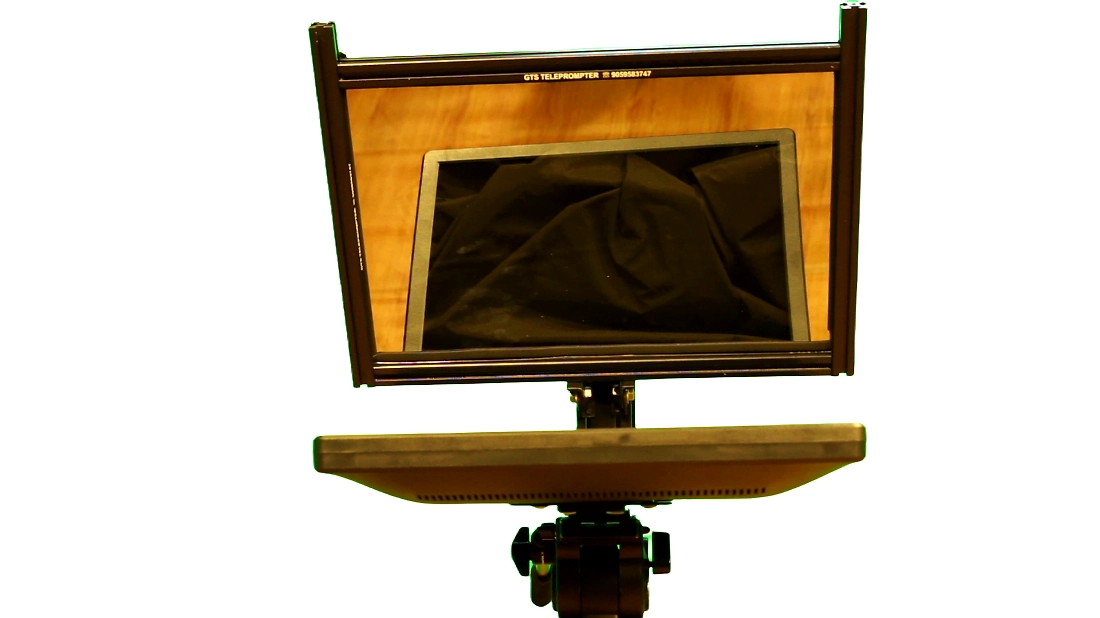
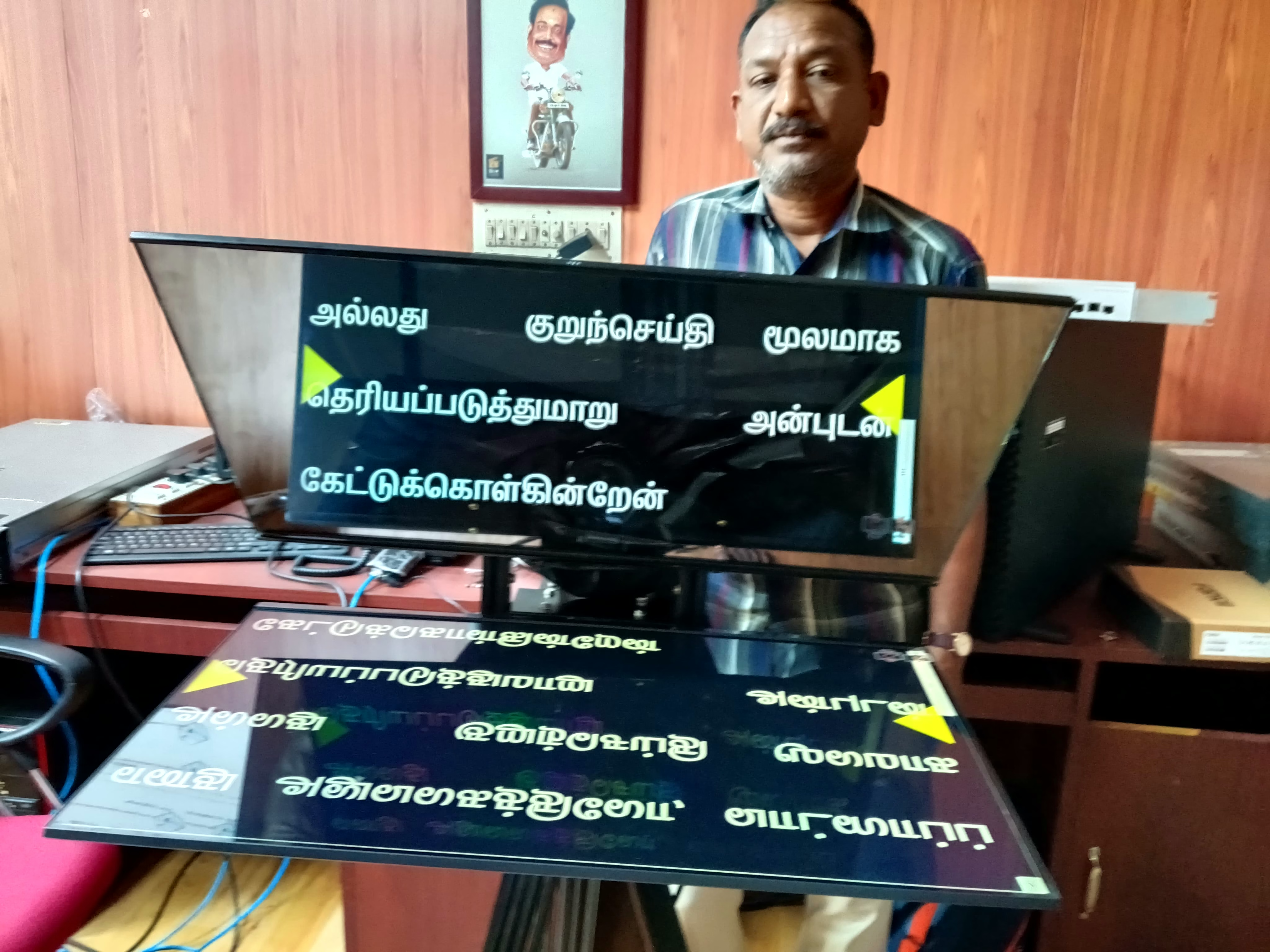
A teleprompter is an elegantly simple system built on a fundamental optical principle. The device typically consists of a display, such as a horizontally mounted tablet or monitor, and a specialized piece of transparent glass known as a "beam-splitter". This glass is strategically positioned at a 45-degree angle in front of the camera lens, acting as a one-way mirror. The script, which is horizontally mirrored on the display, is reflected by the beam-splitter glass toward the speaker, allowing them to read it effortlessly. Simultaneously, the camera can film a clear, unobstructed image directly through the transparent surface of the glass. This ingenious setup creates the powerful illusion that the speaker is speaking spontaneously or has memorized their lines, all while maintaining a consistent and natural eye line with the camera lens.
The true value of this technology extends beyond a simple technical function. It addresses a core psychological challenge inherent in public speaking and on-camera performance: the cognitive burden placed on a presenter. When a speaker is forced to simultaneously remember their script, manage their vocal delivery, and maintain eye contact, the performance often suffers. The brain's resources are finite, and attempting to manage these three tasks at once can lead to a less polished result. The teleprompter elegantly offloads the memorization and recall tasks, allowing the presenter to direct their full attention to more nuanced elements of delivery. This includes focusing on voice modulation, emphasizing key points, and using authentic body language, all of which are essential for forging an emotional connection with the audience. By freeing the speaker's mind, the teleprompter paradoxically provides them with the mental space to be more natural and present.
1.2. A Taxonomy of Modern Teleprompters: From Studio Rigs to Smart Apps
The teleprompter market has evolved considerably, moving from a single, monolithic hardware solution to a diverse ecosystem of tools tailored for specific use cases. Today, several distinct types of teleprompters are available to meet the varied needs of content creators and public speakers.
Camera-Mounted Teleprompters: This is the most prevalent type used for video production. The prompter rig attaches directly to the camera, with the display and beam-splitter glass housed in a single unit around the lens. These are a staple in television studios and are also used by professional videographers.
Presidential/Podium Teleprompters: These are standalone units, often used in pairs, positioned on either side of a lectern for formal speeches and addresses. This dual-screen setup allows a speaker, such as a politician or keynote presenter, to look left and right while delivering their message, creating a wider, more inclusive address to a large audience.
Floor/Stand Teleprompters: Similar to the Presidential models, these are versatile units placed on the floor or a stand and angled upwards. They are commonly used by musicians for reading lyrics during concerts or in theatrical productions.
Mobile/App-Based Teleprompters: This is the newest and most disruptive category. These systems use a smartphone or tablet as the display and often as the camera itself, paired with a small, affordable rig. This technology has become a game-changer for solo creators and small businesses.
The diversification of teleprompter types is a direct response to the fragmentation of the content creation landscape. As video production shifted from expensive, large-scale broadcast studios to individual creators and corporate offices, a demand for more portable, affordable, and multi-functional solutions emerged. The proliferation of mobile devices and free web-based applications is not simply a passing trend; it reflects a fundamental change in the market, where the user's existing device has become the new broadcast studio. This democratization of technology has enabled a new class of professional-grade content to be created without the prohibitive cost and logistical overhead once associated with the industry.
1.3. The Democratization of Technology: Accessibility for Every Creator
Historically, professional teleprompter systems were a costly investment, accessible only to large broadcast networks and production studios. Today, that barrier to entry has been virtually eliminated. The modern market is characterized by a wide array of accessible solutions, ranging from free web apps to low-cost subscription services. Free options like CuePrompter and Teleprompter Mirror offer basic functionality for immediate use, requiring no software download. For users seeking more robust features, there are numerous subscription-based mobile applications and software platforms that provide advanced capabilities.
This market shift represents a significant case study in technological democratization. The cost of entry has been lowered from thousands of dollars for specialized hardware to a monthly subscription fee, effectively empowering any individual with a smartphone to produce high-quality, professional-looking videos. This has a profound ripple effect on modern marketing strategies. Businesses can now create compelling, on-brand video content in-house, on-demand, and with far greater frequency than ever before. This flexibility allows for more authentic and targeted video communication without the logistical and financial overhead of traditional production. The transition from a hardware-first to a software-first business model is a fundamental change that defines the modern video creation industry.
Section 2: The Strategic Value Proposition: Why a Teleprompter is a Must-Have Marketing Tool
2.1. Enhancing Professionalism and Audience Trust
For promotional purposes, a teleprompter's greatest value is its ability to build audience trust through a refined and professional delivery. The technology enables speakers to maintain direct, consistent eye contact with the camera, which is a critical element for forging a human connection and establishing rapport. This uninterrupted gaze creates the impression that the speaker is delivering a heartfelt, spontaneous message directly to the viewer. This is a powerful and persuasive technique that adds a layer of credibility to the brand and the message being communicated.
The perception of professionalism is a function of both the content's quality and the confidence of its delivery. A teleprompter addresses the latter, ensuring a performance that is not only accurate but also psychologically engaging. Without a teleprompter, a speaker may look to the side, down at notes, or to cue cards, which can break the illusion of a personal conversation and signal a lack of preparation or nervousness. These subtle visual cues can erode audience trust. By providing an uninterrupted eye-line, the teleprompter transforms a one-way broadcast into a seemingly direct conversation, which is far more trustworthy and persuasive.