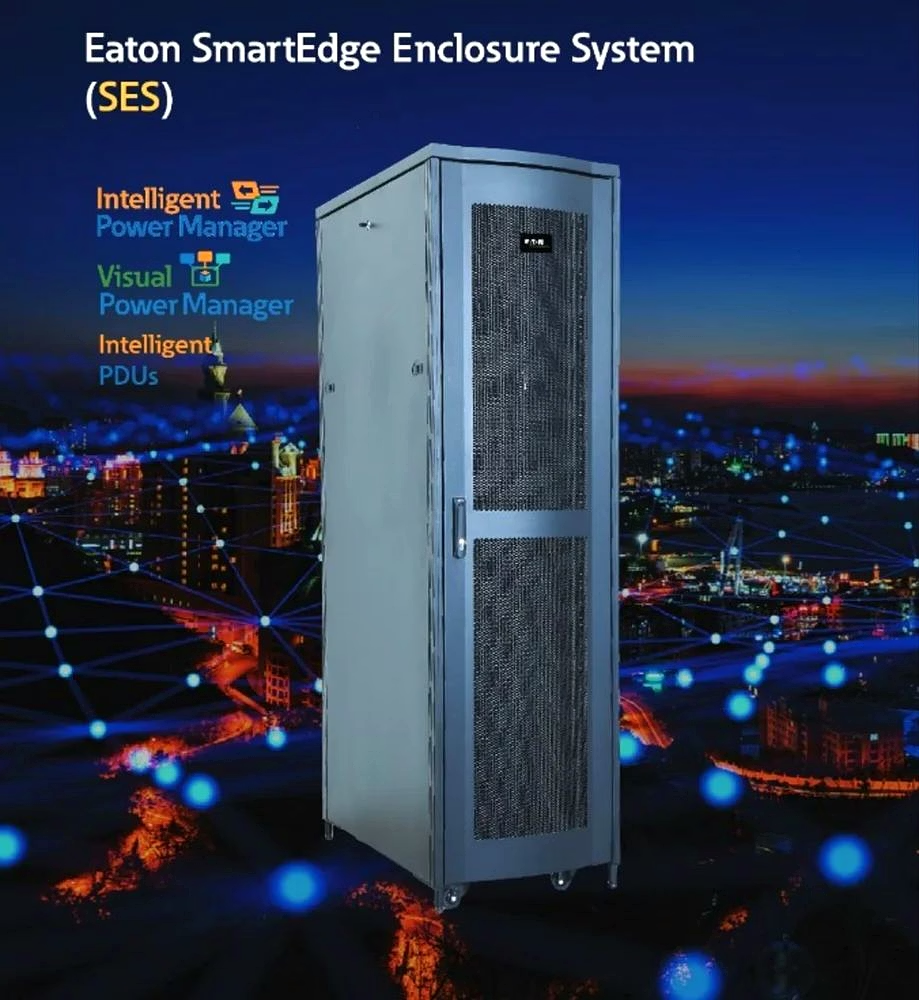
Structural reinforcement, footprint variants and modular accessory logic of 42U Enclosures
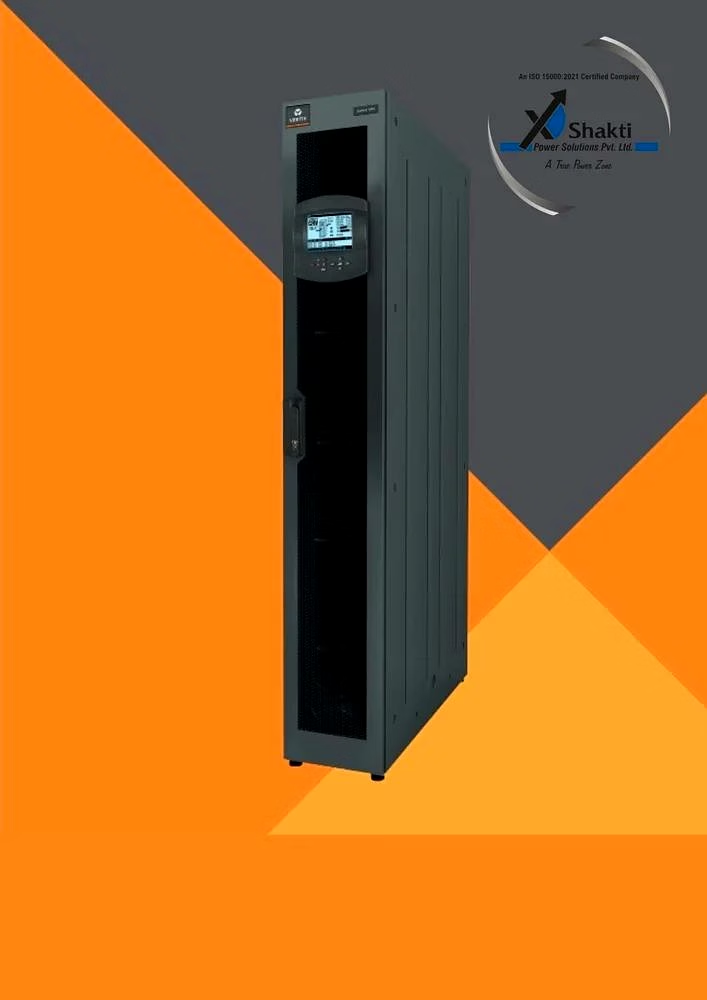
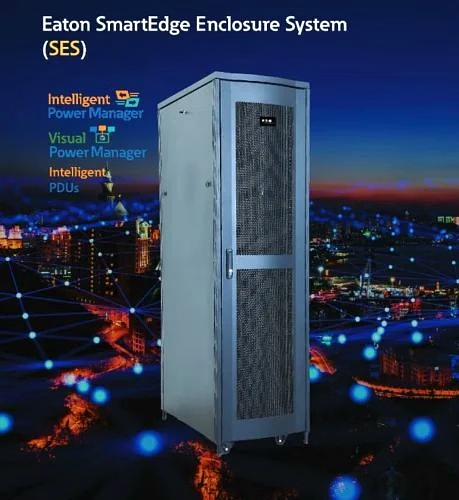
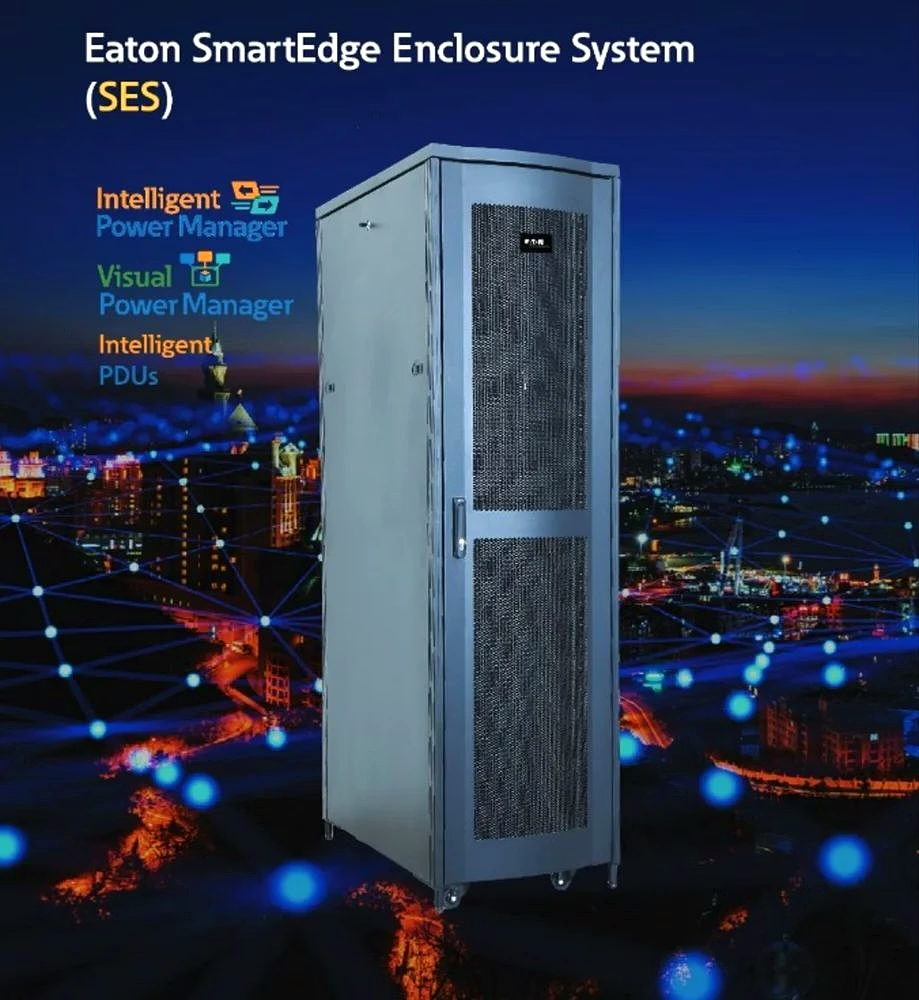
The technical framework of the SmartEdge SES-42U utilizes a heavy-gauge welded steel chassis with gusseted corners and a load-rated base frame. The structural reasoning for this reinforcement is to maintain geometric stability when fully populated with core IT assets—a failure in structural rigidity results in "cabinet twisting," where the doors no longer seal correctly and internal components become misaligned, potentially causing mechanical binding of hot-swap modules. The 19-inch mounting rails are machined to EIA-310 standards and feature full-depth adjustability to accommodate enterprise-grade storage arrays. measurement physics rely on precise RU verticality; a failure in rail alignment—due to transport-induced stress—results in the inability to mount standard components, effectively decommissioning the rack. Quality consistency is managed through per-unit load verification and dimensional inspection. The modular chassis and reinforced base enable safe handling and transport of loaded cabinets. Reinforced base plates include heavy-duty leveling feet and provisions for bolt-down anchoring, a critical standard for seismic or high-vibration industrial environments where cabinet stability is paramount for cable integrity.
Functional Performance & Operational Efficiency in Centralized Data Halls
Operational efficiency is achieved through the enclosure’s multi-path airflow patterns, which are designed to support both passive and active cooling strategies. Failure to manage internal airflow—especially in 42U racks—results in "thermal stratification," where heated air pools at the top of the rack, causing the upper servers to overheat while the lower units remain cold. functional performance centers on the unit’s support for fan-tray integration and airflow blanking; correctly configured racks reduce the localized cooling overhead by up to 20%. In real operational scenarios, a failure to utilize the integrated cable-routing channels results in "congestion throttling," where cable bundles block the intake vents of high-density switches. The SES-42U utilizes lockable front and rear perforated doors with 65% to 80% free area, ensuring maximum convective flow. integrated grounding busbars with M6 studs are provided throughout the frame to protect against impulsive surges—a failure in the grounding logic leads to "ground potential shifts" that can destroy network interfaces. By providing a secure and thermally optimized environment, the enclosure effectively improves the overall availability of the core IT infrastructure, providing the technical transparency required for large-scale energy accounting.
Application & Industry Deployment Logistics for Core Infrastructure
Suitable for large edge compute clusters, telco aggregation points and compact data-centre pods, the SES-42U series is configured for the logistical requirements of multimodal multi-site procurement. Units ship in heavy-duty crates with internal rigid bracing and shock-mitigating foam to protect both the chassis and any factory-installed hardware during maritime and road freight. Failure to implement shock-monitored packaging results in "latent mechanical stress" on internal components, manifesting as intermittent component failures months after commissioning. For international procurement, supply-readiness is supported through serialized inspection reports and certificates of conformity (ANSI/TIA). Export-ready documentation includes mounting templates, dimensional drawings, and environment manifests provided with each shipment to facilitate site acceptance. Packaging utilizes moisture-barrier liners and desiccant to prevent oxidation of the hinges and latch mechanisms during transit. Factory pre-population and labeling options are available, allowing system integrators to deliver "ready-to-run" cabinets with serialized asset tracking. This high-authority approach ensures procurement teams receive verified, site-ready hardware that meet the performance and safety requirements of global markets.
Frequently Asked Questions
- Which footprint should be selected for deep chassis? The 8x10 footprint accommodates deeper chassis and additional cable clearances; review equipment depths against rails.
- How are loaded enclosures protected during shipment? Heavy-duty crates with internal bracing and shock-mitigating fixtures are used to protect cabinets and pre-installed hardware.
- Can enclosures be pre-populated for OEM builds? Yes; factory pre-population and labeling options are available to support integrator and private-label workflows.
- How is airflow managed in dense configurations? Fan trays, blanking panels and well-planned cable routing prevent recirculation and hot spots.
- What documentation is included? Dimensional drawings, inspection reports and packing lists are supplied per serial number for procurement review.
Description provided by Shakti Power Solutions Pvt Limited.
SES-42U-6x10-S1 and SES-42U-8x10-S1
6x10 and 8x10 configurations
Integrated rack-level power supply with EA9102 unit
Temperature sensor (EA9103), Temperature & Humidity combo (EA9105), Rope leak sensor (EA9112), Spot leak sensor (EA9111)
Magnetic Door Switch (EA9109)
Dry Contact Input Cable (EA9110)
Remote and distributed system management for easy maintenance
Edge computing, finance, government digital systems, telecom 5G, retail, education, medical
Specifications
Compatible Brand
As per Eaton Catalogue
Model Name/Number
SES-42U-6x10-S1, SES-42U-8x10-S1
Power Supply Required
Refer Catalogue for EA9102
Temperature Sensor
EA9103
Temperature & Humidity Combo Sensor
EA9105 (single), EA9112 (triple)
Magnetic Door Switch
EA9110
Dry Contact Input Cable
EA9111
Country of Origin
Made in India


 FIEO Registered
Export Ready
FIEO Registered
Export Ready