Product Composition and Structure
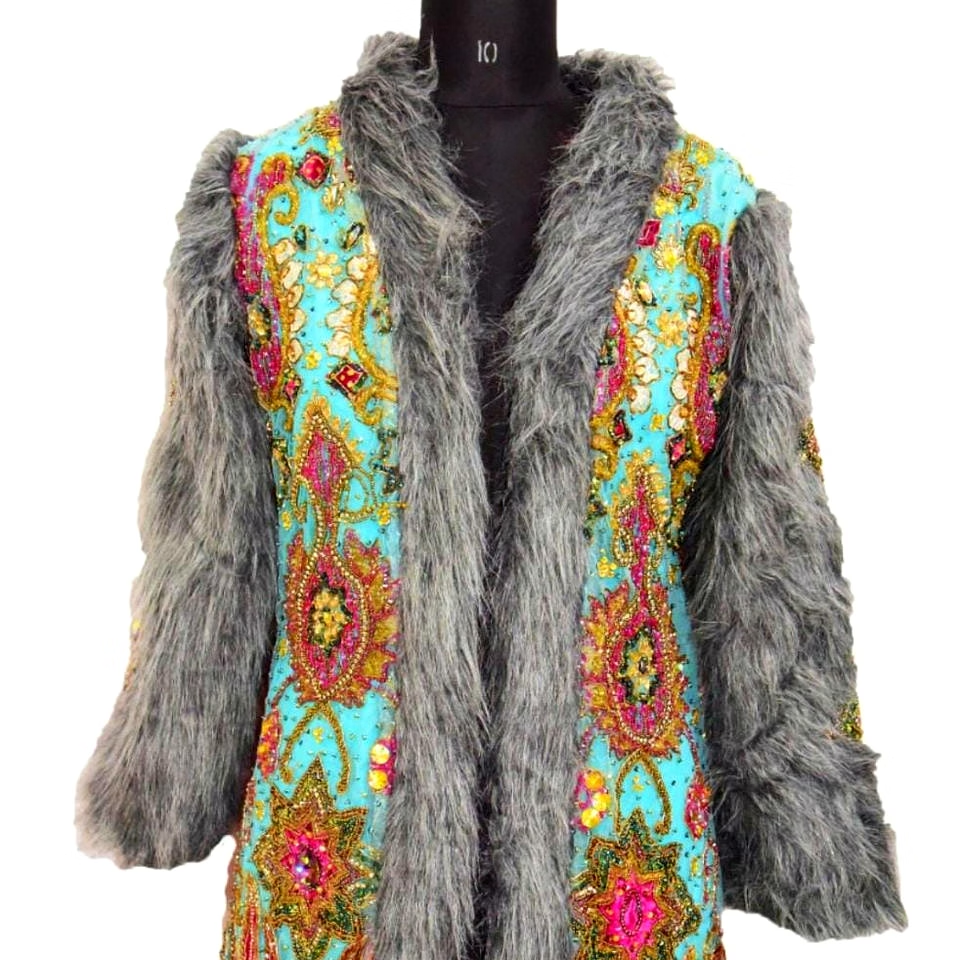
The buttoned banjara jacket uses a reinforced placket and interfacing behind closures to reduce stress on patchwork and bead zones. Buttons are secured with back-stitching and optional washer backing for higher-stress designs. Patchwork panels are sited to minimize direct stress on closure areas.
Functional Performance & Operational Efficiency
Buyer-critical outcomes are closure durability, minimised post-sale repairs, and pack-stability. Reinforced placket construction and selected thread-locking patterns limit button pull-through and reduce returns. Production sequencing positions closure work after patch assembly and before final finishing to confirm alignment and button spacing.
Processing Insight
Critical checkpoints include button shear testing, placket tensile verification, and visual alignment checks. For bead-button hybrid areas, assembly is sequenced so that bead-setting does not interfere with closure mechanics. Buyers should request an approved fit sample to validate button spacing and action across size-sets.
Application & Industry Deployment
Distributor restock
Buyer role: restock planner; Constraint: size-set closure consistency across lots; Outcome: predictable replenishment with consistent button alignment and low repair rates when samples are approved.
Retail chain stocking
Buyer role: retail merchandiser; Constraint: in-store handling and durability at checkout; Outcome: reduced returns and increased sell-through when closures are reinforced and final checks are performed.
Seasonal distribution planning
Buyer role: seasonal assortment manager; Constraint: lead-time coordination for button and trim procurement; Outcome: on-shelf availability for seasonal campaigns when trim lead-time is included in pre-production planning (15–25 days typical).
Differentiation Hook
This jacket is specified for closure longevity via reinforced plackets and washer-backed buttons; buyers can request button shear and placket tensile results during pre-shipment inspection.
Frequently Asked Questions
- What is the minimum order quantity for buttoned banjara jackets? Indicative MOQ is 50 units. MOQ and lead time depend on button sourcing and beadwork complexity.
- How does bead and button work influence pricing per jacket? Pricing increases with manual bead-hours, specialty buttons, and reinforcement hardware. Consolidating button style and limiting bead motifs reduces unit costs.
- Can you provide inspection or quality notes for beaded and buttoned finishes? Recommended checks include button pull tests, placket tensile verification, and bead adhesion inspections. Document downloads (IEC Export License and GST Registration Certificate) are available for shipment records.
- What are lead times, bulk packing and shipping options for these buttoned jackets? Typical lead time is 15–25 days. Packing includes size-set cartons and inner protective sleeves; private-label cartons and hang-tags can be supplied after sample approval.
Description provided by Fashion Mart.
Intricate glass beadwork and sequins applied using controlled hand-beading techniques for a consistent, high-quality finish.
Inspired by traditional Banjara aesthetics, offering a unique multicultural fashion statement.
Use of sustainable sequins and buttons in combination with glass beads ensures environmentally responsible apparel.
Constructed to withstand regular wear season after season, ensuring practical use for kids.
Standardized sizing and bulk packaging support dependable supply chains for international markets.
Perfect for boutique assortments and events requiring standout kids apparel.
Finished to meet international export and retail fashion standards.
Specifications
Category
Banjara Jackets and Bags
Material
Glass Beads, Eco-Friendly Sequins, Buttons
End Use
Kids Fashion Apparel
Supply Type
Bulk and Wholesale Ready
Handwork
Hand-beaded and sequined embroidery
Packing
Bulk packaging suitable for export
Target Market
International B2B buyers (importers, distributors, retailers)

 FIEO Registered
Export Ready