Product Composition & Structure
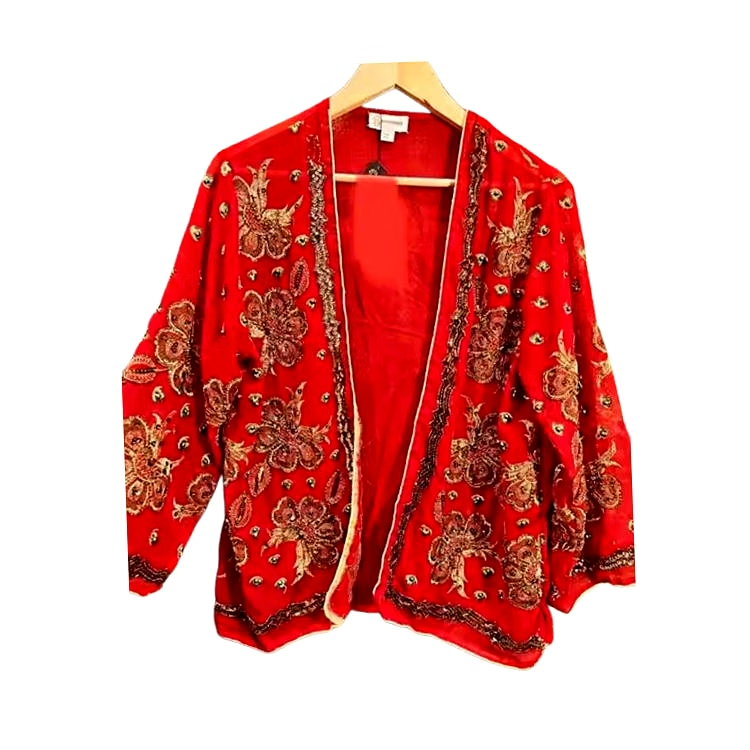
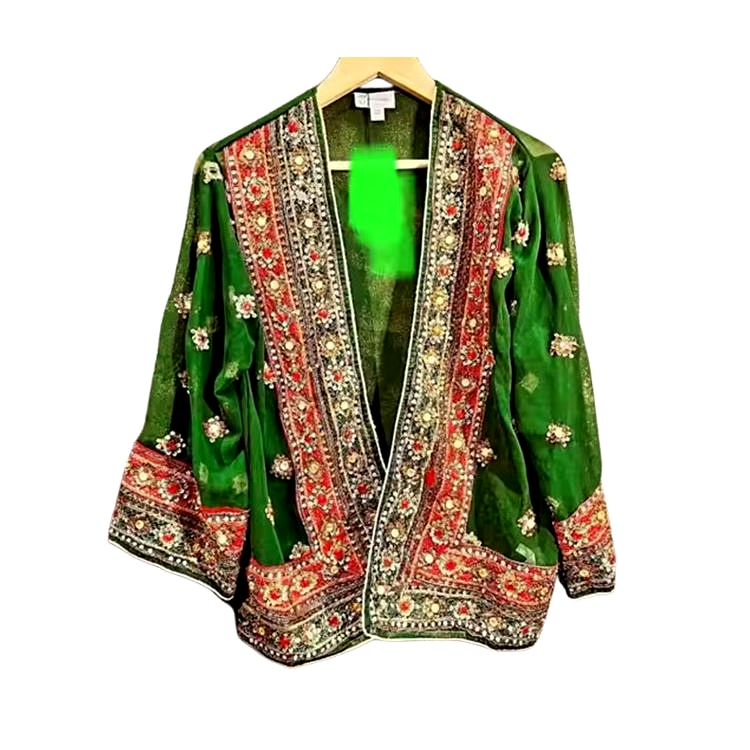
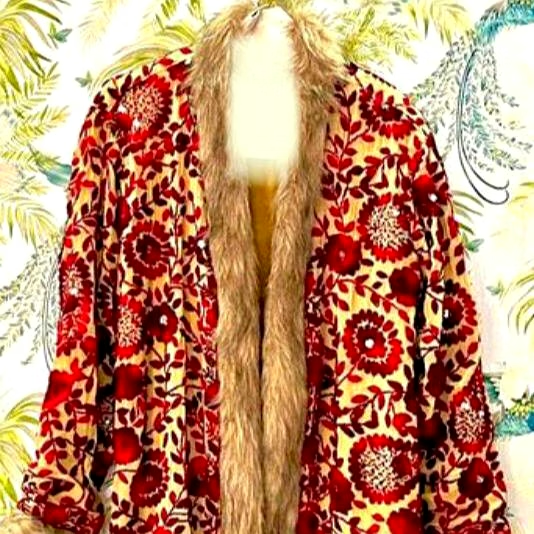
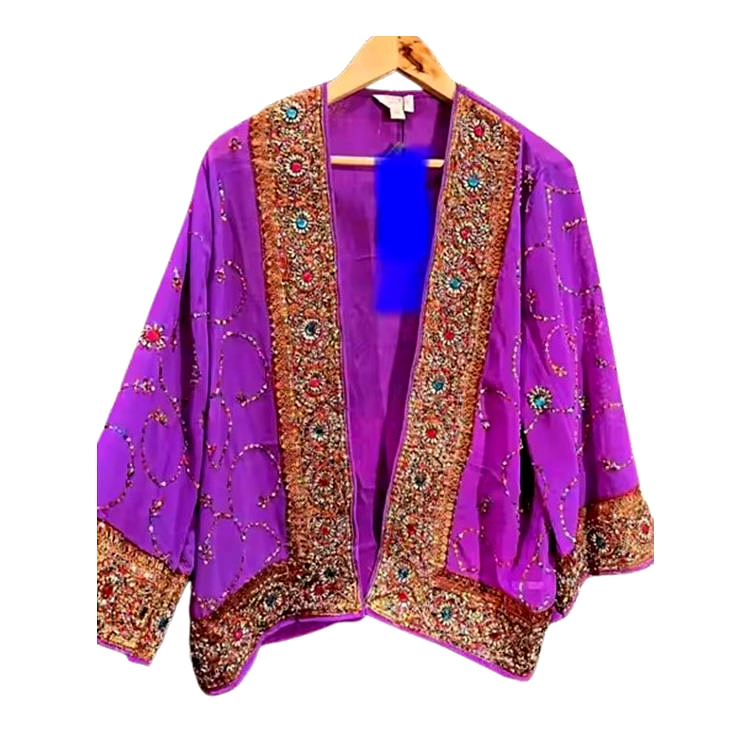
The hand‑beaded jacket combines a woven or velvet shell with hand‑applied glass or acrylic beads affixed by single‑stitch beadwork. Lining and interlining choices are selected to control drape and bead load: a medium‑weight lining stabilises bead attachment and reduces distortion. Material selection focuses on surface stability to prevent bead pull‑through and to preserve pattern geometry during handling and wash cycles.
Functional Performance & Operational Efficiency
Bead placement and stitch density drive visual uniformity and durability. Inspection criteria include bead torque and stitch security checks sampled per lot. When specifying for a retail chain, require a sample sign‑off that includes wash trial results (gentle cycle) and a shrinkage tolerance target; these capture post‑wash size drift and help avoid returns. Operationally, finished pieces are folded with acid‑free interleaving to protect bead surfaces during transport.
Processing Insight / Technical Insight
Hand beading increases production time per unit versus machine embroidery. For procurement planning, factor beadwork complexity into per‑unit labour and quality‑inspection time. Common checks: pull test on bead stitches, seam strength near heavy bead clusters, and lot shade comparison under standard lighting. Traceability is maintained by lot codes on carton labels to link COA/test checkpoints to shipment batches.
Application & Industry Deployment
Distributor restock
Buyer role: replenishment planner managing store resets. Constraint: matching beadwork pattern and size set across restock batches. Outcome: scheduled repeat production with pre‑approved sample reduces inbound inspection time and ensures shelf consistency.
Retail chain stocking
Buyer role: merchandise planner for multi‑store roll‑out. Constraint: pack presentation and label compliance for retail POS. Outcome: retail‑ready cartons and aligned care labels speed SKU deployment and reduce store prep labour.
Seasonal distribution planning
Buyer role: seasonal product manager. Constraint: lead time sensitivity and batch shade continuity across season. Outcome: production window planning (15–25 days) with lot traceability reduces mid‑season variation risk.
Differentiation Hook
This variant emphasises hand‑stitch bead retention checkpoints and sample‑anchored size tolerances to reduce visual drift across reorder cycles—useful where pattern fidelity is a procurement requirement.
Frequently Asked Questions
- What is the minimum order quantity and lead time for hand‑beaded jackets? MOQ options are available; typical production lead time is 15–25 days depending on complexity and order band. Sample approval is recommended to lock bead density and size tolerances before bulk production.
- How does beadwork complexity affect pricing? Pricing is driven by bead type, stitch density and pattern complexity. Labour‑hour estimates per unit are used to tier unit cost; provide a tech pack or sample for an accurate quote.
- Is compliance documentation or testing support available? Batch COA and lot traceability records are provided on request. Company registration documents such as IEC export license and GST registration certificate can be listed in procurement files where required.
- What packaging and delivery options are offered? Standard carton packing with internal interleaving is used for shipment. Palletised export packing and barcode labelling can be arranged after finalising quantity and packaging spec.
Description provided by Fashion Mart.
Glass beads are hand-applied ensuring detailed and consistent finish
Tailored for kids' boutique, festive, and special occasion wear
Secure bead attachment and durable garment construction for kids' active use
Standardized sizing and packaging ideal for wholesale and export
Meets international fashion retail quality standards


 FIEO Registered
Export Ready