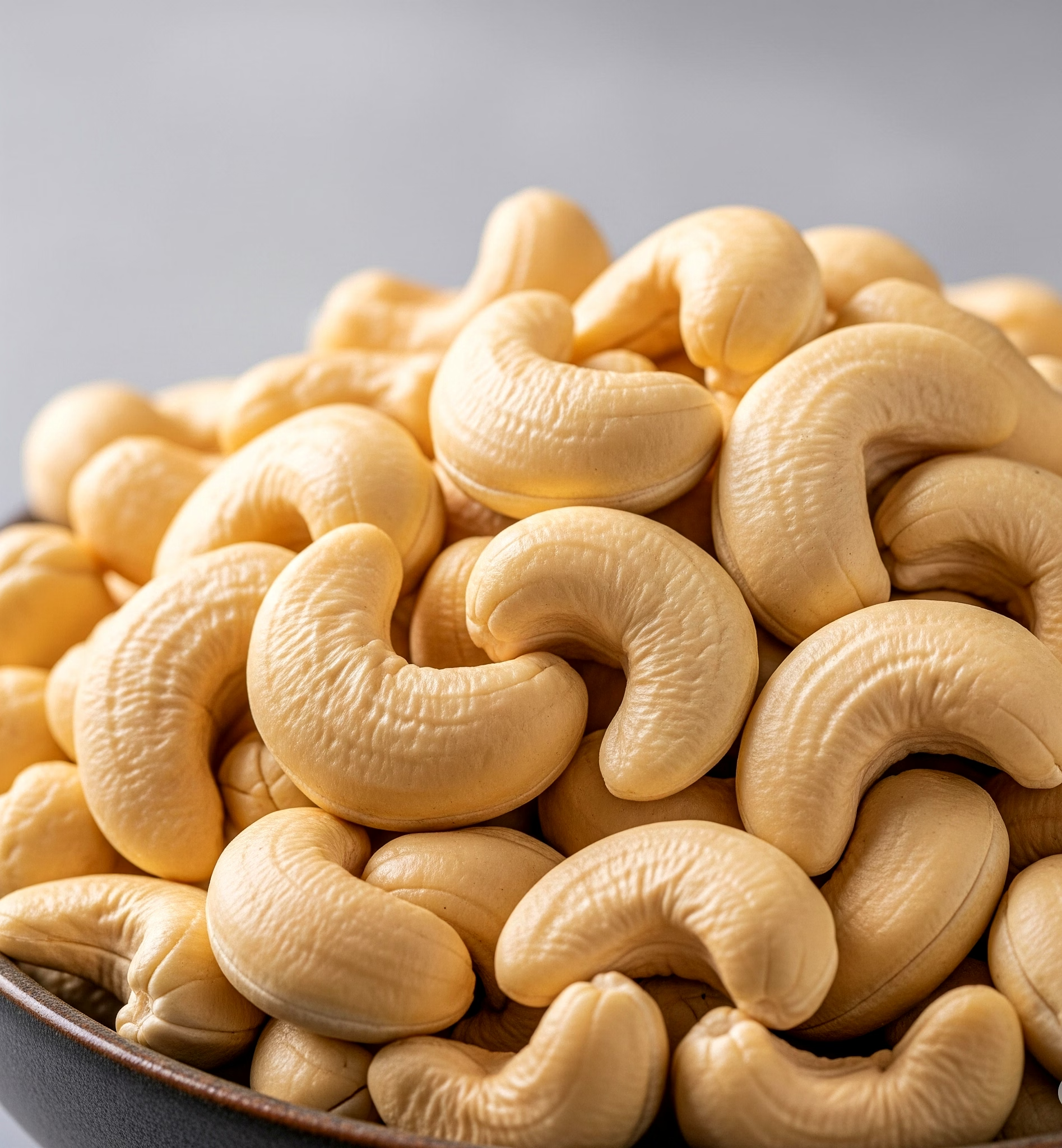
California is the only place in North America where almonds are grown commercially. There are 49 varieties of almonds grown in the United States. The four main varieties that make up 85% of all almonds grown in California are Nonpareil, Carmel, California types, and Mission types. These varieties differ in terms of their shell hardness, skin color, and overall appearance.
Almonds are sorted into four grades that measure the quality of the nut in terms of chips and scratches, foreign material, and splits and broken almonds. The highest quality grade is Extra No. 1, which has less than 5% chips and scratches and less than 1% split and broken almonds. The amount of foreign material in Extra No. 1 almonds is less than .05%. No. 1 Supreme is the second grade of almonds, and it has less than 10% chips and scratches and less than 1% split and broken almonds. The foreign material in No. 1 Supreme almonds is less than .05%. U.S. Select Sheller Run is the third highest grade of almonds, and it allows for no more than 20% chips and scratches and 5% split and broken almonds. The foreign material in Select Sheller Run almonds is less than 1%. Finally, U.S. Standard Sheller Run is the fourth grade of almonds, and it has less than 35% chips and scratches and 15% split and broken almonds. The foreign material in U.S. Standard Sheller Run almonds is less than 2%.
In addition to the four grades, almonds are also manufactured into six different types. The processed almonds are produced in two ways, blanched and natural. Blanched almonds are almonds with the skins removed. Blanched Whole almonds are usually manufactured no smaller than a 25/27 size, and Blanched Sliced almonds are cut into thin, regular, and thick slices. Sliced Natural almonds are the same as Blanched Sliced, but the skins remain on the almonds. Blanched Slivered almonds are made from blanched whole almonds, and the kernel is cut to produce uniform "slivers." Finally, Diced Blanched almonds are diced into small pieces, and Diced Natural almonds are also diced but with the skins still on.
Almonds are also sorted based on the number of kernels per ounce. The largest almond size is 18/20, which yields 18-20 almonds per ounce. The second-largest size is 20/22, which yields 20-22 almonds per ounce. The smallest size is 36/40, which yields between 36-40 almonds per ounce. Processed almonds are sorted by size as well. Blanched Whole almonds are usually no smaller than a 25/27 size, while Blanched Sliced almonds are cut into thin, regular, and thick slices. Sliced Natural almonds are the same as Blanched Sliced, but with the skins remaining on the almonds. Blanched Slivered almonds are cut into uniform "slivers," and Diced Blanched almonds are diced into small pieces. Diced Natural almonds are also diced, but with the skins still on.
Consumers can enjoy almonds in various ways, such as raw or roasted, salted or unsalted, and flavored or unflavoured. Almond flour is also becoming increasingly popular as a wheat flour substitute. California almond growers harvest at least 25 different
Description provided by Satyaa.
Nonpareil, Carmel, California types, Mission types
Extra No. 1, No. 1 Supreme, U.S. Select Sheller Run, U.S. Standard Sheller Run
Blanched (whole, sliced, slivered, diced) & Natural (sliced, diced)
18/20, 20/22, 36/40 kernels per ounce
Rich in healthy fats, protein, fiber, and antioxidants
Snacking, baking, almond flour, salads, and cooking
Specifications
Shell Hardness
Varies by variety
Skin Color
Light to brown depending on variety
Chips and Scratches (Extra No. 1)
Less than 5%
Split and Broken (Extra No. 1)
Less than 1%
Foreign Material (Extra No. 1)
Less than 0.05%
Kernels per Ounce (Largest Size)
18-20 almonds for 18/20 size
Kernels per Ounce (Smallest Size)
36-40 almonds for 36/40 size


 Trusted Seller
Export Ready