Countries & Product's Trade Names:
• GCC Countries:
o Saudi Arabia: رز بسمتي (Ruz Basmati)
o Iran: برنج باسماتی (Berenj Basmati)
o United Arab Emirates: ارز بسمتي (Arz Basmati)
o Iraq: تمن بسمتي (Tuman Basmati)
o Kuwait: عيش بسمتي (Aish Basmati)
• North America:
o United States: Basmati Rice
o Canada: Riz Basmati / Basmati Rice
o Mexico: Arroz Basmati
• Europe:
o United Kingdom: Basmati Rice
o Germany: Basmati-Reis
o France: Riz Basmati
o Netherlands: Basmati Rijst
o Italy: Riso Basmati
• Asia:
o Malaysia: Beras Basmati
o Singapore: Basmati Rice
o Nepal: बासमती चामल (Basmati Chamal)
o Philippines: Basmati Rice
o Hong Kong: 印度香米 (Indian Aromatic Rice)
• Africa:
o South Africa: Basmati Rice
o Nigeria: Basmati Rice
o Kenya: Mchele wa Basmati
o Mauritius: Riz Basmati
o Egypt: أرز بسمتي (Urz Basmati)
• Oceania:
o Australia: Basmati Rice
o New Zealand: Basmati Rice
o Fiji: Basmati Rice
• South America:
o Brazil: Arroz Basmati
o Colombia: Arroz Basmati
o Chile: Arroz Basmati
HSN Code Specifics (Indian Government Rules)
The HSN (Harmonized System of Nomenclature) code is a globally standardized system of names and numbers to classify traded products.
• Exact 8-digit HSN Code: 10063020
________________________________________
Particularities
Our 1121 Steam Basmati Rice conforms to the highest international quality and safety standards.
Compositional Analysis
• Primary Aromatic Compound: 2-acetyl-1-pyrroline (C6H7NO)
• Amylose Content: Typically 23−25% (contributes to non-sticky texture)
• Protein Content: Approx. 8−9%
• Moisture Content: Maximum 13%
• Foreign Matter: Nil to less than 0.1%
Metabolism & Pharmacokinetics
• As a food product, this section is not directly applicable in the pharmaceutical sense.
• Digestion involves the enzymatic breakdown of complex carbohydrates (starch) into glucose.
• Glycemic Index (GI): Medium (approx. 56-69), providing sustained energy release.
• It is naturally free from cholesterol and trans-fats.
• Serves as a primary source of metabolic energy.
Safety & Regulatory Notes
• Aflatoxin Levels: Strictly below international limits (e.g., < 4 ppb).
• Pesticide Residues: Conforms to MRLs (Maximum Residue Limits) of importing countries.
• GMO Status: Certified 100% Non-GMO product.
• Gluten Content: Naturally gluten-free.
• Microbiological Contaminants: Tested and clear of E. coli, Salmonella, and other pathogens.
Nutritional Properties (Approximate per 100g serving)
• Energy: 350−360 kcal
• Carbohydrates: 78−80 g
• Protein: 8−9 g
• Fat: 0.5−1.0 g
• Dietary Fiber: 1.0−1.5 g
Physical Properties
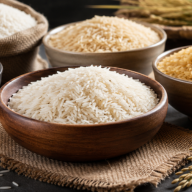
• Form at Room Temperature: Solid, elongated grain, creamy white color.
• Average Grain Length (Uncooked): 8.30 mm to 8.45 mm.
• Elongation Ratio (Post-Cooking): 2.0 to 2.5 times its original length.
• Broken Grains: Maximum 2%
• Damaged/Discolored Grains: Maximum 1%
Chemical Properties
• Moisture Content: ≤13%
• pH (Cooked): Approximately 6.5−7.0 (Neutral)
• Admixture: Maximum 5% (of other rice varieties)
• Purity: Minimum 95%
• Stability: Highly stable when stored in cool, dry conditions away from sunlight and moisture.
Manufacturing Profile
• Primary Production Method: Controlled Hydration and Steaming Process followed by gradual drying and milling.
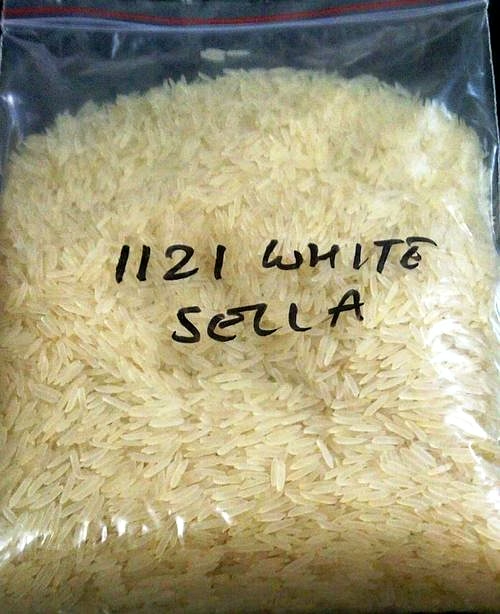
• Production Methods: Steaming, Parboiling (Sella), Raw (White).
• Typical Commercial Purity: > 95% Basmati grain count.
• Forming Processes: Precision milling, polishing, and color sorting.
• Handling Requirements: Requires storage in a cool (<25∘C), dry environment with controlled humidity to prevent fungal growth and pest infestation.
________________________________________
Market Overview
• Factors Influencing Price Volatility: Annual monsoon performance, Indian government's Minimum Support Price (MSP), global demand-supply dynamics, and currency exchange rates.
• Emerging Growth Trends: Rising demand for aged Basmati rice (1-2 years) for enhanced flavor and aroma, and growing market for organic variants.
• Regulatory Environment: Protected by a Geographical Indication (GI) tag, ensuring authenticity and origin.
Packaging
We offer robust, export-grade packaging solutions tailored to importer requirements.
• Consumer Bags: Non-Woven Fabric Bags, PP Bags, Jute Bags in sizes of 5 kg, 10 kg, 20 kg, and 25 kg.
• Bulk Bags: FIBC (Jumbo) Bags with capacities of 500 kg, 1000 kg, and 1250 kg.
• Container Lining: Food-grade liners are used inside containers to protect against moisture and contaminants.
• Palletization: Pallets are fumigated as per ISPM 15 international standards.
• Customization: We offer custom printing and branding on all packaging types.
Labeling
Flexible labeling options are available to meet your brand strategy and regulatory needs.
• Private Labeling: We can pack the product under your customized brand name and design (White Labeling).
• Kaizen BMS Branding: Option to use our established in-house brand, recognized for its quality.
• Compliance: All labels comply with international standards, including net weight, country of origin, manufacturing/expiry dates, nutritional information, and lot numbers for traceability.
• Languages: Labeling can be provided in multiple languages as per the destination country's requirements.
• Barcoding: GS1 standard barcodes can be included for retail and inventory management.
Shipping
We ensure secure and efficient transit for all international shipments.
• Primary Mode of Transport: Ocean Freight is the standard for bulk shipments.
• Standard Container Types: 20ft and 40ft Dry Van (DV) containers.
• Loadability: A 20ft container typically accommodates 24-26 Metric Tons.
• Essential Safety Measures: Containers are treated with approved fumigants (e.g., Methyl Bromide or Aluminum Phosphide) and moisture control desiccants are used.
• Documentation: A complete set of shipping documents, including Bill of Lading, is provided promptly.
Ports
Our strategic port selection ensures optimal transit times and cost-efficiency for global destinations.
• West Coast India:
o Mundra Port (Gujarat): Offers strategic proximity to the major rice-growing regions of North India, reducing inland transit time and costs.
o Nhava Sheva / JNPT (Maharashtra): India's largest container port with excellent connectivity to major global shipping lanes.
o Kandla Port (Gujarat): A major hub for agri-commodity exports with specialized cargo handling facilities.
• East Coast India:
o Chennai Port (Tamil Nadu): A key gateway for trade with Southeast Asia, Oceania, and the Far East.
o Visakhapatnam (Andhra Pradesh): A deep-water port with modern infrastructure, serving as an efficient export point to Asia-Pacific markets.
o Kolkata Port (West Bengal): Strategically located to serve markets in Southeast Asia and Bangladesh.
INCOTERMS
We offer flexible shipping terms based on the internationally recognized INCOTERMS to clarify trade responsibilities.
• FOB (Free On Board): We are responsible for all costs and risks until the goods are loaded on board the vessel nominated by the buyer at the named Indian port.
• CFR (Cost and Freight): We cover the costs and freight necessary to bring the goods to the named destination port. Risk transfers to the buyer once the goods are on board the vessel.
• CIF (Cost, Insurance, and Freight): Same as CFR, but we also procure marine insurance against the buyer's risk of loss or damage to the goods during carriage.
Payment Terms
Our secure and transparent payment terms are designed to facilitate smooth international trade.
• Full Advance: 100% payment via Telegraphic Transfer (T/T) before shipment, offering the most security for the exporter.
• Sight Letter of Credit (LC): An irrevocable LC issued by a prime international bank, payable at sight against the presentation of compliant shipping documents.
• Advance + Balance: A combination, such as 30% advance payment via T/T and the remaining 70% against scanned copies of shipping documents or via a Sight LC.
Required Export Certificates from India
• Commercial Invoice & Packing List
• Bill of Lading (Ocean) / Airway Bill (Air)
• Certificate of Origin (issued by Chamber of Commerce)
• Phytosanitary Certificate (issued by Directorate of Plant Protection)
• Fumigation Certificate
• Certificate of Analysis / Quality and Weight Certificate (from an independent agency like SGS, Bureau Veritas)
• APEDA Registration Certificate (RCMC)
• Importer Exporter Code (IEC)
Implied Taxation (India)
• Domestic Trade in India: As per the latest GST council regulations, unbranded rice is exempt from GST. Branded rice sold in pre-packaged and labelled form typically attracts a GST of 5%.
• Exports from India: All exports of goods are treated as 'zero-rated supplies' under the Indian GST law. This means no tax is levied on the export of 1121 Steam Basmati Rice, making our pricing highly competitive for international buyers.
Company Profile: Kaizen BMS
Kaizen BMS is a premier, Government of India-recognized global exporter specializing in high-quality industrial products and agricultural commodities. We are your strategic partner in international trade, offering robust contract manufacturing solutions from reliable sources and streamlined merchant exporting services. Our core philosophy is built on fostering long-term, mutually beneficial relationships with our international clients. By choosing Kaizen BMS, you are not just sourcing a product; you are gaining a dedicated partner committed to ensuring quality, supply chain integrity, and seamless logistics. We leverage our deep industry expertise and extensive network to deliver unparalleled value, making us the trusted choice for businesses seeking reliable and efficient sourcing from India.
Description provided by Kaizen Bms.


 FIEO Registered
Export Ready