


The Gulf Cooperation Council (GCC) region continues to be one of the world's largest consumers of halal food, supported by growing populations, thriving hospitality sectors, and increasing reliance on food imports GCC markets depend on. As demand continues to rise, buyers are looking for trusted sourcing partners that can deliver quality, consistency, compliance, and value.
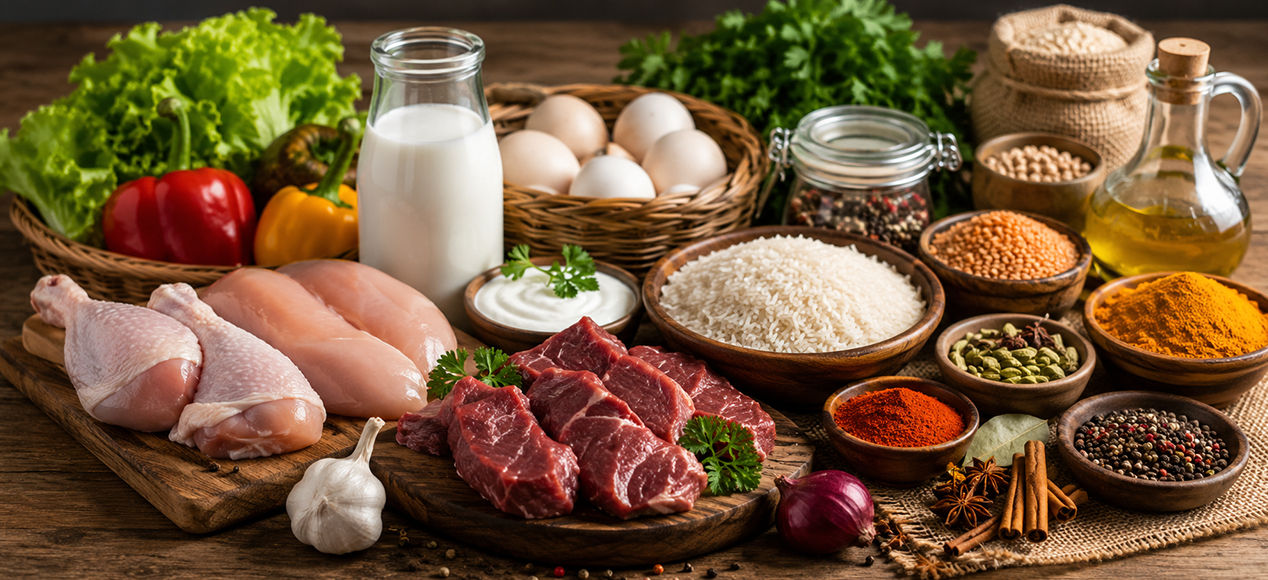
India has emerged as a leading supplier of halal-certified food products across categories such as meat, poultry, rice, spices, dairy products, frozen foods, and processed foods. Today, Halal food sourcing from India is helping importers, distributors, hotels, restaurants, and catering companies build resilient supply chains while meeting evolving consumer expectations.
Overview
Halal food sourcing from India offers GCC buyers access to a wide range of certified products, competitive pricing, and reliable supply chains. From meat and poultry to rice, spices, dairy, and processed foods, Indian suppliers are well-positioned to meet the growing needs of hotels, restaurants, caterers, distributors, and food importers across the GCC.
What Does Halal Compliance Mean for Food Imports?
For GCC buyers, halal compliance extends beyond certification. It ensures that food products meet Islamic dietary requirements throughout sourcing, production, storage, packaging, and transportation.
When businesses import halal food from India, they should verify that suppliers maintain valid halal certification alongside recognized food safety and quality standards. Working with experienced exporters reduces compliance risks and helps ensure smooth market entry across GCC countries.
Key Takeaways
-
India is a trusted source of halal certified food products for GCC markets.
-
Buyers benefit from competitive pricing, quality assurance, and export expertise.
-
Leading halal food exporters from India serve multiple food categories and HORECA segments.
-
Strong certification and supply chain management are essential for successful sourcing.
-
Indian suppliers can support large-scale procurement requirements for hotels, restaurants, and catering businesses.
Why Source Halal Food from India?
India has become a preferred destination for Halal food sourcing from India due to its extensive manufacturing capabilities, strong agricultural base, and well-developed export ecosystem.
One of the biggest advantages is product diversity. Buyers can source everything from meat and poultry to spices, rice, dairy products, frozen foods, snacks, and ready-to-eat meals through established halal food suppliers from India.
Cost competitiveness is another important factor. Large-scale production capabilities allow suppliers to offer high-quality products at attractive price points, helping buyers improve procurement efficiency without compromising on quality.
India is also home to many experienced halal food manufacturers India that comply with international food safety standards and have extensive experience serving international markets.
Key Halal Food Categories for GCC Buyers
India exports a broad range of halal-certified food products that support the needs of food service operators, distributors, and retailers across the GCC.
Halal Meat and Poultry
India is home to several leading halal meat exporters supplying frozen chicken, mutton, buffalo meat, and processed meat products. These products are widely used across hotels, restaurants, catering companies, and institutional kitchens.
Rice and Grains
Premium basmati rice remains one of the most sought-after Indian food exports. It continues to be a staple ingredient for restaurants, caterers, and hospitality businesses across GCC markets.
Spices and Seasonings
Indian spices such as cardamom, cumin, turmeric, coriander, and pepper are valued for their quality, consistency, and flavor profile. They remain essential ingredients across Middle Eastern and international cuisines.
Processed and Ready-to-Eat Foods
Growing demand for convenience has increased interest in frozen meals, ready-to-cook products, sauces, snacks, and other value-added food solutions. Many halal food exporters from India now offer customized products designed specifically for international food service businesses.
What GCC Buyers Should Look For in a Supplier
Choosing the right supplier is critical for long-term success.
First, buyers should verify halal certification and food safety credentials. Reliable suppliers should provide transparent documentation and maintain strong quality assurance processes.
Second, production capacity should be assessed to ensure suppliers can meet both current and future demand.
Third, export experience matters. Suppliers that understand GCC regulations, labeling requirements, and customs procedures can help streamline halal food procurement and reduce operational challenges.
Finally, buyers should evaluate logistics capabilities, inventory management practices, and product traceability systems to ensure consistent supply.
Logistics and Supply Chain Considerations
Efficient logistics play a vital role in successful sourcing programs.
For frozen and temperature-sensitive products, cold chain management is essential. Buyers should ensure suppliers have appropriate storage, transportation, and monitoring systems in place to preserve product quality throughout transit.
Other important considerations include:
-
Lead times and production schedules
-
Packaging standards
-
Customs documentation
-
Inventory planning
-
Product traceability
Strong logistics infrastructure supports reliable halal food distribution GCC businesses depend on for uninterrupted operations.
Growing Opportunities for the GCC HORECA Sector
The hospitality industry across the GCC continues to expand through investments in tourism, infrastructure, entertainment, and food service.
As hotels, restaurants, catering companies, cloud kitchens, and distributors grow, demand for reliable sourcing partners is increasing. Many HORECA food suppliers from India are responding by offering bulk packaging, customized specifications, and scalable production capabilities tailored to food service requirements.
This has strengthened India's position as a preferred supplier of halal food for hotels and restaurants throughout the region.
Conclusion
The continued growth of the GCC halal food market is creating new opportunities for importers, distributors, and food service operators. With competitive pricing, strong manufacturing capabilities, and a diverse portfolio of products, Indian halal food exports continue to play an important role in supporting the region's food security and hospitality sectors.
By partnering with experienced halal food suppliers from India and prioritizing certification, quality assurance, and logistics excellence, businesses can build resilient supply chains and achieve long-term procurement success.
FAQs
Why is India a preferred source for halal food imports?
India offers a wide variety of halal-certified products, competitive pricing, strong manufacturing capabilities, and established export infrastructure.
What halal food products are commonly sourced from India?
Popular products include halal meat, poultry, rice, spices, dairy products, frozen foods, ready-to-eat meals, bakery products, and processed foods.
How can GCC buyers verify halal certification?
Buyers should request valid halal certificates, review compliance documentation, and work with suppliers that maintain transparent quality assurance processes.
Can Indian suppliers support large HORECA orders?
Yes. Many halal food exporters India have the production capacity and export experience required to serve hotels, restaurant chains, caterers, distributors, and institutional buyers.
What should buyers consider when selecting a halal food supplier?
Key factors include certification, product quality, production capacity, food safety standards, export experience, and logistics capabilities.
Is the demand for halal food expected to grow in GCC countries?
Yes. Continued growth in tourism, hospitality, population, and food service industries is expected to drive further expansion of the GCC halal food market.
Also read
Top Food Products Exported from India for the Hospitality Industry: A Complete HORECA Sourcing Guide
Image source: OpenAI
Disclaimer: The views and opinions expressed in this article are those of the author and do not necessarily reflect the views, official policy or position of GlobalLinker.
Posted by
Supriya MathurMy endeavour is to help business owners digitise, network and grow easily. Towards this I help organise webinars, curate articles and answer queries via our help centre.
More Articlesby this author
Communications Manager
GlobalLinker / Mumbai, India
3°+ / 2318 Connections