HORECA Export Certifications: A Simple Guide for Indian Exporters

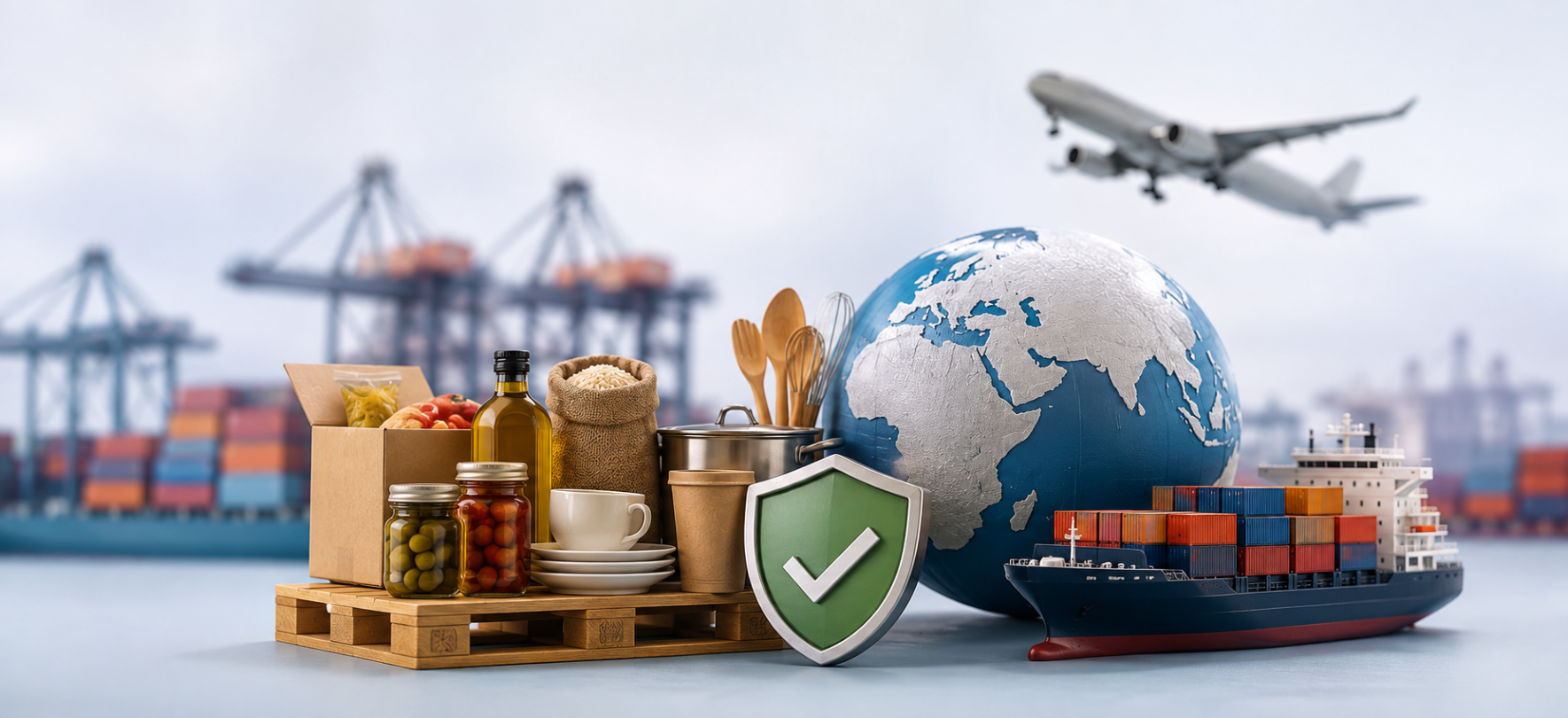
If you sell to the HORECA (Hotel, Restaurant, Catering) industry and want to export from India, certifications are one of the first things international buyers check, often before they even message you.
This guide breaks down, in plain language, which certifications you may need: the ones that apply broadly to exporters, the ones specific to your product category, the ones specific to your destination country, and the optional certifications that can help you win more business.
You don't need all of these. Use this guide to identify the certifications that apply to your business and work through them one by one.
The certifications every HORECA exporter should check first
Before anything else, these are the key registrations and certificates that form the foundation of your export setup. Exact requirements can vary by product and destination.
-
IEC (Import Export Code): Issued by the DGFT and generally required for exporting from India. Get this first, as several other registrations and processes depend on it.
-
FSSAI Central License: Required for food businesses involved in export activities, subject to the applicable FSSAI rules.
-
APEDA Registration (RCMC): Relevant for many agricultural and processed food products covered by APEDA.
-
Spice Board Registration (RCMC): Relevant for businesses exporting spices and spice products, depending on the products being exported.
-
FSSAI Export/Health Certificate: Required for certain food products and destinations. Where applicable, it is issued for individual consignments or shipments.
Not in the food business? If you export kitchen equipment, tableware, packaging, or other non-food HORECA products, the IEC may still apply, while food-specific registrations may not. Check the requirements for your product and destination before shipping.
Certifications based on what you sell
Every HORECA product category can carry additional requirements on top of the basic export registrations. Find your category below.
Food & Beverages
This includes spices, grains, oils, dairy, sauces, frozen foods, beverages, bakery ingredients, and similar products.
-
Phytosanitary Certificate: May be required when shipping certain raw agricultural commodities.
-
HACCP / Food Safety Management System: Often required or strongly preferred by international buyers, particularly when you manufacture or process food yourself.
-
Facility approval or listing: Dairy, meat, poultry, seafood, and other regulated products may require the manufacturing or processing facility to be approved or listed with the destination country's authority.
Kitchen Equipment
Requirements for kitchen equipment depend heavily on the destination country and the type of equipment.
-
Check the destination country's product safety and electrical compliance requirements before exporting.
-
Additional gas-safety approval: May apply to gas-fired equipment such as tandoors, burners, and commercial cooking appliances.
Tableware, Serveware & Disposables
-
Food-contact safety documentation: Relevant when the product comes into direct contact with food.
-
Compostable or biodegradable certification: Relevant if you make compostable, biodegradable, or similar environmental claims on packaging or marketing materials.
Hygiene, Cleaning & Safety Products
-
Safety Data Sheet (SDS): Required for many chemical and cleaning products. The SDS should follow the classification and labelling requirements of the destination country.
Hospitality Supplies
This includes toiletries, uniforms, linen, and similar products.
-
Destination-specific compliance: Personal care products may have chemical and labelling requirements, while textiles may have composition, labelling, safety, or testing requirements depending on the destination.
Packaging
-
Food-contact certification: Relevant when packaging comes into direct contact with food.
-
Compostable or environmental claim certification: Relevant when you make specific environmental claims about the packaging.
Certifications based on where you're exporting to
This is the part many exporters underestimate. The same product can require different documentation depending on the destination country.
UAE / GCC
For exports to the UAE and other GCC markets such as Saudi Arabia, Bahrain, Kuwait, Oman, and Qatar, requirements can vary by product and country.
-
Halal Certificate: Frequently requested and particularly important for meat and other products containing animal-derived ingredients.
-
Certificate of Islamic Slaughter: Relevant to applicable meat and poultry products.
-
Arabic labelling: May be required for food and other regulated consumer products.
Always check the current requirements of the specific GCC country and product category before shipping.
European Union
Depending on the product, EU exports can involve requirements such as:
-
EU Health Certificate: Required for certain products and consignments.
-
Pesticide and additive limits (MRLs): EU limits can differ from Indian requirements and may be stricter for certain products.
-
Facility approval or listing: Dairy, meat, seafood, and other regulated products may require the manufacturing facility to be approved or listed with the relevant EU authority.
United Kingdom
The UK operates its own import and export health certification system.
-
UK Export Health Certificate: Required for certain animal-origin and other regulated products.
-
Do not assume that an EU health certificate or EU clearance automatically satisfies UK requirements.
United States
Food exporters to the US may need to comply with requirements including:
-
FDA Facility Registration: Applicable food facilities generally need to be registered with the FDA and registration must be renewed periodically.
-
US Agent and Prior Notice: Applicable foreign food facilities generally need a US Agent, and Prior Notice is required for applicable food shipments before they arrive in the US.
-
FCE/SID registration: Relevant to certain commercially processed low-acid and acidified foods packed in hermetically sealed containers.
Southeast Asia
Requirements vary across Malaysia, Indonesia, Singapore, and other Southeast Asian markets.
-
Halal certification: Particularly important for applicable food products. Malaysia and Indonesia have their own halal certification systems, so a certificate accepted in one market may not automatically be accepted in another.
-
Destination-specific food registration, labelling, ingredient, and safety requirements may also apply.
Optional certifications that can help you win buyers
These certifications may not be legally required for every shipment, but they can strengthen your credibility with premium buyers, distributors, private-label customers, and large hospitality groups.
-
Organic Certification: Relevant when you market the product as organic. India's NPOP certification and its recognition or equivalence in specific markets should be checked for the destination you're targeting.
-
Kosher Certification: Particularly relevant when selling to markets or buyers that require kosher-certified products.
-
BRCGS or ISO 9001: Quality and food-safety-related certifications that can be requested by larger buyers and private-label customers, depending on the product and supply chain.
-
FSC Certification: Relevant to certain wood- and paper-based products, including some packaging and disposable products.
A quick word on Halal certification
Halal certification can work differently depending on the product, ingredients, destination, and certification system involved. It is one of the areas where exporters should avoid assuming that one certificate covers every market.
-
Meat or poultry going to GCC markets: Halal and slaughter-related requirements can be mandatory, depending on the destination and product.
-
Products containing ghee, animal stock, gelatin, or certain flavouring ingredients: Check the requirements carefully, even for products such as spice blends, sauces, or bakery decorations.
-
Plain vegetarian products with no animal-derived ingredients: Halal certification may not be legally required in some markets, although buyers may still request it as a trust or procurement requirement.
-
Certification for one region: A halal certificate accepted in one market does not necessarily satisfy the requirements of another. GCC and Southeast Asian certification systems can differ.
Things to watch out for
A few common traps can catch even experienced exporters off guard:
-
An EU clearance doesn't mean UK clearance. The UK has its own export health certificate system. Check both markets separately when exporting regulated products.
-
Certification and accreditation requirements can change. Which certification bodies are currently recognised by authorities, and whether specific equivalence arrangements remain active, can change over time. Reconfirm requirements before each certification cycle.
-
A certificate alone isn't always enough. For dairy, meat, seafood, and other regulated products, the manufacturing or processing facility itself may need to be approved or listed with the destination country's authority. A shipment certificate on its own may not be sufficient.
-
Hidden animal-derived ingredients can create halal issues. Alcohol-based flavour carriers, gelatin in glazes, and animal stock in sauces or marinades can be overlooked during product assessment.
-
Product claims need supporting documentation. Claims such as "organic," "compostable," "cold-pressed," or "biodegradable" may require certification, testing, or other documentary evidence depending on the claim and destination. Treat these as compliance requirements, not simply marketing language.
-
US FDA registration needs to be tracked. Where FDA registration applies, keep renewal requirements on your compliance calendar rather than treating registration as a one-time task.
Frequently asked questions
Do I need all of these certifications to start exporting?
No. Start with the registrations and licences that apply to your business, such as IEC and the relevant food or product registrations. Then add destination- and product-specific certifications as required.
For food exporters, this may include FSSAI licensing, APEDA or Spice Board registration, and applicable export or health certificates.
Is Halal certification mandatory for exporting to the UAE?
It depends on the product and the applicable UAE requirements. Halal and slaughter certification are particularly important for meat and poultry, while other food products may have different requirements. Some buyers may also request Halal certification even when it is not strictly required by law.
What's the difference between an FSSAI license and an FSSAI Export/Health Certificate?
The FSSAI licence allows a food business to operate under India's food-safety regulatory framework. An Export/Health Certificate is a separate document that may be required for particular products or destinations and, where applicable, is issued for individual consignments.
Does an EU-cleared shipment automatically clear UK customs?
No. The UK maintains its own import requirements and export health certificate system. A product that meets EU requirements may still need additional documentation or certification for the UK.
Do I need organic certification if I don't market my product as organic?
Generally, no. Organic certification is relevant when you make an organic claim or when the buyer or destination market specifically requires it. Always check the rules applicable to your product and destination.
Not sure where to start?
Add your certifications to your GlobalLinker profile. Buyers can filter suppliers based on certifications before they even open your listing.
Certification requirements, import rules, and recognised certification bodies can change periodically. Always confirm the current requirements with the relevant government authority, importing-country authority, buyer, or accredited certification body before committing to a shipment.
Also read
Top Food Products Exported from India for the Hospitality Industry: A Complete HORECA Sourcing Guide
Halal Food Sourcing from India: A Complete Guide for GCC Buyers
What Do Indian Food Export Certifications Mean for International HORECA Buyers?
How to Evaluate a Commercial Kitchen Equipment Supplier from India: HORECA Buyer's Guide
Basmati Rice Grades Explained: A HORECA Buyer's Guide to Sourcing from India
How to Get More Leads for Your Manufacturing Business (Including on AI Search)
Image generated by OpenAI
Disclaimer: The views and opinions expressed in this article are those of the author and do not necessarily reflect the views, official policy or position of GlobalLinker.
SMEs are our partners & my focus is to provide value, experience in their quest for growth and opportunities. This drives us to improvise our feature offerings and enhance our bouquet of services on the platform.